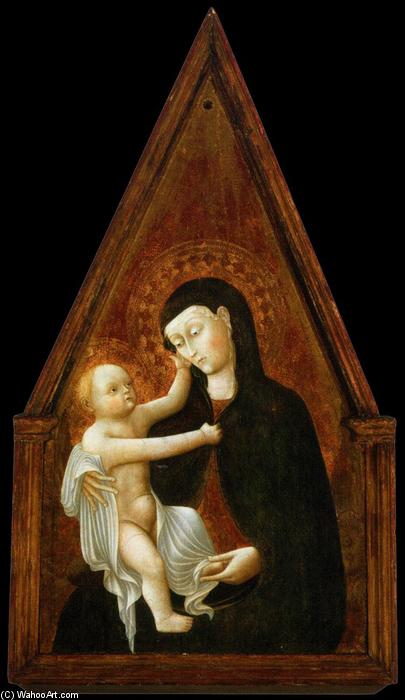
The
Virgin and Child by
Pietro Di Giovanni D'Ambrogio is a stunning example of early Renaissance art, showcasing the artist's mastery of tempera on wood panels. Created in 1435, this painting is a testament to the enduring beauty of religious art from the Sienese school.
A Brief History of the Artist and the Painting
Pietro Di Giovanni D'Ambrogio was an Italian painter active in the 15th century, known for his work in the Sienese style. The
Virgin and Child is one of his most notable works, featuring a serene and contemplative depiction of the Virgin Mary and the Christ Child. The painting is characterized by its use of muted colors, subtle lighting, and intricate details.
Key Features of the Painting The
Virgin and Child features a number of key elements that showcase
Pietro Di Giovanni D'Ambrogio's skill as an artist. These include:
- The use of tempera on wood panels, which was a common technique during the early Renaissance
- The depiction of the Virgin Mary and the Christ Child in a serene and contemplative pose
- The use of muted colors and subtle lighting to create a sense of intimacy and devotion
Reproductions and Conservation
For those interested in owning a piece of art history,
ArtsDot.com offers high-quality, handmade oil painting reproductions of the
Virgin and Child. These reproductions are created by skilled artists using traditional techniques and materials. You can also learn more about the artist and his work on
Wikipedia.
The
Brooklyn Museum is home to the original
Virgin and Child painting, where it remains a popular attraction for art lovers and historians alike. Whether you're interested in the history of the painting or simply appreciate its beauty, the
Virgin and Child by
Pietro Di Giovanni D'Ambrogio is a must-see work of art.