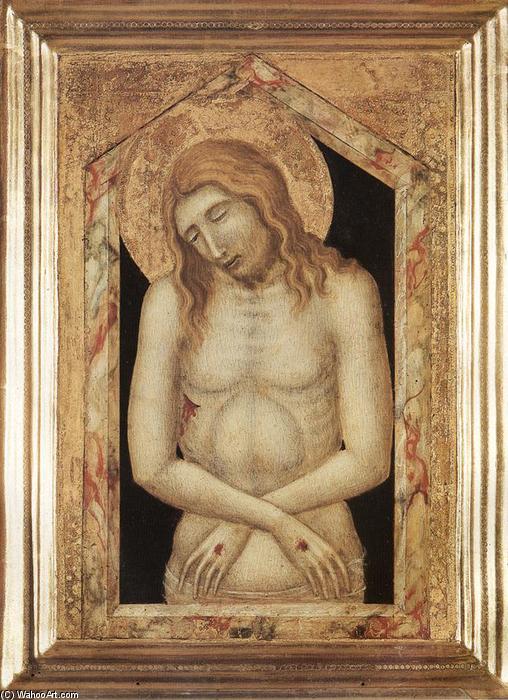
The
Man of Sorrow is a poignant painting created by the renowned Italian artist
Pietro Lorenzetti in 1330. This tempera on panel artwork measures 35 x 26 cm and is currently housed at the Lindenau-Museum in Altenburg, Germany. The painting's subject is a representation of Jesus Christ, characterized by his long hair and contemplative expression.
Artistic Style and Symbolism
The painting features a somber and introspective atmosphere, with the central figure of Jesus Christ depicted in a state of sorrow. The artist's use of
tempera on panel creates a sense of depth and texture, while the subtle hints of red and gold in the background add a touch of solemnity to the overall composition. The
Man of Sorrow is a prime example of
Pietro Lorenzetti's skill in capturing the emotional intensity of his subjects.
- The painting's use of symbolism, such as the halo around Jesus' head, adds to its religious significance and emphasizes the importance of the subject.
- The Man of Sorrow is also notable for its historical context, having been created during a time of great artistic and cultural change in Italy.
- For more information on Pietro Lorenzetti and his works, visit Pietro Lorenzetti's page on ArtsDot.com.
Handmade oil paintings reproductions of the
Man of Sorrow are available on
ArtsDot.com, allowing art lovers to own a piece of history and appreciate the beauty of
Pietro Lorenzetti's work in their own homes. The Lindenau-Museum in Altenburg, Germany, is also home to other notable works by
Pietro Lorenzetti, including the
Virgin and Child. For more information on the museum and its collection, visit
The Museum Pieve di Santa Maria page on ArtsDot.com.
The
Man of Sorrow is a powerful and emotive painting that showcases
Pietro Lorenzetti's skill as an artist and his ability to capture the essence of his subjects. As a masterpiece of medieval art, it continues to inspire and fascinate art lovers to this day.