The Grace of Aristocratic Portraiture
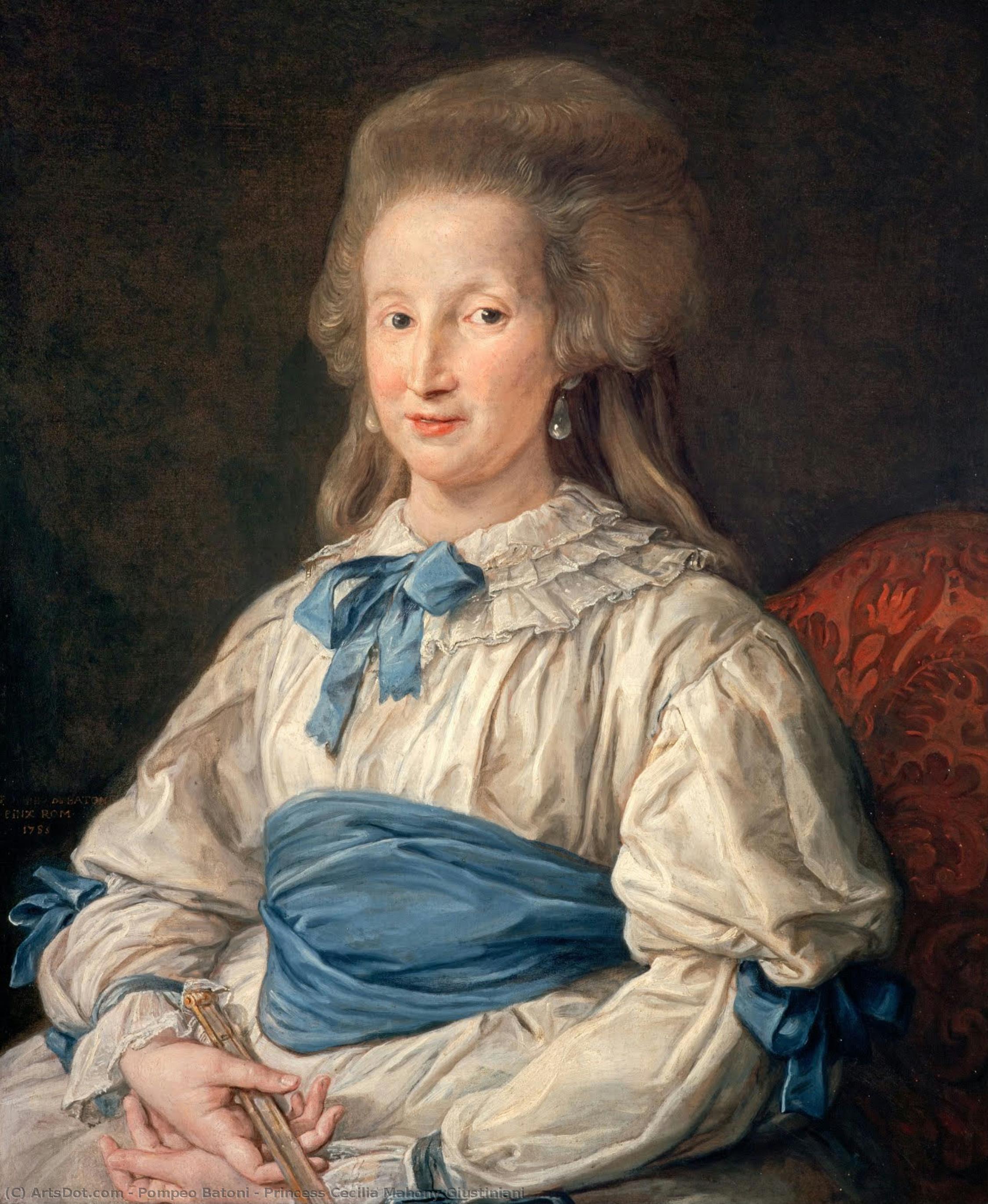
This captivating portrait, dating from 1785, presents us with Princess Cecilia Mahony Giustiniani, a vision steeped in the refined elegance of the late eighteenth century. The subject commands attention not merely through her striking beauty, but through the very poise and composure she exudes. Her blonde hair catches the light, framing a face graced by a gentle, knowing smile that seems to invite the viewer into an intimate moment across the span of decades. Batoni’s masterful handling of flesh tones allows Cecilia's expression to feel both timeless and immediate, capturing the ephemeral quality of aristocratic grace.
A Study in Neoclassical Poise
The artistic hand responsible for this work belongs to Pompeo Batoni, an artist whose career bridged the gap between the dramatic flourish of the late Baroque and the crisp idealism of emerging Neoclassicism. His style, deeply influenced by classical antiquity and the refined tastes filtering from French Rococo sensibilities, is perfectly evident here. While his background suggests a mastery of grand historical scenes, in this portrait, Batoni channels that academic rigor into celebrating individual dignity. The composition itself—with the sitter seated before an ornate couch and flanked by visible swords—suggests a confluence of personal status and martial heritage, grounding her ethereal beauty within a framework of established societal power.
Symbolism Woven into Silk and Steel
Observe the subtle details that enrich the narrative. The vibrant blue ribbon adorning her neck serves as a focal point, perhaps signifying an honor or familial allegiance. More intriguing are the two swords positioned near her hands; these implements introduce a fascinating tension. They suggest not only the potential for defense but also the symbolic weight of duty and lineage accompanying high social standing. Batoni masterfully balances this symbolism—the softness of the silk against the cold gleam of polished steel—creating a visual dialogue between feminine charm and masculine fortitude, all embodied by Cecilia.
Technique and Enduring Appeal
The technique employed speaks to Batoni's supreme skill. The rendering is characterized by luminous clarity; every fold in her gown, the texture of her hair, and the subtle sheen on the furniture are executed with meticulous precision. For those considering a reproduction for their own esteemed collection or interior design scheme, understanding this technical finesse is key. A high-quality hand-painted reproduction allows one to bring the sophisticated palette and polished finish of Batoni’s original vision into modern living spaces, offering an immediate elevation of any room's atmosphere with its historical depth.