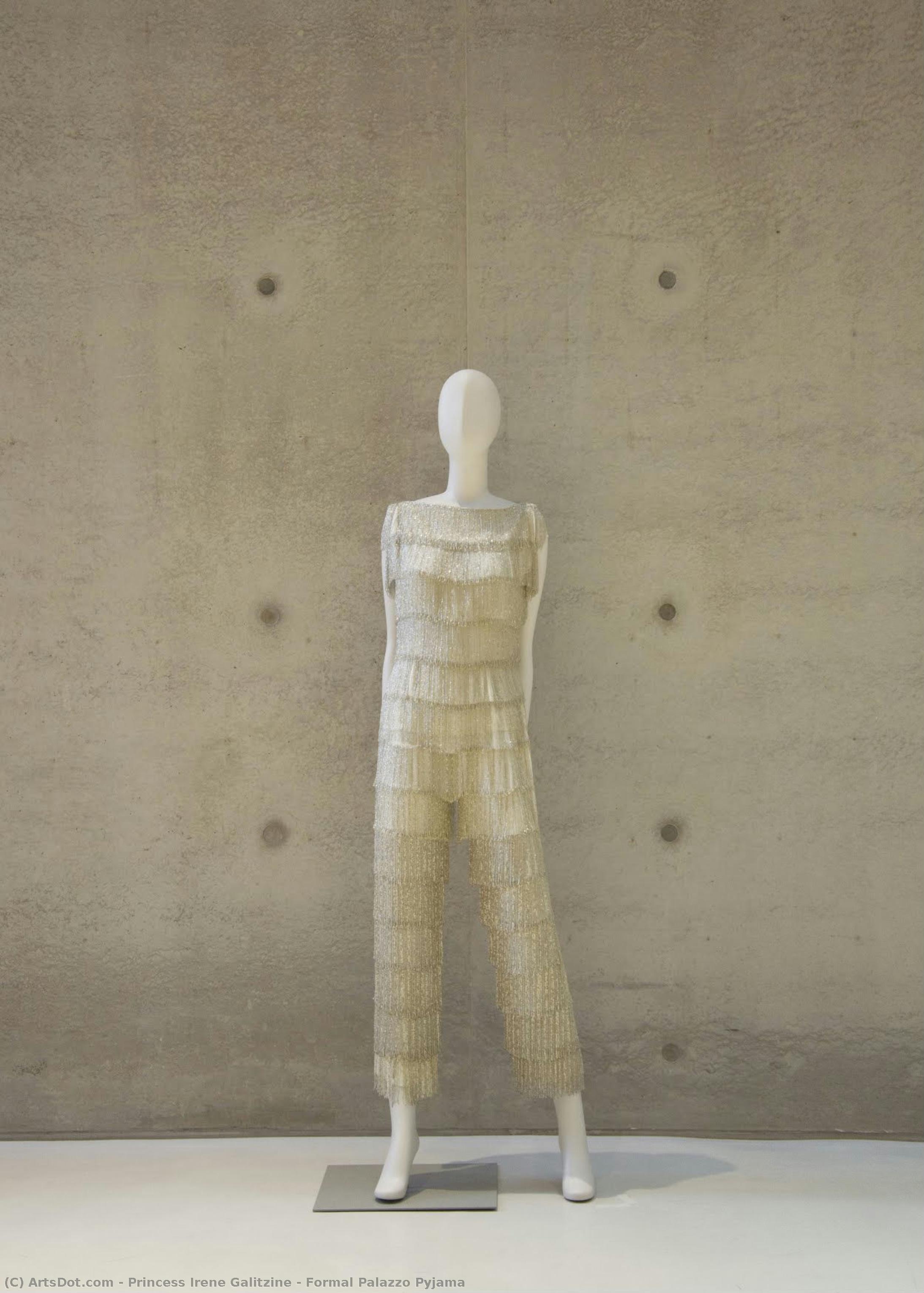
The Palazzo Pyjama: A Vision of Fluid Elegance
Princess Irene Galitzine’s “Formal Palazzo Pyjama” isn't merely a dress; it’s an emblem of the 1960s aesthetic—a testament to daring silhouettes and luxurious fabrics that captured the spirit of a generation. Born in Tbilisi, Georgia, amidst the upheaval of post-war Europe, Galitzine possessed an innate understanding of how fashion could communicate emotion and aspiration. Her formative years instilled a profound appreciation for both Russian aristocratic heritage and European artistic influences, shaping her distinctive approach to design. This painting encapsulates precisely that ethos: a celebration of effortless sophistication achieved through meticulous craftsmanship.
- Subject Matter: The artwork depicts a mannequin draped in a striking crimson silk palazzo pyjama ensemble. The dress features voluminous trousers that cascade down from the waistline, creating an illusion of movement and grace—a deliberate departure from the restrictive fashions of previous decades.
- Style: Galitzine’s style is characterized by its sculptural quality – she sought to elevate clothing beyond mere practicality, transforming it into a form of art. The palazzo pyjama embodies this principle perfectly, prioritizing dramatic drapery and fluid lines over conventional tailoring.
- Technique: Executed in oil paint on canvas, the painting demonstrates Galitzine’s mastery of chiaroscuro—the skillful manipulation of light and shadow—to accentuate the fabric's texture and create a sense of depth. The artist’s meticulous brushstrokes capture the subtle sheen of silk and convey an impression of luxurious materiality.
Historical Context: Challenging Conventions
The palazzo pyjama emerged during a period of significant social change, as women began to assert their independence and embrace bolder expressions of femininity. It represented a rebellion against the corseted silhouettes that had dominated fashion for decades, signaling a move towards greater freedom of movement and comfort.
Influence: The palazzo pyjama gained considerable renown thanks to its endorsement by influential figures such as Jackie Kennedy Onassis and Audrey Hepburn—icons whose style choices resonated globally. Galitzine’s creation became synonymous with glamour and elegance, cementing its place in fashion history.
Symbolism: Fluidity and Grace
The palazzo pyjama's flowing silhouette symbolizes liberation from constraints and embodies the aspiration for effortless beauty—a core theme of Galitzine’s artistic vision. The crimson hue adds to this symbolism, representing passion, vitality, and regal splendor.
Reflection: Beyond its aesthetic appeal, the palazzo pyjama speaks to a broader cultural shift toward embracing fluidity and grace as ideals of femininity. It serves as a reminder that fashion can be more than just ornamentation; it can convey profound emotional and intellectual ideas.
Emotional Impact
Viewing “Formal Palazzo Pyjama” evokes feelings of nostalgia for the opulent glamour of the 1960s—a time remembered for its optimism, creativity, and daring experimentation. The painting’s masterful execution inspires admiration for Galitzine's artistic skill and celebrates the enduring power of fashion to captivate and enchant.
Legacy: Galitzine’s palazzo pyjama continues to inspire designers today, demonstrating that timeless elegance can be achieved through innovative silhouettes and luxurious fabrics—a legacy that transcends generations.