The
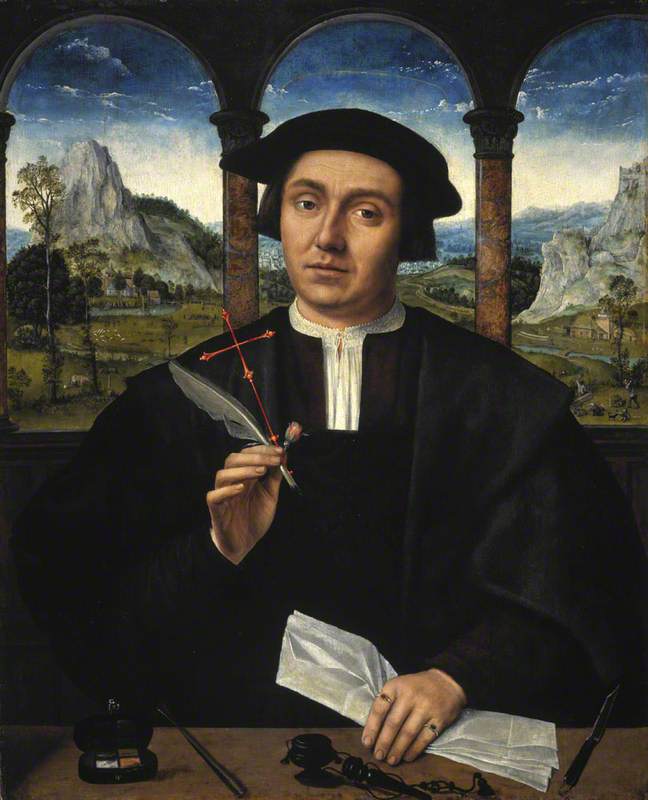
Portrait of a Man is a captivating painting created by the renowned Flemish artist
Quinten Massys in 1520. This oil on panel artwork measures 80 x 65 cm and is housed at the
National Galleries of Scotland in the United Kingdom. The painting features a man wearing a black robe with a white collar, sporting a beard and mustache, and holding a book in his hand.
Composition and Symbolism
The composition of the painting is notable for its use of symbolism. The two pillars in the background represent stability and strength, while the clock at the top left corner symbolizes the passing of time. The open book on the center of the image is a significant element, as it highlights the importance of knowledge and learning. The man's attire and demeanor suggest that he is a scholar or a member of the clergy.
Key elements of the painting include:
- The use of chiaroscuro to create depth and volume
- The intricate details on the man's clothing and accessories
- The subtle expression on the man's face, conveying a sense of introspection
The
Workshop Of Quinten Massys was known for producing high-quality paintings, and this work is no exception. As seen in other works by
Quinten Massys, such as those available on
ArtsDot.com, the artist's attention to detail and mastery of composition are evident.
Artistic Significance
The
Portrait of a Man is a significant work in the context of Northern Renaissance art. It showcases
Quinten Massys' skill in capturing the essence of his subjects and creating a sense of depth and atmosphere. For more information on
Quinten Massys and his works, visit
ArtsDot.com. To learn more about the
National Galleries of Scotland, where the painting is housed, check out their collection on Wikipedia:
National Galleries of Scotland.
The
Portrait of a Man by
Quinten Massys is a masterpiece that continues to captivate art lovers and scholars alike. Its intricate details, symbolism, and composition make it a significant work in the history of art.