The Raw Essence of Creation: A Glimpse into Raja Ravi Varma’s Preparatory Vision
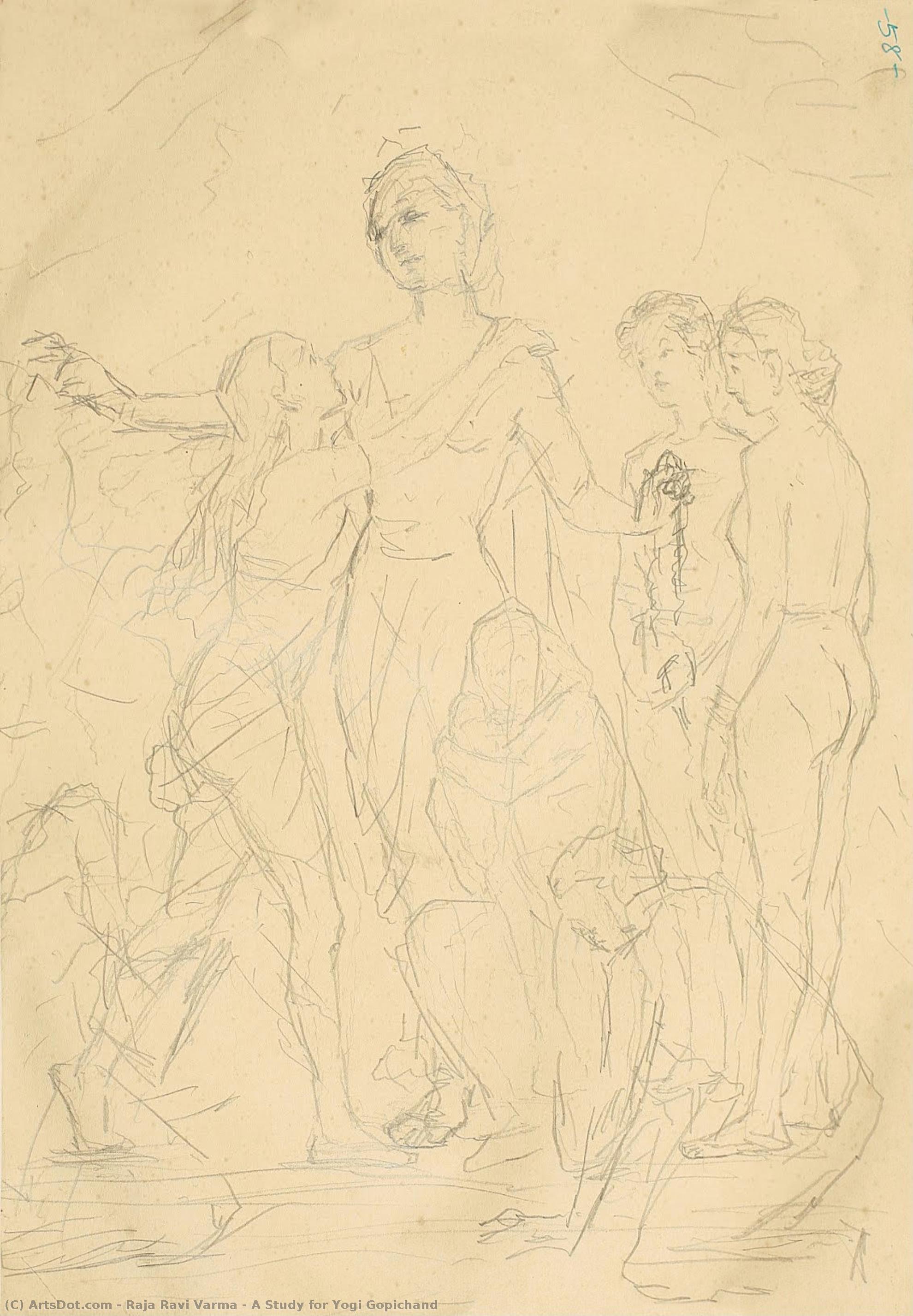
In the quiet, intimate space of an artist's studio, before the grand narratives of mythology are draped in rich oils and vibrant pigments, there exists a moment of pure, unadulterated discovery. A Study for Yogi Gopichand captures this fleeting, vital stage of the creative process. This exquisite pencil sketch by the legendary Indian master Raja Ravi Varma serves as a window into the artist's mind, revealing the skeletal grace and rhythmic movement that would later form the foundation of his much more famous, finished masterpieces. Unlike his polished lithographs and oil paintings that brought Hindu deities to the masses, this preparatory study offers an unfiltered look at the artist’s technical prowess and his profound fascination with the human form.
The composition is a mesmerizing dance of graphite on paper, where five nude female figures are clustered in a way that suggests both spontaneous movement and deliberate anatomical exploration. There is no rigid hierarchy here; instead, the figures overlap and intertwine, creating a sense of organic density. The lines are loose, expressive, and remarkably confident, defining the soft contours of the bodies without the need for heavy shading or distracting detail. Through varying pressures of the pencil, Varma achieves a subtle tonal depth that breathes life into the paper, making the skin appear supple and the gestures feel heavy with intention. It is a masterclass in line drawing, where the simplicity of the medium belies the complexity of the anatomical study.
A Bridge Between Tradition and Academic Realism
To understand this sketch, one must understand the revolutionary position Raja Ravi Varma held in the history of Indian art. He was a pioneer who dared to marry the academic realism of European oil painting with the soulful, iconographic traditions of India. In this study, we see the seeds of that fusion. While the subject matter—the human figure in motion—echoes the classical studies of Western masters, the underlying spirit remains deeply connected to the fluid aesthetics found in Indian classical traditions. The sketch lacks the heavy shadows of Baroque art, opting instead for a diffuse, even light that emphasizes the silhouette and the rhythmic flow of the limbs.
The historical context of the piece is equally compelling. As a preparatory work for Yogi Gopichand, this drawing was the laboratory where Varma worked out the complexities of pose and weight. The story of Gopichand—a prince who renounced his kingdom in pursuit of spiritual enlightenment under the guidance of his mother—is one of profound transformation and asceticism. While this specific sketch focuses on the sensuality of form, it represents the essential groundwork required to eventually depict the heavy emotional weight of renunciation and divine devotion found in the final painting.
An Invitation for the Discerning Collector
For art lovers and collectors, A Study for Yogi Gopichand offers something far more rare than a finished portrait: it offers an encounter with the artist's raw intellect. There is an undeniable intimacy in viewing a work that was never intended for public display, but rather for the private struggle of creation. The monochromatic palette and the visible texture of the paper provide a sophisticated, understated elegance that makes this piece a versatile choice for high-end interior design. It possesses a timeless quality that complements both contemporary minimalist spaces and more traditional, richly textured environments.
Integrating a high-quality reproduction of this study into a collection or a curated space brings with it a sense of academic depth and historical reverence. It serves as a conversation piece that invites viewers to contemplate the labor behind the legend. Whether you are an interior designer seeking to add a layer of intellectual sophistication to a room, or a collector drawn to the foundational moments of Indian modernism, this sketch stands as a testament to the enduring power of the artist's first stroke.