A Moment Captured: The Intimacy of Self-Reflection
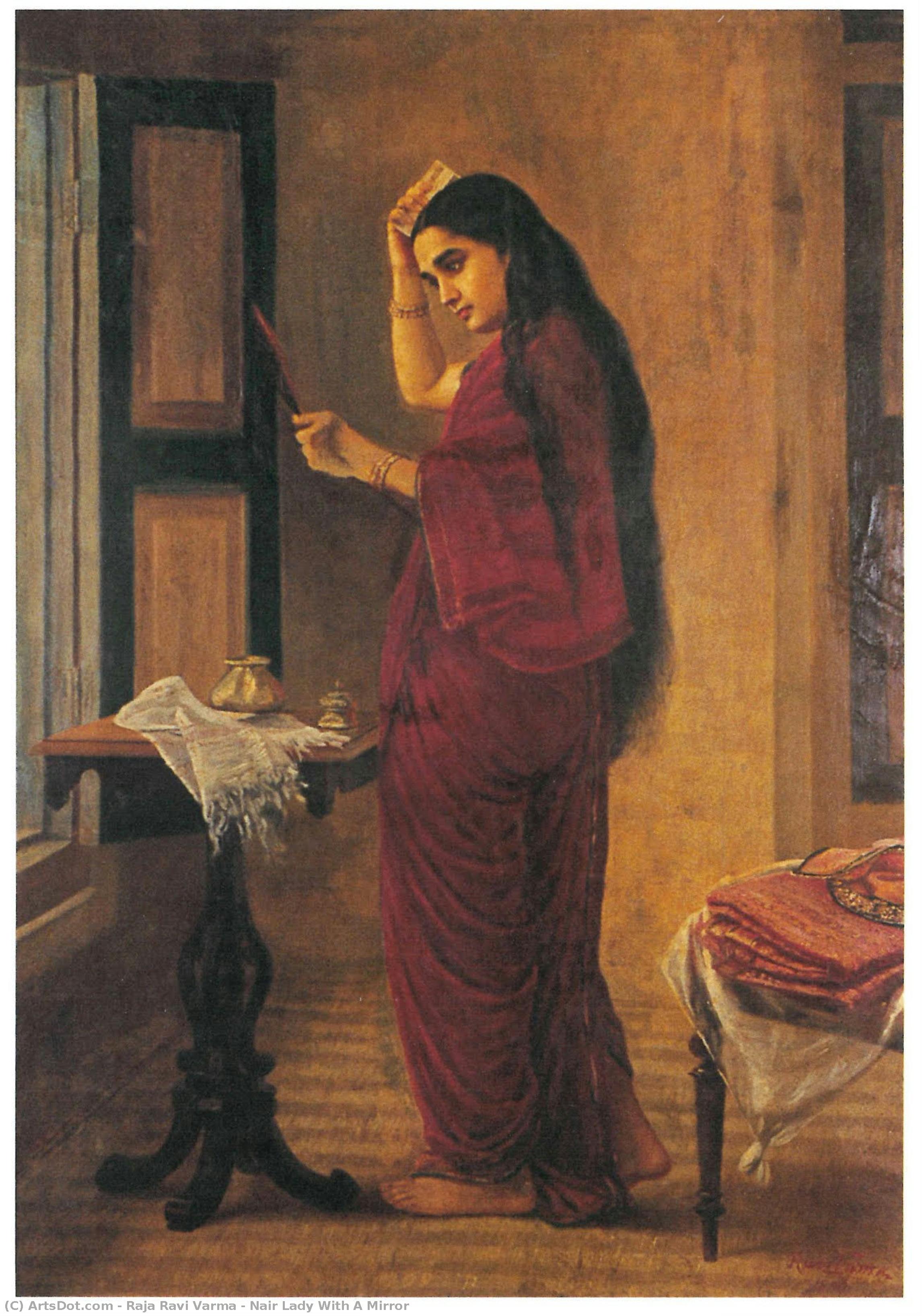
This exquisite portrait, titled Nair Lady With A Mirror, invites the viewer into an intimate, almost whispered moment of personal contemplation. It captures a lady caught in the gentle ritual of grooming—the act of brushing her hair while gazing into the reflective surface before her. Raja Ravi Varma, master chronicler of everyday Indian life imbued with classical grace, has gifted us more than just a likeness; he offers a window into domestic tranquility from the turn of the 20th century. The scene is richly composed, suggesting the private sanctuary of a well-appointed bedroom, complete with visible drapery at a nearby window and the soft presence of decorative vases flanking the space.
The Artistry of Raja Ravi Varma
To appreciate this work is to understand the genius of its creator. Raja Ravi Varma (1848–1906) stands as a monumental figure in Indian art history, celebrated for his unparalleled ability to synthesize the rigorous techniques of European academic painting with the vibrant narratives and deep cultural resonance of Indian aesthetics. His style is instantly recognizable: a seamless marriage of Western realism and indigenous romanticism. While he often painted mythological grandeur, as seen in his depictions of Hindu deities, works like this ground his mastery in the relatable human experience. He possessed an uncanny gift for rendering the feminine form with both dignity and delicate allure.
Symbolism and Setting: Domestic Grace
The mirror itself is a potent symbol throughout art history—it represents self-knowledge, vanity, and the boundary between the inner world and outward appearance. Here, combined with the act of combing hair, it speaks to a quiet moment of self-assessment. The setting, hinted at by the bed in the background and the patterned curtains, anchors the piece firmly within the realm of domesticity. These elements transform what could be a simple portrait into a narrative study of feminine poise. It is an ode to the rituals that define personal space and beauty.
Technique and Emotional Resonance for the Modern Collector
The painting’s execution, dating from 1894, showcases Varma's meticulous attention to detail—from the sheen on the comb to the soft folds of the fabric. The light seems to emanate naturally within the room, highlighting the subject’s features and lending an ethereal glow to the entire composition. For those seeking art that breathes history into a modern interior, this piece offers profound emotional depth without sacrificing elegance. Owning a reproduction allows one to curate a space filled with timeless romance and sophisticated cultural narrative, making it a breathtaking focal point for any drawing-room or master suite.