Ralph Earl’s “Lady Williams and Child”: A Portrait of Domesticity and Colonial Grace
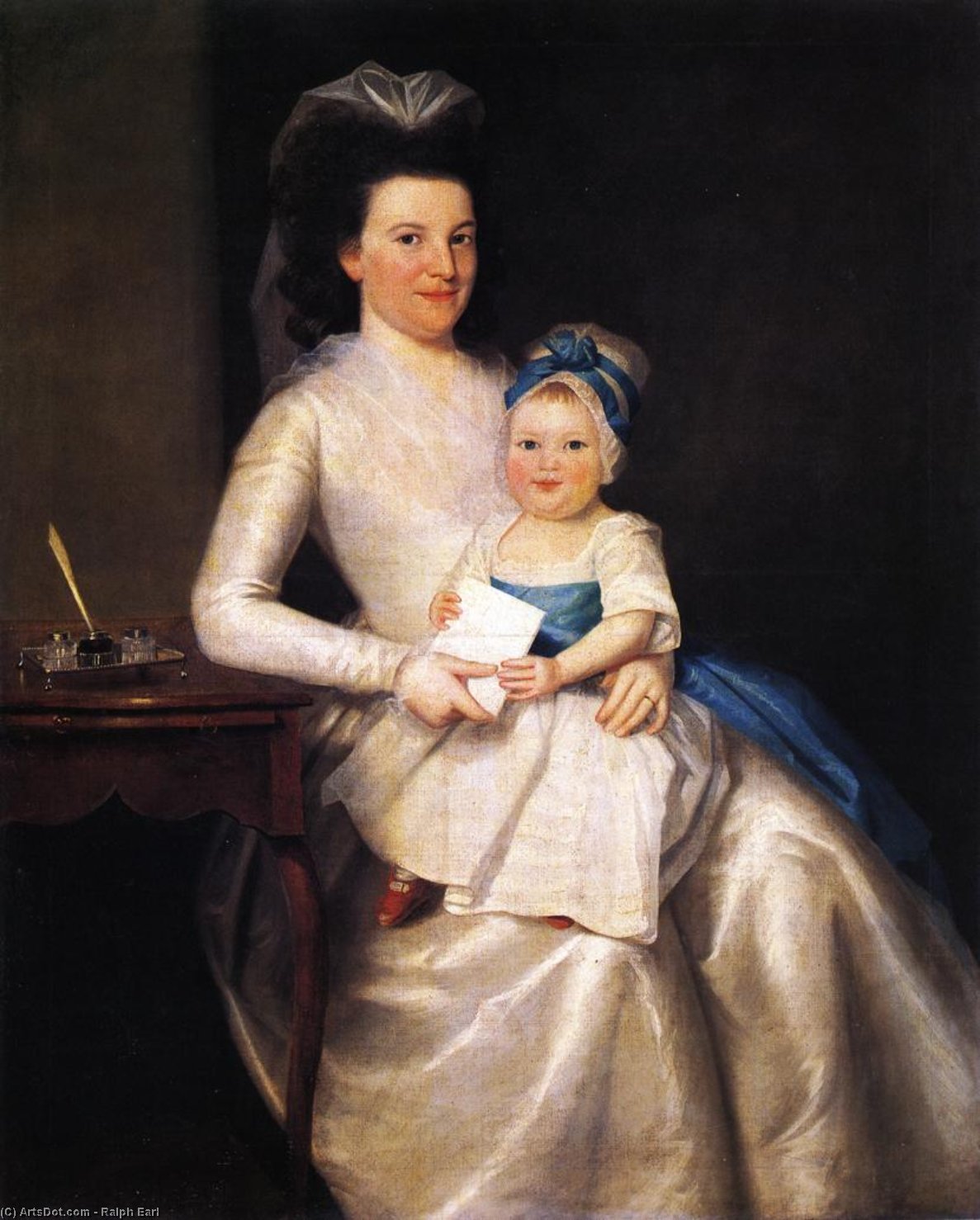
Ralph Earl's "Lady Williams and Child," painted in 1783, is more than just a portrait; it’s a meticulously crafted window into the domestic life of colonial America. The painting depicts a woman, presumed to be Lady Williams, holding her child close within an intimate tableau set against a subtly detailed backdrop. Earl's skill lies not merely in his ability to capture likeness but in his profound understanding of conveying mood and social standing through gesture, light, and carefully chosen objects. The scene unfolds with a quiet dignity, radiating a sense of warmth and familial affection that belies the complexities of the era.
Earl’s style leans heavily towards the Neoclassical tradition, influenced by his time spent in London's artistic circles. However, he departs from strict formality, imbuing the scene with a palpable sense of immediacy. The composition is balanced and restrained, drawing the eye to Lady Williams and her child as the central focus. Notice how Earl employs soft, diffused light – likely achieved through layering glazes – to illuminate their faces and clothing, creating a gentle glow that softens the edges of the scene and evokes a feeling of serenity. The background, while present, is deliberately understated, serving primarily to anchor the figures within a believable domestic setting rather than competing for attention.
A Glimpse into Colonial Society
Understanding “Lady Williams and Child” requires considering its historical context. Painted during a period of significant social and political upheaval in America – marked by growing tensions between colonists and the British Crown – the portrait offers a poignant glimpse into the stability and continuity of family life within colonial society. The inclusion of the child is particularly noteworthy, symbolizing hope for the future and reinforcing the importance of lineage and tradition. The attire worn by Lady Williams—a simple yet elegant gown with a delicate blue ribbon—suggests her status as a woman of means, comfortable within her social circle. The presence of the book and cup on the table subtly allude to intellectual pursuits and the values associated with a refined household.
Ralph Earl’s background is fascinating in itself. Born in Shropshire, England, he emigrated to America and quickly established himself as a portraitist, capturing the likenesses of prominent figures across the colonies. His work reflects both European artistic influences and an acute awareness of American visual culture. He was known for his ability to portray character with remarkable insight, often imbuing his subjects with a sense of personality that extended beyond mere physical representation. This is evident in Lady Williams’ gentle expression and the tender way she holds her child – conveying a deep connection and affection.
Symbolism and Emotional Resonance
Beyond its surface details, “Lady Williams and Child” is rich in symbolic meaning. The blue ribbon around both the woman's neck and the child's represents purity, loyalty, and perhaps even divine favor—common motifs in portraiture of this era. The book on the table could symbolize education, knowledge, or the importance of cultivating a well-rounded character. More subtly, the arrangement of objects – the cup, the pen, the book – speaks to the values of hospitality, contemplation, and intellectual engagement that were highly prized within colonial households.
The painting’s emotional impact is profound. It evokes a sense of quiet intimacy, warmth, and familial love—qualities that resonated deeply with viewers during its time and continue to resonate today. Earl masterfully captures the tenderness between mother and child, creating an image that speaks to universal themes of family, connection, and the enduring beauty of domestic life. The painting’s ability to transport us back in time and connect us to a bygone era is a testament to Earl's artistic skill and his profound understanding of human emotion.
A Legacy of Colonial Portraiture
“Lady Williams and Child” stands as a remarkable example of colonial portraiture, showcasing Ralph Earl’s technical proficiency and his ability to capture the essence of his subjects. Its enduring appeal lies in its ability to transcend the constraints of time and place, offering viewers a glimpse into the lives and values of those who shaped early America. Reproductions of this captivating work continue to be appreciated for their beauty, historical significance, and emotional resonance – a testament to Earl’s lasting contribution to American art history.