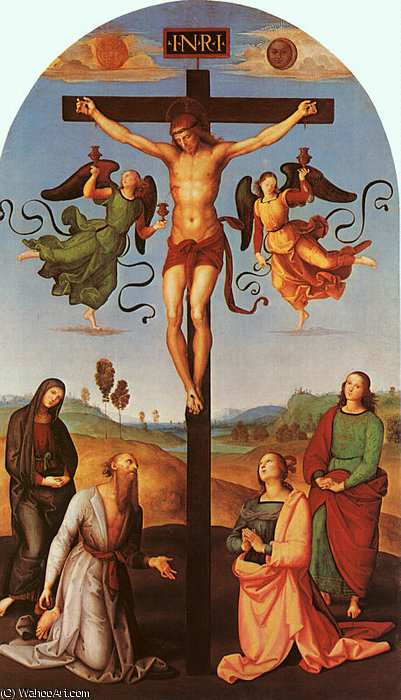
Christ on the Cross with the Virgin, Saint Jerome,
Raphael (1483-1520): A High Renaissance master renowned for his serene Madonnas, architectural genius, and iconic works like 'The School of Athens'. Explore his Urbino beginnings & artistic legacy.
A Testament to Faith: Raphael’s Christ on the Cross with the Virgin, Saint Jerome
Raphael Sanzio da Urbino's *Christ on the Cross with the Virgin, Saint Jerome,* stands as a cornerstone of High Renaissance artistic achievement—a poignant meditation on faith and divine compassion rendered in breathtaking detail. Painted circa 1507-1508 during his formative years in Rome, this monumental altarpiece exemplifies Raphael’s mastery of composition, color palette, and anatomical precision, cementing his reputation as one of the era's foremost artists. Commissioned for Cardinal Aldobrandini’s chapel in St. Peter’s Basilica, it represents more than just a depiction of biblical iconography; it embodies the humanist ideals that underpinned Renaissance culture—a belief in human dignity and an aspiration to capture the sublime beauty of God’s creation.
Style and Technique: Harmonious Balance and Ideal Beauty
Raphael's approach to painting is characterized by remarkable balance and serenity, reflecting the prevailing aesthetic sensibilities of his time. Departing from the dramatic chiaroscuro favored by Michelangelo—a stylistic choice driven by a desire for emotional intensity—Raphael opted for a softer tonal range, prioritizing luminous color harmonies that convey an atmosphere of profound contemplation. The artist skillfully employs sfumato, a technique pioneered by Leonardo da Vinci, to subtly blend contours and soften edges, creating an illusion of depth and enhancing the ethereal quality of the figures. Raphael’s meticulous attention to anatomical accuracy—evident in the musculature of Christ's body and the graceful drapery of Mary—demonstrates his unwavering commitment to classical ideals of beauty and proportion.
Historical Context: The Papal Patronage and Renaissance Spirituality
The painting emerged during a period of significant artistic innovation within Rome, fueled by papal patronage and a renewed interest in Classical art and philosophy. Pope Julius II’s ambitious program to transform St. Peter's Basilica into a symbol of papal grandeur spurred artists like Raphael to produce works that celebrated Christian faith and conveyed spiritual profundity. The altarpiece aligns perfectly with the humanist preoccupation with human experience—particularly emotion—while simultaneously upholding the theological convictions of the Renaissance. It reflects the broader cultural movement toward elevating human intellect and artistic expression as pathways to understanding God’s divine plan.
Symbolism: Angels, Light, and Divine Mercy
The composition itself is laden with symbolic significance. The central figure of Christ dominates the canvas, embodying sacrifice and redemption—a motif prevalent throughout Christian iconography. Surrounding him are angels, representing divine grace and guardianship, their wings outstretched in gestures of compassion and protection. Mary Magdalene kneels at Jesus’s feet, symbolizing humility and devotion—a poignant reminder of humanity's yearning for divine mercy. The radiant light emanating from Christ illuminates the scene, signifying God’s illumination and illuminating the path to salvation. Raphael’s masterful use of color contributes to this symbolic narrative, reinforcing the painting’s overarching message of hope and spiritual transcendence.
Emotional Impact: A Vision of Heavenly Grace
Ultimately, *Christ on the Cross with the Virgin, Saint Jerome,* transcends mere visual representation; it aspires to evoke a profound emotional response in the viewer. Raphael's serene depiction captures the essence of Christian piety—a solemn reverence for divine majesty tempered by compassion for human suffering. The painting’s harmonious colors and balanced composition instill a sense of tranquility and inspire contemplation on themes of faith, grace, and redemption. It remains an enduring testament to Raphael’s artistic genius and his ability to translate theological concepts into visual splendor—a masterpiece that continues to resonate with audiences centuries after its creation.