A Divine Tableau: Unveiling Raphael’s Coronation of the Virgin
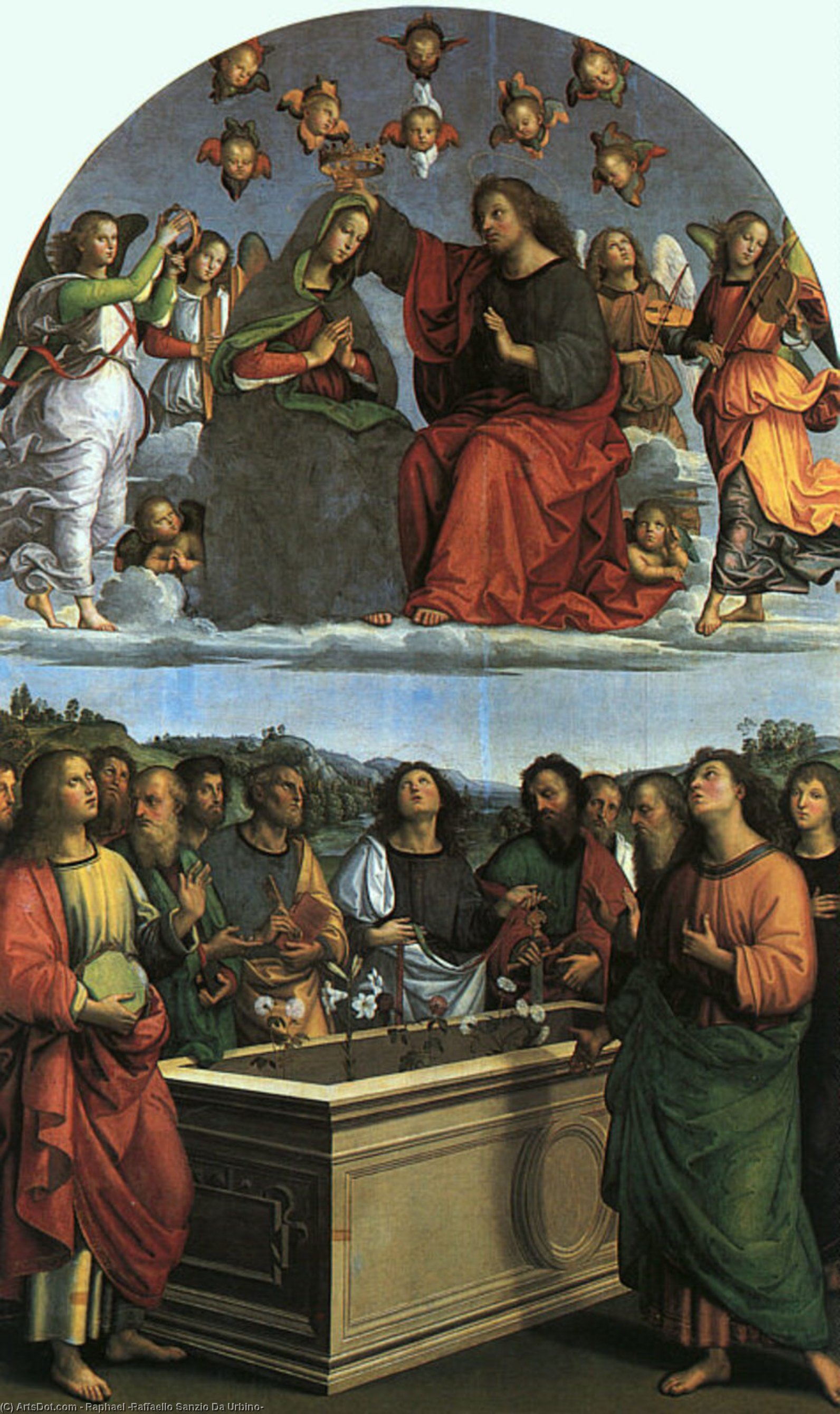
Raphael’s Coronation of the Virgin, more formally known as the Oddi Altarpiece, is not merely a painting; it's an immersive journey into the heart of Renaissance faith and artistic mastery. Commissioned for the Oddi family chapel in Perugia around 1502-1504, this altarpiece transcends its original devotional purpose to stand as a testament to Raphael’s unparalleled ability to synthesize complex theological concepts with breathtaking beauty and harmonious composition. It's a work that speaks volumes about the High Renaissance ideal of balance, order, and the glorification of Mary as Queen of Heaven – a vision rendered in luminous color, precise perspective, and an almost palpable sense of serenity.

The painting’s structure is immediately captivating, divided into two distinct yet seamlessly integrated registers. Above, Christ, depicted with a serene dignity, bestows upon Mary a radiant crown – an act symbolizing her divine elevation and assumption into heaven. Angels, rendered in exquisite detail, participate in the ceremony, their instruments creating a celestial chorus that elevates the scene to a realm of ethereal beauty. Below this heavenly tableau unfolds a terrestrial narrative: the apostles gather around the empty tomb of Mary, a poignant reminder of her earthly life culminating in her glorious ascension. This juxtaposition – heaven and earth, earthly mortality and divine immortality – is characteristic of Renaissance art’s desire to bridge the gap between the temporal and the eternal.
The Predella: A Window into the Virgin's Life
What truly elevates this altarpiece is its predella—a series of three small panels that extend outwards from the main scene, offering a glimpse into key moments from Mary’s life. These miniature masterpieces – depicting “The Annunciation,” “The Adoration of the Magi,” and “Presentation in the Temple” – serve as crucial contextual elements, reinforcing Mary's central role as both mother and queen. Raphael masterfully utilizes perspective and color to imbue each scene with a sense of immediacy and emotional resonance, drawing the viewer deeper into the narrative. The detail in these panels is remarkable, showcasing Raphael’s meticulous attention to every fold of fabric, expression on a face, and element of the landscape.
The choice of these particular scenes is significant. “The Annunciation” highlights Mary's role as the vessel of divine grace, “The Adoration of the Magi” emphasizes her royal status, and “Presentation in the Temple” underscores her maternal devotion. Together, they create a comprehensive portrait of Mary’s life, culminating in her coronation – a celebration of her ultimate triumph over earthly limitations and her ascension to eternal glory.
A Masterclass in Renaissance Technique
Raphael's skill is evident in every brushstroke. The use of *sfumato*, a technique pioneered by Leonardo da Vinci, creates subtle gradations of light and shadow, lending the figures an almost ethereal quality. The color palette is rich and harmonious, dominated by warm reds, golds, and blues – colors associated with royalty, divinity, and heavenly light. Furthermore, Raphael’s mastery of perspective—particularly evident in the depiction of the landscape behind the apostles—is astonishing for its time, creating a sense of depth and realism that was revolutionary for Renaissance art. The composition itself is meticulously balanced, reflecting the High Renaissance ideal of harmony and order.
The altarpiece’s influence reverberates throughout subsequent generations of artists. Raffaello Sanzio da Urbino, Raphael's protégé, clearly absorbed many of his master’s techniques and compositional principles, as evidenced by his own works. The Coronation of the Virgin remains a cornerstone of Renaissance art history, demonstrating Raphael’s ability to seamlessly blend religious devotion with artistic innovation.
Bringing the Divine Home: Reproductions and Legacy
Today, this magnificent altarpiece resides in the Vatican Pinacoteca, offering visitors a rare opportunity to witness its splendor firsthand. However, ArtsDot offers exquisite, hand-painted reproductions that capture the essence of Raphael’s masterpiece, allowing you to bring this iconic work into your own home or office. Our skilled artisans meticulously recreate every detail—from the luminous colors and delicate brushstrokes to the intricate folds of fabric and expressions on the figures' faces—ensuring a faithful representation of Raphael’s original vision. Whether you are an art enthusiast, a collector, or simply seeking to add a touch of timeless beauty to your space, a ArtsDot reproduction of the Coronation of the Virgin is a treasured addition to any collection.
For more information on Raphael and his works, including this extraordinary altarpiece, please visit ArtsDot.com or explore the resources linked below for further insights into this remarkable artistic achievement.