A Quiet Intimacy Captured in Oil
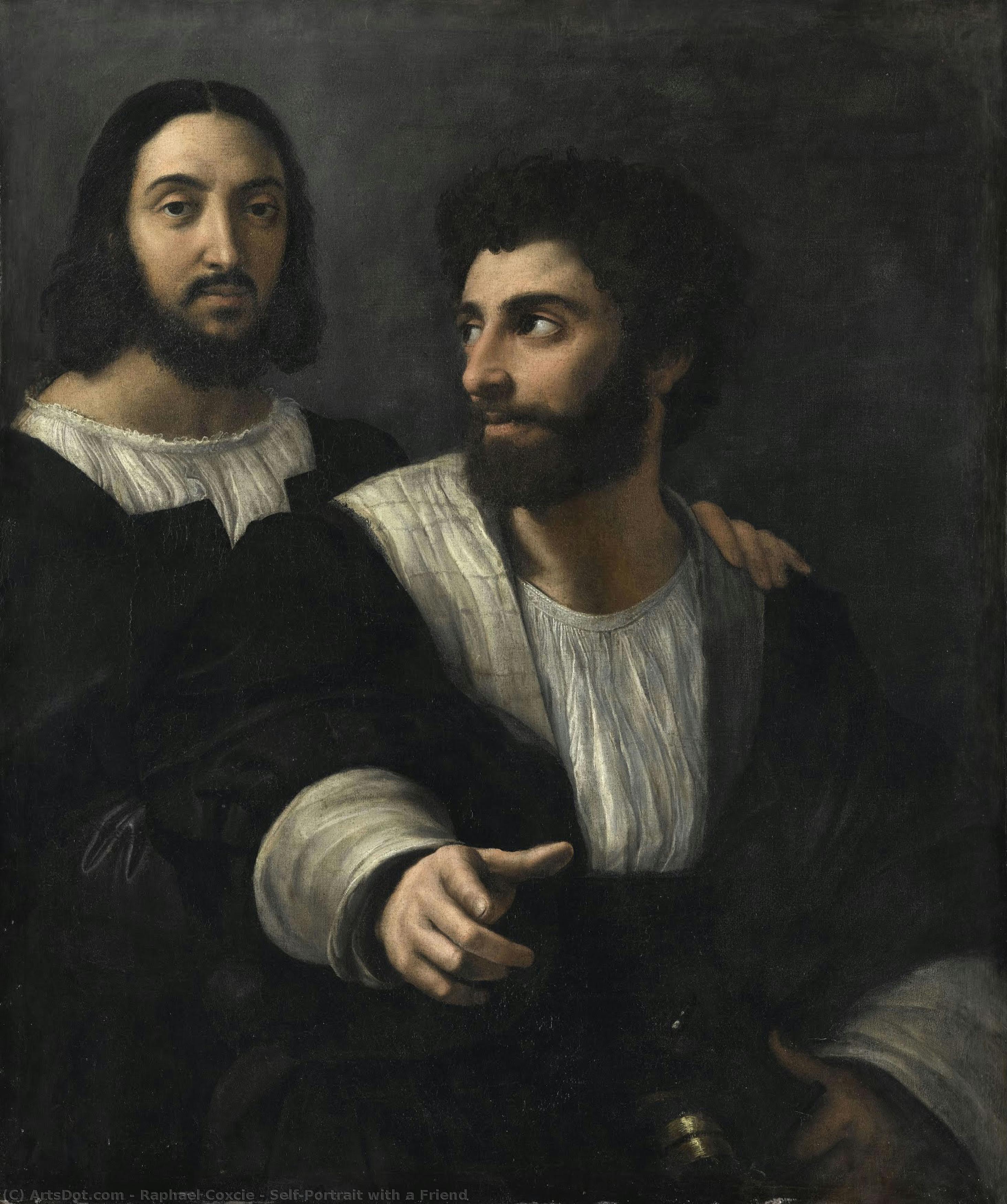
In the profound stillness of Self-Portrait with a Friend, we are invited into a private moment frozen in time by the Flemish master Raphael Coxcie. Created around 1519, this evocative work transcends the mere documentation of faces, offering instead a window into the deep emotional resonance of human connection. The composition is strikingly intimate; two men are positioned closely together, their arms draped casually yet affectionately over one another's shoulders. This physical closeness creates a sense of shared history and silent understanding, suggesting a bond that has weathered both time and experience. Against a dark, almost infinite void, the figures emerge with a startling presence, pulling the viewer into their quiet, introspective world.
The technical mastery displayed in this piece is a testament to the High Renaissance tradition. Coxcie employs a sophisticated chiaroscuro technique, where light and shadow dance across the subjects to sculpt their forms with remarkable three-dimensionality. A soft, directional light source from the left illuminates the contours of their faces and the subtle textures of their garments, while leaving much of the scene shrouded in a mysterious, velvety darkness. This dramatic contrast does more than just create depth; it directs our emotional focus toward the subtle expressions etched upon the men's features—eyes that gaze slightly away, hinting at a shared inwardness and a quiet, contemplative melancholy.
Mastery of Texture and Renaissance Elegance
For the discerning collector or interior designer, the allure of this painting lies in its exquisite palette and tactile quality. The color scheme is a sophisticated arrangement of muted, somber tones—deep browns, charcoal blacks, and creamy highlights—that lend the work an air of timeless dignity. Through the meticulous layering of oil paints on canvas, Coxcie achieves a surface that feels incredibly lifelike. One can almost sense the softness of the skin and the heavy, rhythmic folds of the fabric. The artist avoids harsh, jarring lines, opting instead for blended transitions that contribute to the painting's smooth, polished aesthetic.
Beyond its visual beauty, Self-Portrait with a Friend serves as a profound historical artifact. As an artist influenced by the legendary Raphael, Coxcie brings a sense of humanist idealism to this portrait, focusing on the psychological depth of his subjects rather than mere ornamentation. The painting captures the essence of Renaissance portraiture: the pursuit of realism intertwined with the exploration of the human soul. For those seeking to adorn a space with art that inspires reflection and exudes a sense of classical grandeur, this reproduction offers an unparalleled opportunity to possess a piece of history that speaks of enduring friendship and the quiet beauty of the human spirit.