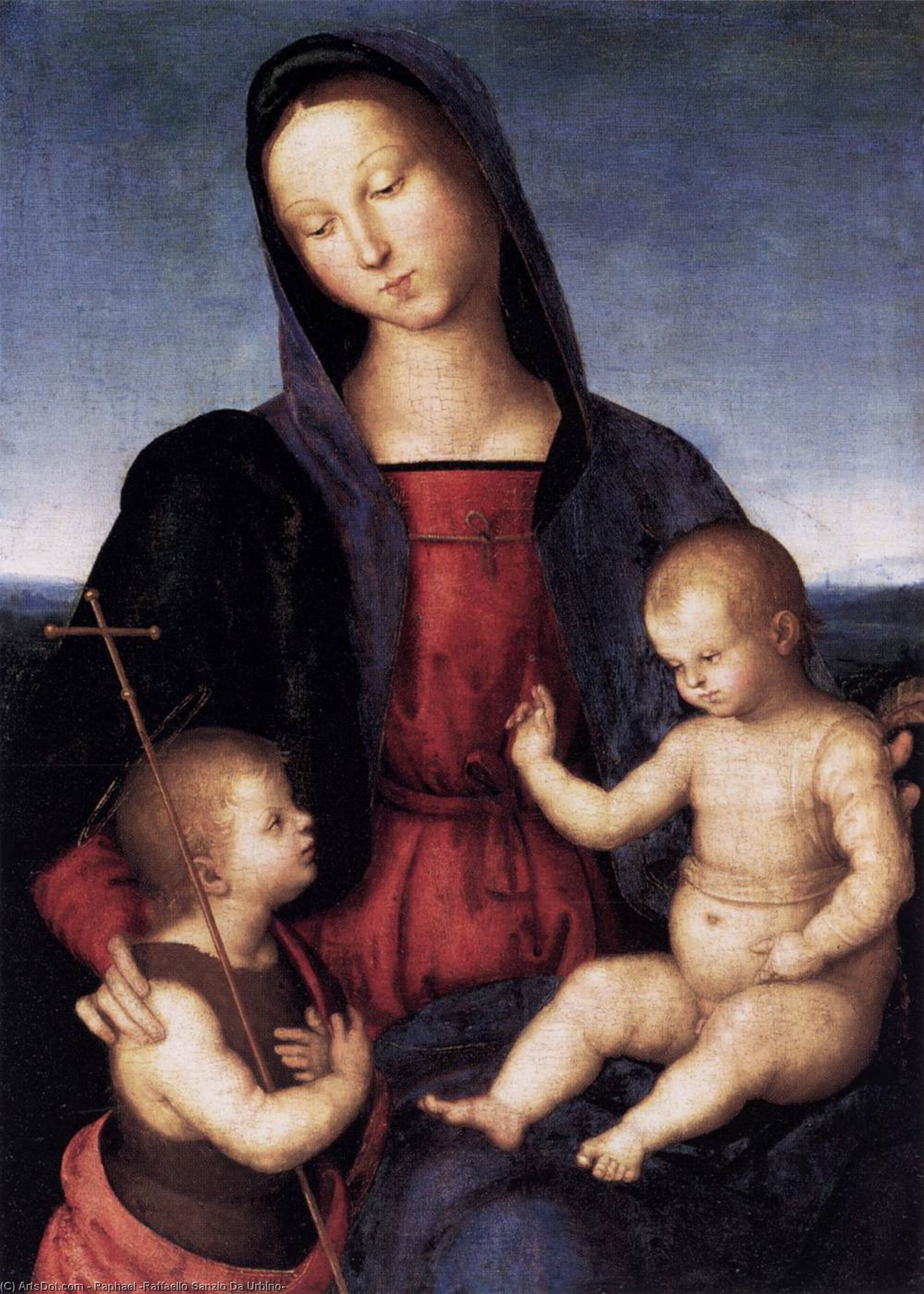
‘Diotalevi Madonna’ by Raphael (1503) embodies High Renaissance grace & serenity! Explore Luini & Ferrari frescoes at Santuario Madonna dei Miracoli, Venice.
Raphael (1483-1520): A High Renaissance master renowned for his serene Madonnas, architectural genius, and iconic works like 'The School of Athens'. Explore his Urbino beginnings & artistic legacy.
A Vision of Serenity: Raphael’s Diotalevi Madonna
The dawn of the High Renaissance was marked by a profound shift toward harmony, a movement where the raw energy of observation met the sublime heights of idealism. At the heart of this transformation stands Raphael, an artist whose name became synonymous with grace and clarity. His Diotalevi Madonna, painted around 1503, serves as a breathtaking testament to this era. In this early masterpiece, we witness a young Raphael, deeply influenced by the shadows of Leonardo da Vinci and the muscularity of Michelangelo, finding his own unique voice—one that prioritizes a tender, luminous equilibrium. The painting is not merely a religious depiction but a window into a world where the divine and the human exist in perfect, quiet unison.
The Architecture of Devotion
Upon first encounter, the viewer is struck by the exquisite structural balance of the composition. Raphael employs a classic pyramidal arrangement, a hallmark of Renaissance stability that guides the eye with effortless precision. At the apex sits the Virgin Mary, her presence both commanding and gentle. She cradels the Christ Child in one arm while Saint John the Baptist rests upon her lap, creating a triangular foundation that lends the scene an enduring sense of permanence. Flanking this central group are two ethereal angels, their wings outstretched and faces turned inward toward the holy figures. This inward gaze creates a closed loop of spiritual contemplation, inviting the observer to step into a sacred space of quiet guardianship. The composition is deceptively simple, yet every line and gesture is calculated to evoke a sense of profound peace.
Technique and Symbolic Radiance
The technical execution of the Diotalevi Madonna reveals Raphael’s burgeoning mastery over light and texture. Through the meticulous layering of oil glazes on panel, he achieves a velvety softness that breathes life into the skin of the infants and the heavy, regal drapery of Mary’s attire. The subtle interplay of light and shadow—the chiaroscuro—does more than just define form; it elevates the figures from mere flesh to symbols of eternal truth. Every element is steeped in meaning: Mary embodies the purity and humility essential to the Christian tradition, while the Christ Child represents the promise of divine grace. Even the crown upon her head serves as a silent herald of her celestial importance. For the collector or the designer, this painting offers more than visual beauty; it provides a focal point of profound symbolic depth, capable of anchoring a room with its quiet, commanding dignity.
An Enduring Legacy for the Modern Space
To possess a reproduction of such a significant work is to bring a piece of history’s most harmonious era into the contemporary home. The Diotalevi Madonna transcends its historical origins, offering an emotional resonance that remains potent centuries later. Its soft palette and balanced forms make it an ideal centerpiece for sophisticated interiors, providing a sense of calm and intellectual weight. Whether placed in a sunlit gallery or a curated private study, the painting’s ability to evoke tenderness and spiritual reflection makes it an incomparable treasure for those who seek art that speaks to the soul as much as it delights the eye.