Madonna del Cardellino: A Renaissance Masterpiece of Maternal Grace
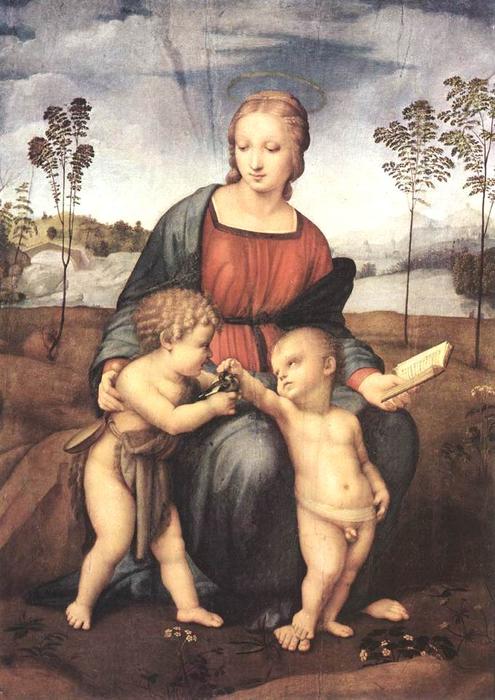
The Madonna del Cardellino, painted by Raphael (Raffaello Sanzio Da Urbino) in 1507, stands as a quintessential example of High Renaissance art. This captivating oil on panel painting, measuring 107 x 77 cm, resides within the esteemed Uffizi Gallery in Florence, Italy. More than just a depiction of religious figures, it's a study in composition, color, and emotional expression that embodies the ideals of its era.
Composition and Symbolism: A Harmonious Scene
The painting portrays the Virgin Mary tenderly holding a baby Jesus while Saint John the Baptist stands beside her. The setting is an idyllic outdoor landscape, with trees subtly visible in the background, creating a serene and natural ambiance. A fourth figure, positioned on the right side of the image, adds depth to the narrative. Notably, a book rests near the woman and children, suggesting intellectual pursuits and emphasizing the importance of knowledge within the scene. The most striking symbolic element is the goldfinch (cardellino in Italian) held by Saint John the Baptist. This bird carries multiple layers of meaning: it represents Christ's Passion through its habit of feeding amongst thorns, alludes to the parable of the sower, and symbolizes divine grace. The triangular composition, a hallmark of Renaissance art, further reinforces the sense of harmony and balance.
Artistic Technique and Style: Raphael’s Signature Brilliance
Raphael's mastery shines through in Madonna del Cardellino. His use of oil on panel allows for rich color saturation and subtle gradations that create a luminous effect. The figures are rendered with remarkable realism, yet retain an idealized beauty characteristic of the High Renaissance. The soft, blended brushstrokes contribute to the painting's overall sense of peace and tranquility. Raphael’s understanding of perspective is evident in the receding landscape, drawing the viewer into the scene. This work demonstrates a clear influence from earlier masters like Leonardo da Vinci and Perugino, while simultaneously establishing Raphael’s own distinct style – one defined by clarity, grace, and emotional depth.
Context within Raphael's Oeuvre: A Flourishing Career
Raphael was an exceptionally prolific artist whose works are celebrated worldwide. Madonna del Cardellino sits alongside other significant pieces in his oeuvre, including the Portrait of a Woman (La Muta), various portraits of men, and The Pregnant Woman, La Donna Gravida. Each work showcases Raphael’s versatility and skill in capturing diverse subjects and emotions with remarkable precision. His ability to blend realism with idealized beauty cemented his reputation as one of the greatest artists of all time.
Legacy and Relevance: A Timeless Masterpiece
Madonna del Cardellino is a cornerstone of Renaissance art, profoundly influencing subsequent generations of artists. Its harmonious composition, symbolic richness, and emotional resonance continue to captivate viewers today. It serves as a testament to Raphael’s genius and the enduring power of High Renaissance ideals. For those seeking to appreciate the beauty and significance of this masterpiece, or to bring its timeless elegance into their own homes through a hand-painted reproduction, it remains an unparalleled source of inspiration.
- Artist: Raphael (Raffaello Sanzio Da Urbino)
- Painting Title: Madonna del Cardellino
- Museum: The Uffizi Gallery
- Date: 1507
- Medium: Oil on Panel
- Size: 107 x 77 cm