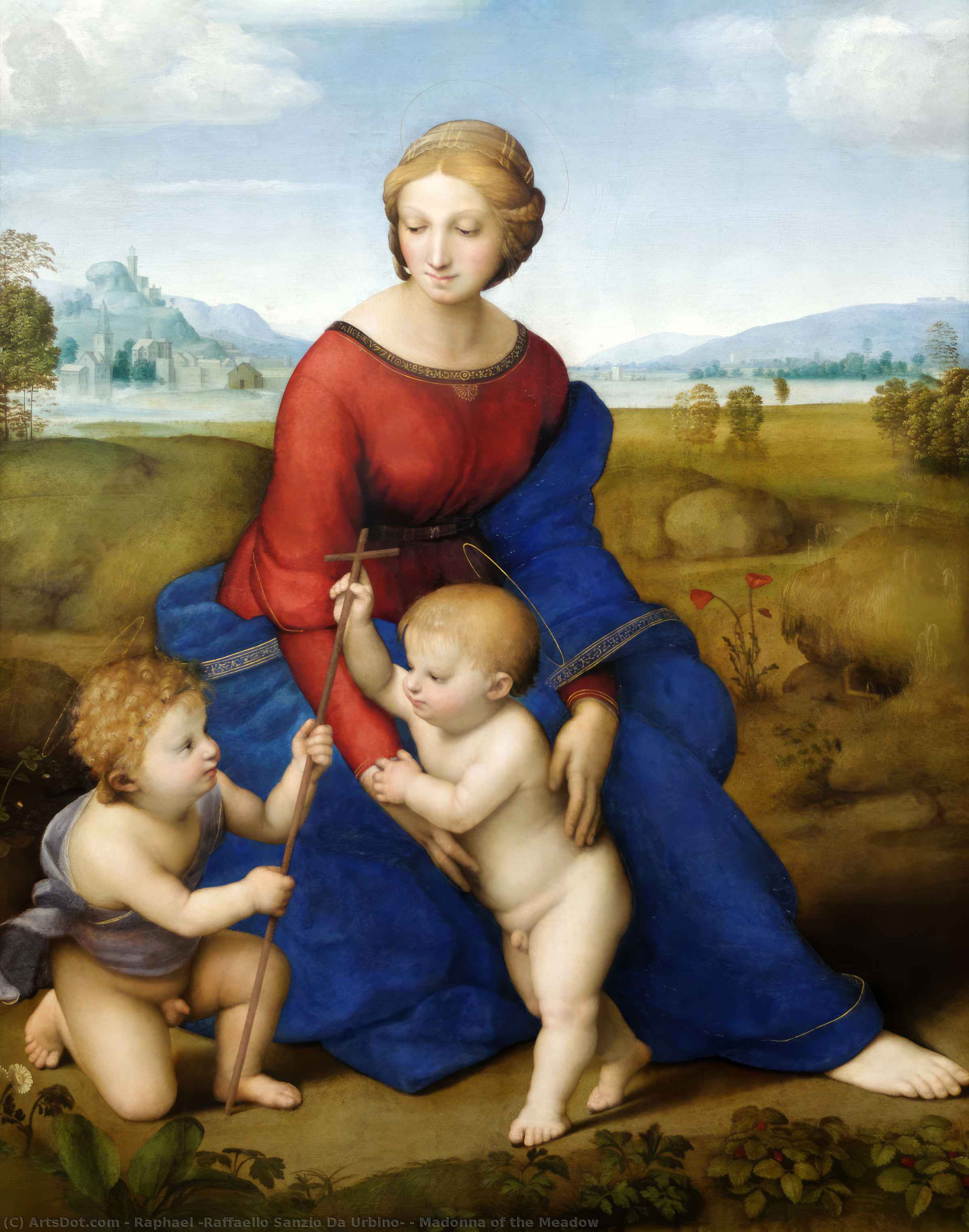
Explore Raphael’s ‘Madonna of the Meadow’ (1506). A High Renaissance masterpiece showcasing serene beauty & masterful technique. Discover its symbolism & timeless elegance.
Raphael (1483-1520): A High Renaissance master renowned for his serene Madonnas, architectural genius, and iconic works like 'The School of Athens'. Explore his Urbino beginnings & artistic legacy.
Explore Vienna's artistic soul at the Kunsthistorisches Museum! Discover masterpieces by Raphael, Rembrandt, Vermeer & ancient treasures from Egypt to Rome.
Exquisite Depiction of Divine Serenity
Immerse yourself in the tranquil beauty of this masterful Renaissance painting, where the sacred and natural worlds harmoniously converge. The scene captures the Madonna with Child, tenderly cradled in her arms, surrounded by two attentive angels. Set against a lush, idyllic landscape, the composition radiates calmness, spiritual contemplation, and divine grace. This artwork invites viewers to experience a moment of serene devotion, evoking feelings of tenderness, reverence, and awe.
Artistic Style and Technique
Created in 1506, this masterpiece exemplifies the High Renaissance’s pursuit of realism, balance, and harmony. The artist employs meticulous oil painting techniques, utilizing sfumato to achieve soft, luminous skin tones and subtle gradations of light and shadow. The composition is structured around a pyramidal form, emphasizing stability and focus on the Madonna as the central figure. Fine brushwork, organic shapes, and delicate contours highlight the naturalistic portrayal of the figures, while the atmospheric perspective lends depth to the distant landscape, creating a convincing three-dimensional space.
Historical Context and Artistic Significance
Produced during the height of the Italian Renaissance, this work reflects the era’s fascination with humanism, natural beauty, and spiritual symbolism. Raphael’s mastery in capturing both divine serenity and human emotion made him a leading figure in Renaissance art. The painting’s balanced composition and harmonious color palette—rich reds, deep blues, and soft flesh tones—embody the ideals of clarity, order, and beauty that defined this period. As a testament to Raphael’s skill, it remains a cornerstone of religious and artistic history.
Symbolism and Spiritual Depth
Every element in this painting is imbued with symbolic meaning. The Madonna’s gentle expression and graceful posture evoke maternal tenderness and divine love. The halos around the angels’ heads signify their sacred nature, while the lush landscape symbolizes paradise and spiritual elevation. The natural setting underscores the Renaissance belief in the harmony between the divine and earthly realms, inspiring viewers to reflect on the divine presence in everyday life.
Emotional Impact and Interior Inspiration
This artwork’s serene and uplifting aura makes it an ideal centerpiece for spaces dedicated to contemplation, inspiration, and beauty. Its timeless elegance complements both classical and modern interiors, adding a touch of spiritual refinement and artistic excellence. Whether displayed in a private collection, a sacred space, or an elegant living room, this high-quality reproduction promises to evoke emotional connection and admiration, inspiring a sense of peace and divine grace in all who behold it.