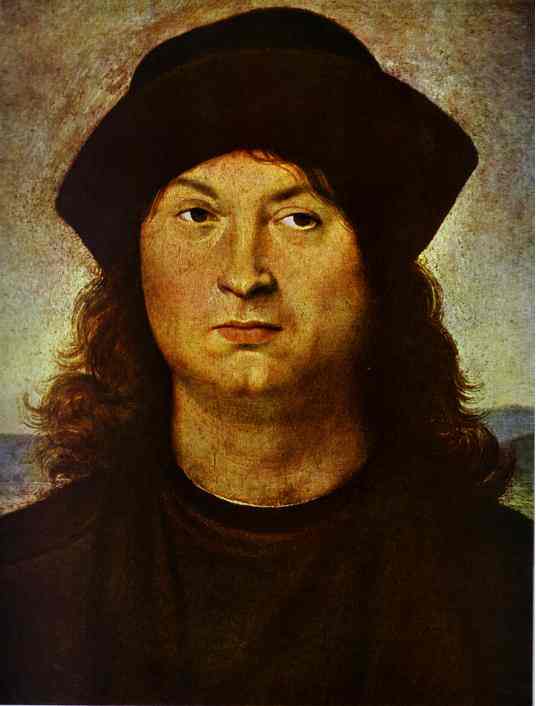
Discover Raphael's 'Portrait of a Man,' an early masterpiece showcasing the artist’s mastery & humanist ideals. Explore its history, style, and significance at ArtsDot.com.
Introduction to Raphael and his Artistic Style
Raphael (Raffaello Sanzio Da Urbino) was an Italian painter and architect born in 1483. He is considered one of the most influential artists of the High Renaissance, alongside
Leonardo da Vinci and
Michelangelo. Raphael's works are admired for their clarity of form, ease of composition, and visual achievement of Neoplatonic ideals.
The
Portrait of a Man is an early work by
Raphael (Raffaello Sanzio Da Urbino), created around 1502. This oil on wood painting measures 45 cm × 31 cm and features a man with an intense gaze, dressed in contemporary clothing. The portrait has been attributed to various artists over time, including
Hans Holbein and Perugino, but is now widely recognized as a work by Raphael.
Media and Style
Raphael (Raffaello Sanzio Da Urbino)'s
Portrait of a Man demonstrates the artist's mastery of oil painting techniques on wood. The portrait showcases his ability to capture the essence of his subject through subtle details, such as the man's facial expression and attire. Raphael's style is characterized by harmony, clarity, and grace, which are evident in this early work. You can find more information about
Raphael (Raffaello Sanzio Da Urbino) on
ArtsDot.com.
Conclusion
The
Portrait of a Man is an exceptional example of Renaissance portraiture, showcasing
Raphael (Raffaello Sanzio Da Urbino)'s talent for capturing the essence of his subjects. At
ArtsDot.com, you can find high-quality handmade oil painting reproductions of this masterpiece and many other works by Raphael and other great artists, such as those displayed at the
Galleria Borghese (Rome, Italy).