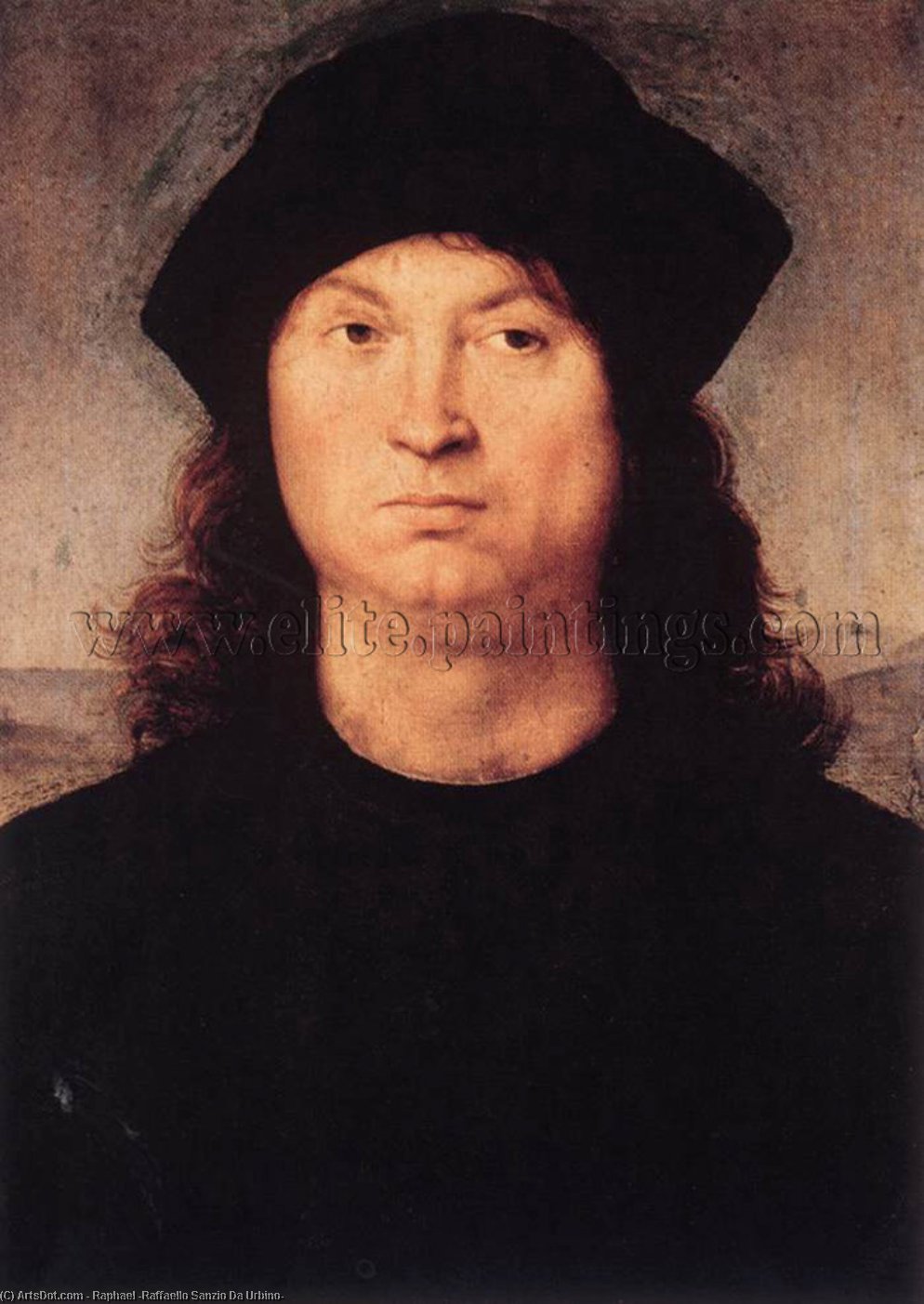
A Window into Renaissance Ideal Beauty: Raphael’s Portrait of a Man
Raphael Sanzio da Urbino's “Portrait of a Man,” painted circa 1513-14, stands as an emblem of High Renaissance artistic achievement—a testament to humanist ideals and masterful execution. More than just a likeness, it embodies the pursuit of perfection that characterized this transformative period in European art history.
- Subject Matter: The painting depicts a dignified gentleman, rendered with meticulous detail, gazing directly at the viewer. This confrontational gaze was a deliberate stylistic choice, reflecting Renaissance artists’ fascination with capturing psychological depth and conveying emotion through visual representation.
- Style & Technique: Raphael employed sfumato—a technique pioneered by Leonardo da Vinci—to achieve an ethereal softness that blends tonal transitions seamlessly. Layers of glaze create luminous surfaces, enhancing the portrait's realism while simultaneously imparting a sense of serenity and contemplative stillness. The artist skillfully utilized chiaroscuro, contrasting light and shadow to sculpt form and accentuate facial features.
- Historical Context: Created during Raphael’s prolific period in Rome—a city brimming with artistic patronage—the portrait aligns perfectly with the humanist revival championed by papal scholars like Erasmus and Pico della Mirandola. It embodies the Renaissance belief in human dignity and potential, mirroring the broader cultural preoccupation with classical ideals of beauty and virtue.
- Symbolism: The inclusion of a gold chain around the man’s neck symbolizes wealth and status—a common motif in portraits commissioned by wealthy patrons during the Renaissance. However, beyond material possessions, it speaks to an inner richness, representing spiritual contemplation and moral integrity – values central to humanist thought.
- Emotional Impact: The portrait transcends mere visual representation; it invites viewers into a moment of quiet introspection. Raphael’s masterful composition conveys confidence and composure, capturing the essence of noble character—a timeless depiction of human dignity that continues to resonate with audiences today.
Exploring Raphael's Artistic Legacy
Raphael’s influence extended far beyond this singular masterpiece. He solidified his reputation as one of the foremost painters of his era through monumental frescoes adorning Vatican City, notably “The School of Athens,” which celebrated intellectual discourse and artistic excellence. His commissions for papal palaces showcased his versatility and unwavering commitment to elevating art as a vehicle for conveying moral and spiritual truths.
A Reproduction Worth Admiring
ArtsDot offers exceptional reproductions of Raphael’s “Portrait of a Man,” meticulously crafted using archival pigments on canvas—preserving the original artwork's vibrancy and nuance. Bring this iconic image into your home or office, allowing its beauty to inspire contemplation and enrich your surroundings.