Introduction
Raphael, also known as
Raffaello Sanzio da Urbino, was an Italian painter and architect who lived between 1483 and 1520. He is considered one of the greatest masters of the High Renaissance, along with Leonardo da Vinci and Michelangelo. Raphael's works are characterized by their clarity of form, ease of composition, and visual achievement of the Neoplatonic ideal of human grandeur.
Title
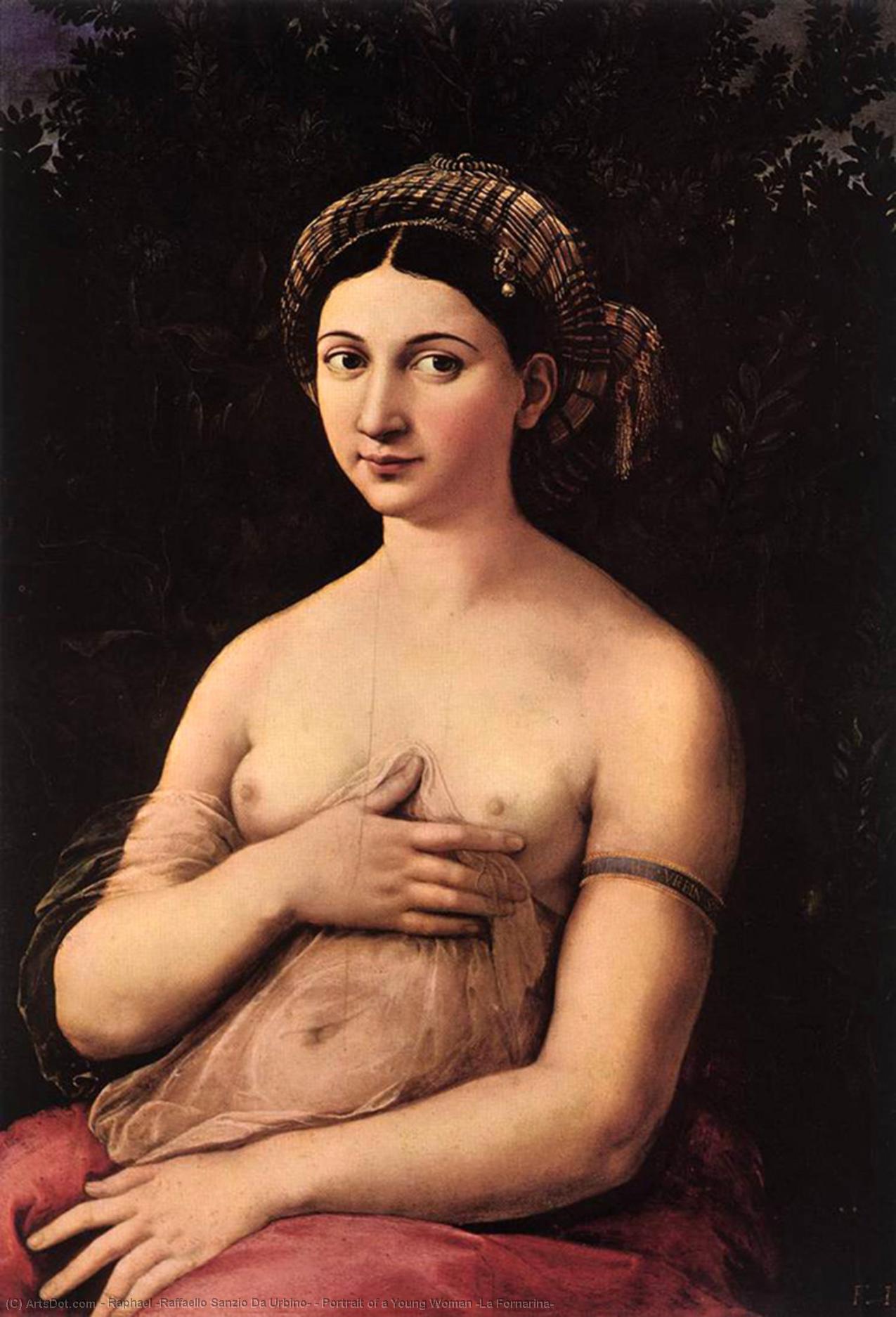
The Portrait of a Young Woman is also known as
"La Fornarina". The title refers to the woman's occupation as a baker's daughter, and it has been traditionally associated with Margherita Luti, Raphael's Roman mistress. However, this identification has been questioned by some art historians.
Media
The Portrait of a Young Woman is an oil on wood painting, measuring 85 cm x 60 cm (33 in x 24 in). The use of oil paint allowed Raphael to achieve a soft and luminous effect, which enhances the sensuality of the woman's portrait.
Style
The Portrait of a Young Woman is an example of Raphael's mature style, characterized by its harmony, balance, and idealization of beauty. The woman is depicted half-nude, with one breast exposed and covered by her hand. She wears a blue and yellow turban over her dark hair, and a thicker red cloth covers her legs and genital region. Her eyes are looking towards the left, and she wears a small, possibly amused smile. The painting is signed with Raphael's name, "Raphael Urbinas," on an armband that the woman is wearing.
History
The Portrait of a Young Woman was painted between 1518 and 1520, shortly before Raphael's death. It is probable that the picture was in the painter's studio at his death in 1520, and that it was modified and then sold by his assistant Giulio Romano. In the 16th century, the picture was in the house of the Countess of Santafiora, a Roman noblewoman, and subsequently became part of the collection of the Galleria Nazionale d'Arte Antica in Palazzo Barberini, Rome.
Interpretations
The identity of the woman depicted in The Portrait of a Young Woman has been the subject of much debate among art historians. While traditionally identified as Margherita Luti, Raphael's Roman mistress, some scholars have suggested that she may be a witch or a courtesan. X-ray analyses have shown that in the background was originally a Leonardesque-style landscape in place of the myrtle bush, which was sacred to Venus, goddess of love and passion. An overpainted ruby ring on the sitter's third left finger has caused speculation on whether there might have been a secret marriage with Raphael.
Conclusion
The Portrait of a Young Woman is one of Raphael's most enigmatic and captivating works, which continues to inspire debate and fascination among art historians and enthusiasts alike. At https://ArtsDot.com, you can find high-quality hand-made oil painting reproductions of this masterpiece, as well as other works by Raphael and other great masters of Western art.
Galleria Nazionale d'Arte Antica, Rome.