Portrait of Agnolo Doni: A Renaissance Masterpiece
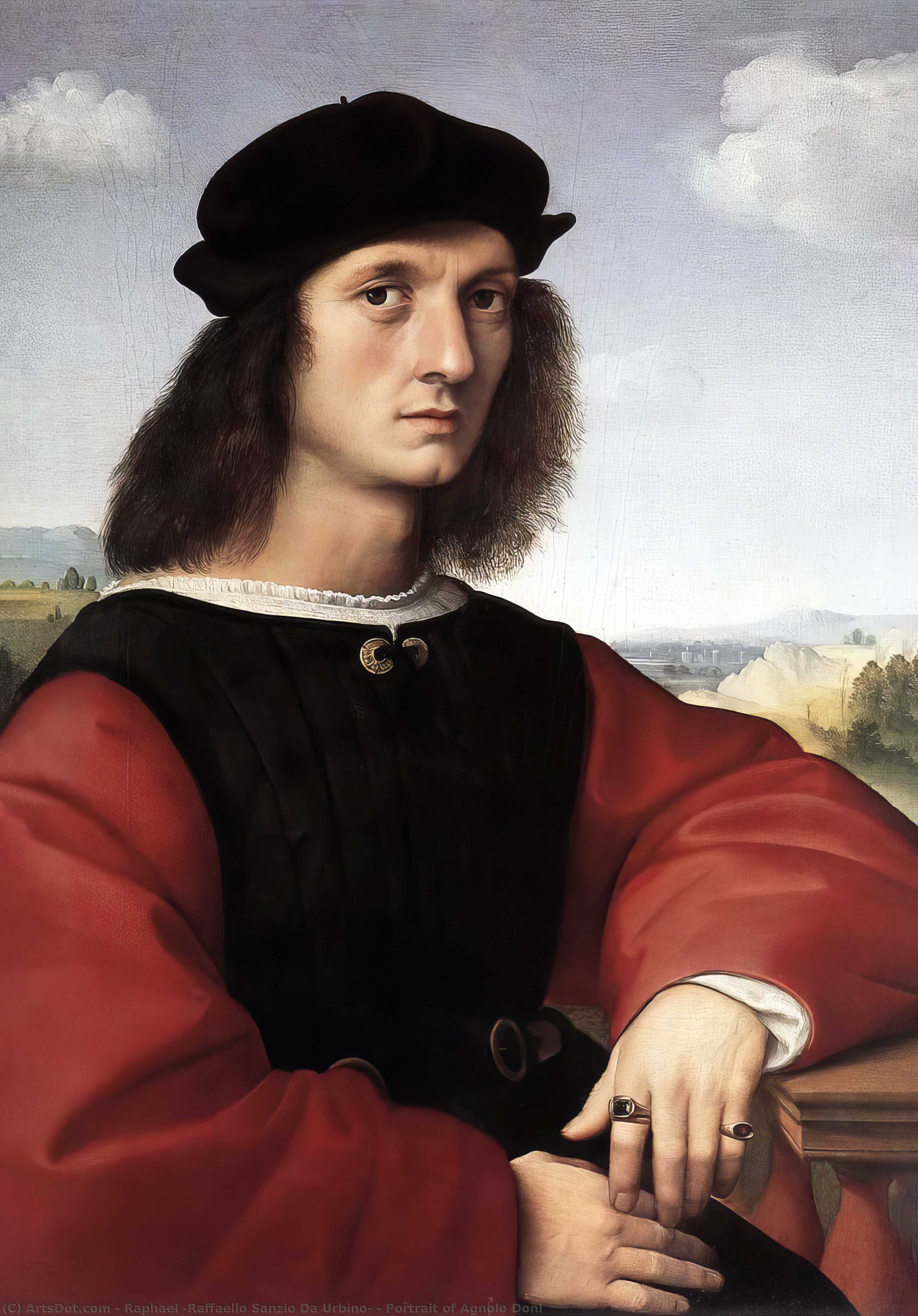
Raphael’s “Portrait of Agnolo Doni,” completed around 1506, stands as an emblem of High Renaissance artistic achievement—a testament to meticulous observation and refined aesthetic sensibility. More than just a likeness of a wealthy Florentine merchant, it embodies the humanist ideals that defined the era, reflecting a profound understanding of human psychology and capturing the essence of aristocratic dignity.
Composition and Style: The painting’s harmonious balance is immediately striking. Agnolo Doni occupies the central position against a muted landscape backdrop—a deliberate departure from Leonardo da Vinci's dramatic use of perspective, which aimed to overwhelm the viewer with grandeur. Instead, Raphael employs a low horizon line that creates a sense of tranquility and emphasizes the figure’s presence within its environment. The artist skillfully utilizes chiaroscuro—the interplay of light and shadow—to sculpt Agnolo’s form, highlighting musculature and conveying an aura of seriousness.
Artistic Influences: Raphael's work during this period was undeniably shaped by Leonardo da Vinci’s groundbreaking innovations. Notably, the positioning of Agnolo’s hands on top of each other—a technique borrowed directly from “Mona Lisa”—underscores the importance of gesture and expression in conveying emotion. However, Raphael distinguishes himself through his incorporation of a serene landscape, offering a counterpoint to Leonardo's theatrical compositions.
Historical Context: Commissioned by Agnolo Doni and Maddalena Strozzi shortly after their marriage, “Portrait of Agnolo Doni” reflects the burgeoning humanist spirit of Florence—a fascination with classical ideals and an emphasis on human reason. The painting’s execution coincided with Raphael's intensive study of Leonardo’s artistic methods, marking a pivotal moment in his artistic development.
Symbolism: Beyond its formal beauty, “Portrait of Agnolo Doni” is laden with symbolic significance. Agnolo’s attire—a scarlet jacket adorned with black trim—represents nobility and authority, while his gaze directs unflinching attention toward the viewer—challenging him to confront his own reflection. The landscape background serves as a visual metaphor for stability and permanence—affirming the enduring values of family and tradition.
Legacy: “Portrait of Agnolo Doni” remains an unparalleled exemplar of Renaissance portraiture, admired for its elegance, psychological depth, and masterful execution. Its influence extends far beyond its own time, inspiring artists across subsequent generations and cementing Raphael’s place as one of the greatest painters in Western art history.
Location: Currently housed in the Pitti Palace Museum (Florence, Italy), this masterpiece invites contemplation and offers a glimpse into the artistic sensibilities of a transformative era.