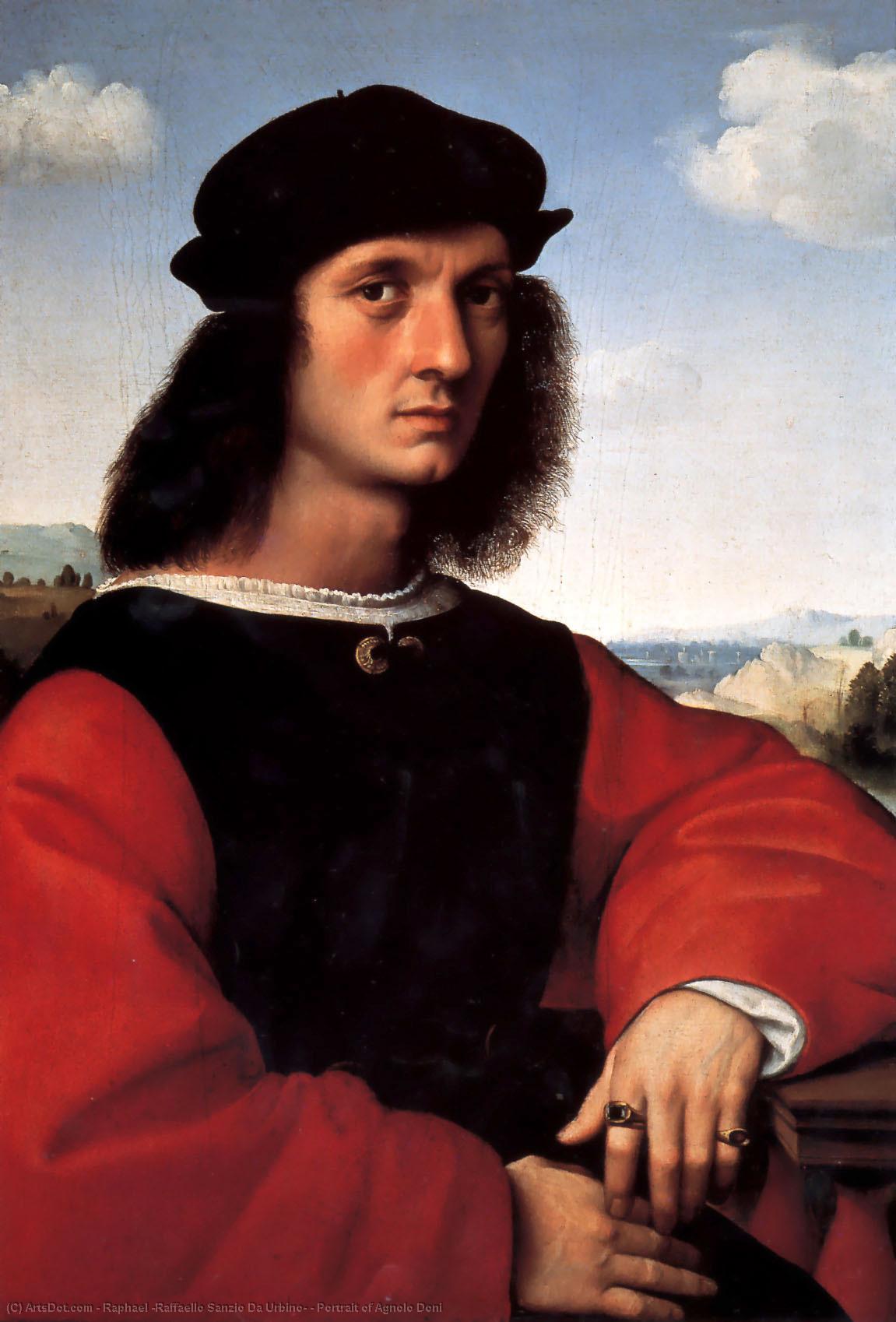
Portrait of Agnolo Doni
The
Portrait of Agnolo Doni, painted by the renowned artist
Raphael (Raffaello Sanzio Da Urbino) in 1506, is a cornerstone of High Renaissance art—a testament to humanist ideals and masterful artistic execution. Housed at the
Pitti Palace Museum in Florence, Italy, this monumental panel painting transcends mere representation, offering a glimpse into the opulent world of Florentine patronage and reflecting Raphael’s profound understanding of human psychology.
Artistic Technique and Style
Raphael's genius lay not only in his subject matter but also in his unparalleled command of artistic technique. Executed on oil paint upon wood—a medium favored for its luminosity and durability—the portrait exemplifies the Renaissance preoccupation with realism and idealized beauty. Observe the meticulous layering of glazes, creating subtle gradations of color that imbue the drapery and skin tones with an astonishing level of detail. Raphael skillfully employed chiaroscuro—the dramatic interplay between light and shadow—to sculpt form and convey emotion, drawing inspiration from Leonardo da Vinci’s pioneering explorations of perspective and tonal modulation. The composition itself adheres to classical principles, prioritizing balance and harmony while subtly directing the viewer's gaze toward the central figure.
Subject and Composition
The portrait depicts Agnolo Doni, a wealthy Florentine merchant distinguished by his dignified posture and penetrating stare. Raphael’s careful attention to anatomical accuracy—a hallmark of Renaissance art—is evident in the musculature of Doni’s torso and arms. The artist skillfully contrasts textures: the smooth sheen of the jacket against the rough weave of the beard and mustache, creating visual interest and reinforcing the impression of character. Furthermore, the inclusion of two figures flanking Doni—one on the left and another receding into the background—adds depth to the scene and subtly reinforces the notion of nobility and status. The chair positioned near the bottom right corner serves as a grounding element, anchoring the composition and emphasizing the sitter’s importance.
Historical Context
Painted during the apex of the High Renaissance—a period marked by intellectual ferment and artistic innovation—the Portrait of Agnolo Doni reflects the humanist spirit that permeated Florentine culture at the time. Raphael's work stands alongside masterpieces created by Michelangelo Buonarroti and Leonardo da Vinci, demonstrating the collaborative dynamism of the era’s artistic landscape. The commission itself underscores the importance of patronage in shaping artistic production, highlighting the role played by wealthy families like the Strozzi in fostering creativity and preserving cultural heritage. It is a poignant reminder that art served not merely as decoration but as a vehicle for conveying ideas about virtue, honor, and human dignity—values central to Renaissance worldview.
Relevance and Legacy
The Portrait of Agnolo Doni continues to captivate audiences centuries after its creation, securing its place among the most celebrated artworks of the Renaissance. Its enduring appeal stems from Raphael’s ability to capture not just a likeness but also an essence—a psychological portrait that speaks to universal themes of dignity, contemplation, and human experience. As a symbol of Florentine grandeur and artistic excellence, it serves as an inspiration for artists and designers alike, demonstrating the timeless beauty and intellectual depth achievable through masterful technique and profound observation. For those seeking to immerse themselves in the splendor of Renaissance art, reproductions of this iconic masterpiece—available on ArtsDot—offer a remarkable opportunity to experience Raphael’s genius firsthand.