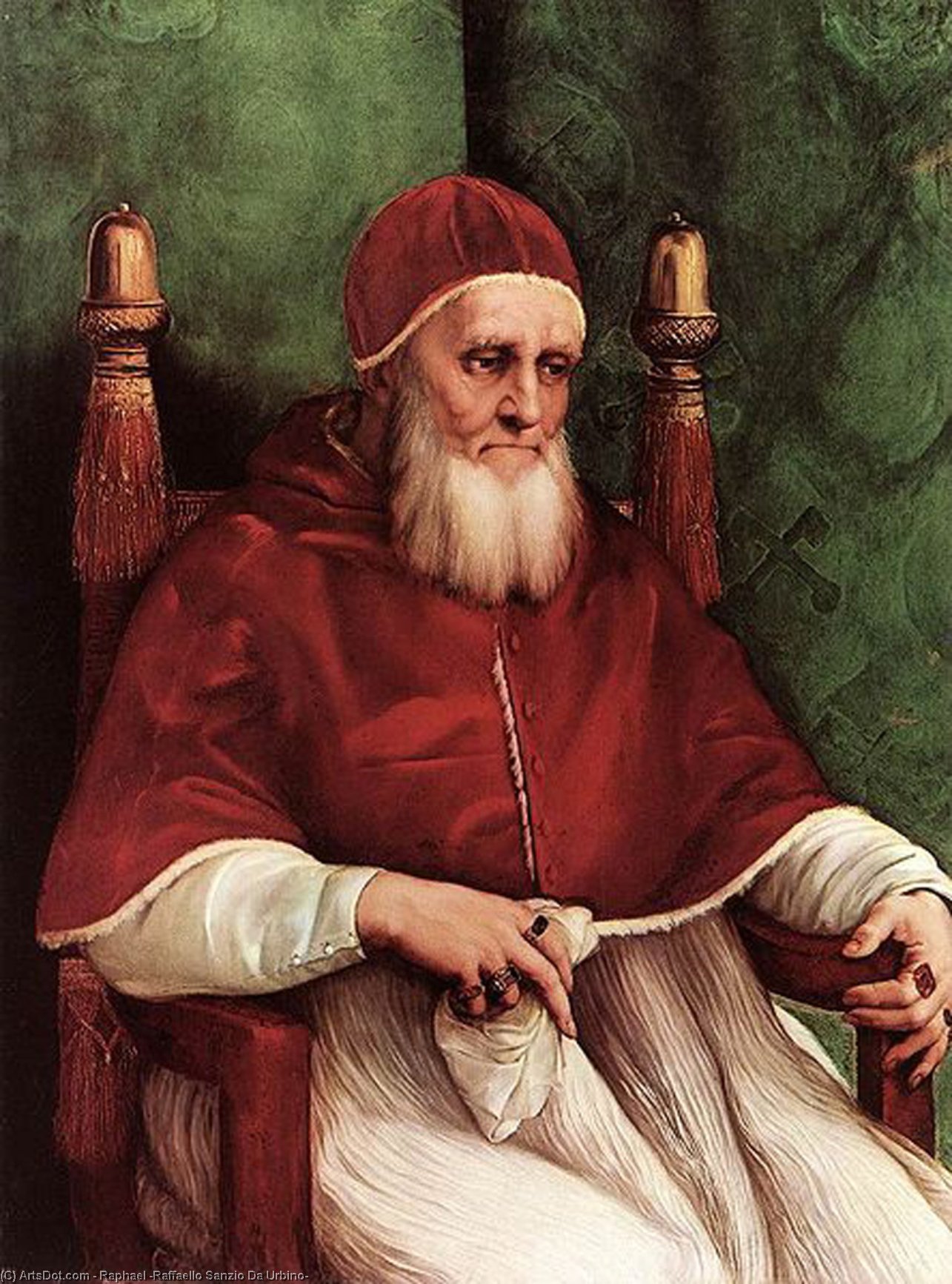
Portrait of Pope Julius II
Raphael’s “Portrait of Pope Julius II,” completed in 1511, stands as a cornerstone of High Renaissance portraiture—a testament to artistic mastery and humanist ideals. More than just a likeness of the papal figurehead, it embodies a profound exploration of character and spiritual contemplation, capturing the essence of Julius II's reign and influencing generations of artists.
- Subject Matter: The painting depicts Pope Julius II seated on a chair adorned with acorns—a symbol of his family name, Della Rovere—reflecting the importance of heraldry in Renaissance art.
- Composition & Style: Raphael’s signature style is characterized by clarity and ease of composition, prioritizing visual harmony and conveying an idealized representation of human grandeur. The pyramidal structure lends stability to the image while directing the viewer's gaze towards the pope’s face.
- Technique: Executed in oil on panel, Raphael skillfully employs layering techniques—glazes and scumbles—to achieve remarkable depth and luminosity. This meticulous approach captures subtle nuances of skin tone and drapery folds, demonstrating unparalleled technical precision.
The historical context is crucial to understanding the painting’s significance. Julius II commissioned Raphael during a period marked by ambitious papal patronage aimed at revitalizing Rome's cultural prestige following the Sack of Rome in 1527. This commission reflects the pope’s desire to portray himself as a symbol of strength and piety—a figure embodying both earthly authority and spiritual devotion.
Beyond its formal qualities, “Portrait of Pope Julius II” resonates with emotional depth. The pope's gaze is downward, conveying introspection and thoughtfulness—a deliberate departure from the conventional frontal poses prevalent in earlier papal portraits. Raphael’s masterful depiction captures a moment of quiet contemplation, inviting viewers to contemplate the complexities of human experience.
- Provenance: Initially hung at Santa Maria del Popolo, the painting underwent significant restoration efforts in 1970 revealing an earlier hanging with a vibrant green textile and highlighting the meticulous research undertaken by scholars.
- Influence: Raphael’s portrait established a new standard for papal representation—a model adopted by subsequent artists who sought to convey similar ideals of dignity and solemnity. Its enduring legacy continues to inspire admiration for its beauty and psychological insight.
ArtsDot.com offers exceptional reproductions of “Portrait of Pope Julius II,” crafted with the same dedication to detail and artistry as Raphael’s original masterpiece. Bring this iconic artwork into your home or office and experience its timeless allure.