St. George and the Dragon: A Renaissance Masterpiece
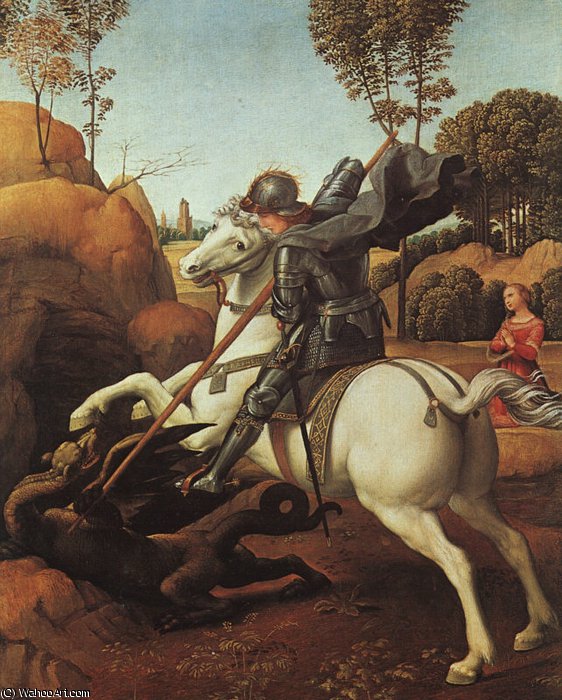
Raphael’s “St. George Fighting the Dragon,” painted in 1506, is a captivating embodiment of High Renaissance ideals – courage, faith, and artistic mastery. This small-scale oil on wood panel (28.5 x 21.5 cm), currently housed at The Museum of Luxembourg Gardens in Paris, belies its size with an immense narrative power and technical brilliance.
A Scene of Heroic Conflict
The painting depicts the legendary Saint George, a Roman soldier later venerated as a Christian martyr, locked in combat with a fearsome dragon. He is portrayed astride a powerfully rendered white horse, lance poised to strike. A youthful attendant struggles to control the steed, while distant figures witness the dramatic confrontation. The landscape itself – rocky outcrops and sparse trees – contributes to the sense of isolation and perilous struggle.
It’s not merely a depiction of battle; it's a visual allegory.
Artistic Technique & Renaissance Style
Raphael demonstrates his exceptional skill through several key techniques. His use of
chiaroscuro – the dramatic interplay of light and shadow – heightens the tension and focuses attention on the central figures. Note how light illuminates St. George’s armor and the horse, contrasting sharply with the darker tones of the dragon and background. The meticulous detail in rendering textures—the scales of the dragon, the polished metal of the armor, the horse's harness—is remarkable for such a small work. The composition is balanced yet dynamic, reflecting the Renaissance pursuit of harmony and ideal proportions.
Symbolism & Meaning
The story of St. George and the Dragon is rich in symbolism. The dragon traditionally represents evil, paganism, or sin, while St. George embodies Christian virtue, bravery, and divine protection. His victory signifies the triumph of good over evil, faith over temptation.
The white horse itself symbolizes purity and righteousness. Some scholars also interpret the scene as an allegory for the power of Christ overcoming Satan. The youthful appearance of both St. George and his attendant may symbolize innocence and unwavering devotion.
Historical Context & Raphael’s Oeuvre
Created during the High Renaissance, a period marked by renewed interest in classical art and humanism, “St. George Fighting the Dragon” reflects the era's emphasis on idealized beauty and narrative storytelling. Raphael, alongside Leonardo da Vinci and Michelangelo, was at the forefront of this artistic revolution. This work predates his most famous commissions in Rome (like those in the Vatican Stanze) but already showcases the hallmarks of his style: grace, clarity, and harmonious composition.
- Other notable works by Raphael include “Portrait of Pietro Bembo,” “The Holy Family,” and “St. John the Baptist.”
- His artistic journey evolved through Umbrian influences, Florentine studies, and ultimately, his distinctive Roman style.
Emotional Impact & Interior Design Considerations
“St. George Fighting the Dragon” evokes a powerful emotional response – a sense of awe, courage, and spiritual upliftment. The painting’s dramatic narrative and masterful execution make it a compelling focal point for any space.
For interior design, its rich colors (cool blues, greens, and golds) complement both traditional and contemporary settings. Its relatively small size makes it suitable for smaller rooms or as part of a larger gallery wall. A high-quality reproduction captures the essence of Raphael’s genius, bringing a touch of Renaissance grandeur into your home or office.