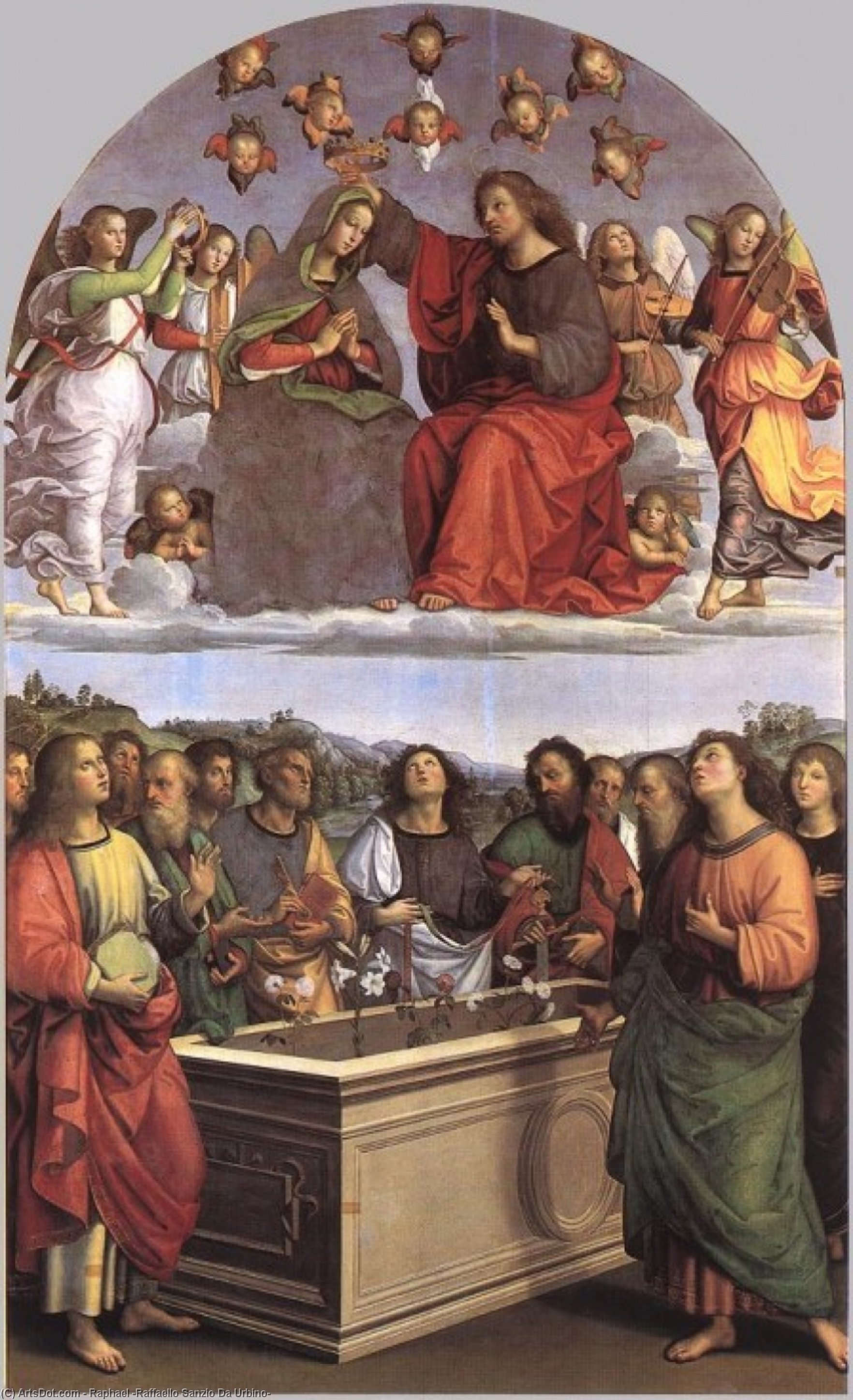
A Divine Union: Exploring Raphael’s *The Crowning of the Virgin*
Raphael's *The Crowning of the Virgin*, painted between 1502 and 1504, is a masterpiece of the High Renaissance, originally created for the Oddi family chapel in Perugia, Italy. Now residing in the Vatican Pinacoteca, this altarpiece isn’t merely a depiction of a religious event; it's a harmonious synthesis of divine grace and human emotion, showcasing Raphael’s burgeoning genius and marking a departure from the style of his teacher, Perugino.
Subject & Composition: Heaven and Earth Intertwined
The painting presents two interwoven scenes within a single composition. Above, in a celestial realm bathed in golden light, Christ crowns the Virgin Mary as Queen of Heaven, surrounded by a chorus of adoring angels and blessed souls. Below, on earth, the apostles gather around Mary’s empty tomb, their expressions conveying both grief and anticipation. This dual narrative—the ascension and the remembrance—creates a powerful sense of continuity between the earthly and divine realms. The composition is masterfully structured with a pyramidal arrangement, drawing the viewer's eye upwards towards Christ and Mary at the apex, emphasizing their central importance.
Style & Technique: Graceful Forms and Luminous Color
Raphael’s style in *The Crowning of the Virgin* is characterized by its grace, clarity, and harmonious balance. Figures possess a gentle naturalism, exhibiting idealized beauty without sacrificing emotional depth. He skillfully employs *sfumato*, a technique popularized by Leonardo da Vinci, to create soft transitions between light and shadow, lending an ethereal quality to the celestial figures. The use of oil paint – relatively new to Italy at the time – allows for rich color saturation and subtle gradations of tone, enhancing the painting’s luminosity and depth.
Historical Context & Renaissance Ideals
Commissioned during a period of artistic flourishing in Italy, *The Crowning of the Virgin* embodies the core tenets of High Renaissance art. The emphasis on classical ideals of beauty, anatomical accuracy, and balanced composition reflects the renewed interest in ancient Greek and Roman art. Raphael’s work also demonstrates the growing importance of humanism, which celebrated human potential and dignity within a religious framework. The Oddi family's patronage highlights the role of wealthy families in supporting artistic endeavors during this era.
Symbolism & Spiritual Resonance
Every element within the painting carries symbolic weight. The crown itself represents Mary’s queenship and her intercession on behalf of humanity. The lilies held by angels symbolize purity, while the red robes worn by Christ signify his divine authority and sacrifice. The apostles' gestures of mourning and reverence underscore their faith and devotion. The overall composition evokes a sense of spiritual transcendence, inviting viewers to contemplate the mysteries of faith and the promise of eternal life.
Emotional Impact & Lasting Legacy
*The Crowning of the Virgin* is profoundly moving in its depiction of both sorrow and joy. The painting inspires awe and reverence, conveying a sense of divine grace and hope. Raphael’s ability to capture human emotion with such sensitivity ensures that this work continues to resonate deeply with audiences centuries after its creation. It remains a cornerstone of Renaissance art, influencing generations of artists and solidifying Raphael's place as one of history’s greatest masters.
Bring the Renaissance Home
- Experience Timeless Beauty: Own a meticulously crafted, handmade oil painting reproduction of Raphael’s *The Crowning of the Virgin* and infuse your space with the elegance of the Italian Renaissance.
- Authentic Craftsmanship: Our skilled artists utilize traditional techniques to recreate the original masterpiece with exceptional detail and quality.
- A Statement Piece: This iconic artwork will serve as a captivating focal point in any home or office, sparking conversation and inspiring contemplation.