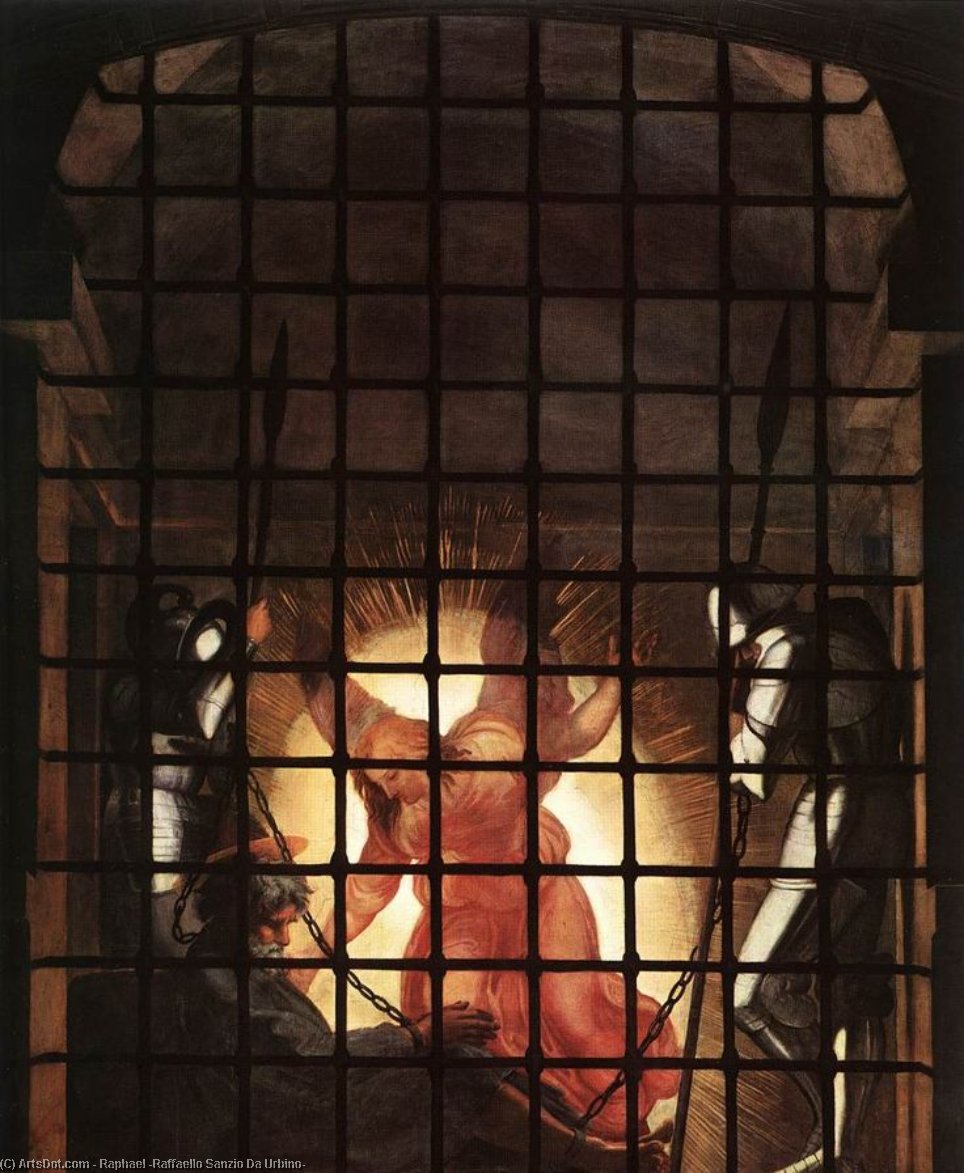
This magnificent fresco, part of the Stanza di Eliodoro in Vatican City, portrays Jesus Christ crucified with several figures observing the scene. Raphael’s masterful depiction emphasizes themes of faith and liberation against a stark stone wall backdrop adorned with chains symbolizing imprisonment. Explore this captivating artwork reproduction.
A Testament to Divine Grace: Exploring Raphael’s ‘The Liberation of St Peter’
Raphael Sanzio da Urbino's *Liberation of Saint Peter*, a breathtaking fresco adorning the Stanza di Eliodoro in Vatican City, stands as an emblem of High Renaissance artistic achievement and theological contemplation. Completed around 1512 during Pope Leo X’s reign, this monumental artwork transcends mere visual representation; it embodies a profound narrative rooted in Christian scripture and imbued with symbolic richness.
- Subject Matter: The fresco depicts Saint Peter's miraculous escape from prison—a pivotal moment recounted in the Gospels where Peter miraculously emerges unharmed after being imprisoned by Herod Agrippa I. This dramatic scene captures the essence of faith’s triumph over adversity, portraying Peter as a figure bathed in divine light, symbolizing resilience and spiritual liberation.
- Style & Technique: Raphael masterfully employs sfumato—a technique pioneered during his formative years under Leonardo da Vinci—to achieve unparalleled subtlety and luminosity. Layers upon layers of translucent glaze create an ethereal atmosphere, softening contours and blending colors seamlessly. This masterful manipulation of light contributes significantly to the fresco’s emotive power, conveying a sense of serenity and spiritual transcendence.
- Historical Context: Created during the Papal Renaissance, *Liberation of Saint Peter* reflects the humanist ideals prevalent at the time—a renewed interest in classical art and philosophy alongside a fervent devotion to Christian faith. The Stanza di Eliodoro itself was commissioned as part of a larger project aimed at decorating the papal apartments with biblical narratives, demonstrating the importance of religious iconography within the artistic landscape of Renaissance Rome.
- Symbolism: Beyond its depiction of Peter’s liberation, the fresco is replete with symbolic elements. The stone wall and bars represent imprisonment—both physical and spiritual—while the radiant light emanating from Christ signifies divine grace and salvation. Furthermore, the chains adorning Peter's wrists serve as a poignant reminder of human vulnerability before God’s power.
- Emotional Impact: Raphael’s artistic vision seeks to inspire awe and contemplation. The fresco’s serene composition and luminous palette evoke feelings of peace and reverence, inviting viewers to reflect on themes of faith, hope, and divine intervention. It remains a testament to the enduring beauty and spiritual significance of Christian art.
A reproduction of *Liberation of Saint Peter* offers an exceptional opportunity to bring this masterpiece into your home or workspace—capturing not only its visual splendor but also the profound emotional resonance that defines Raphael’s legacy. Explore our curated collection today!