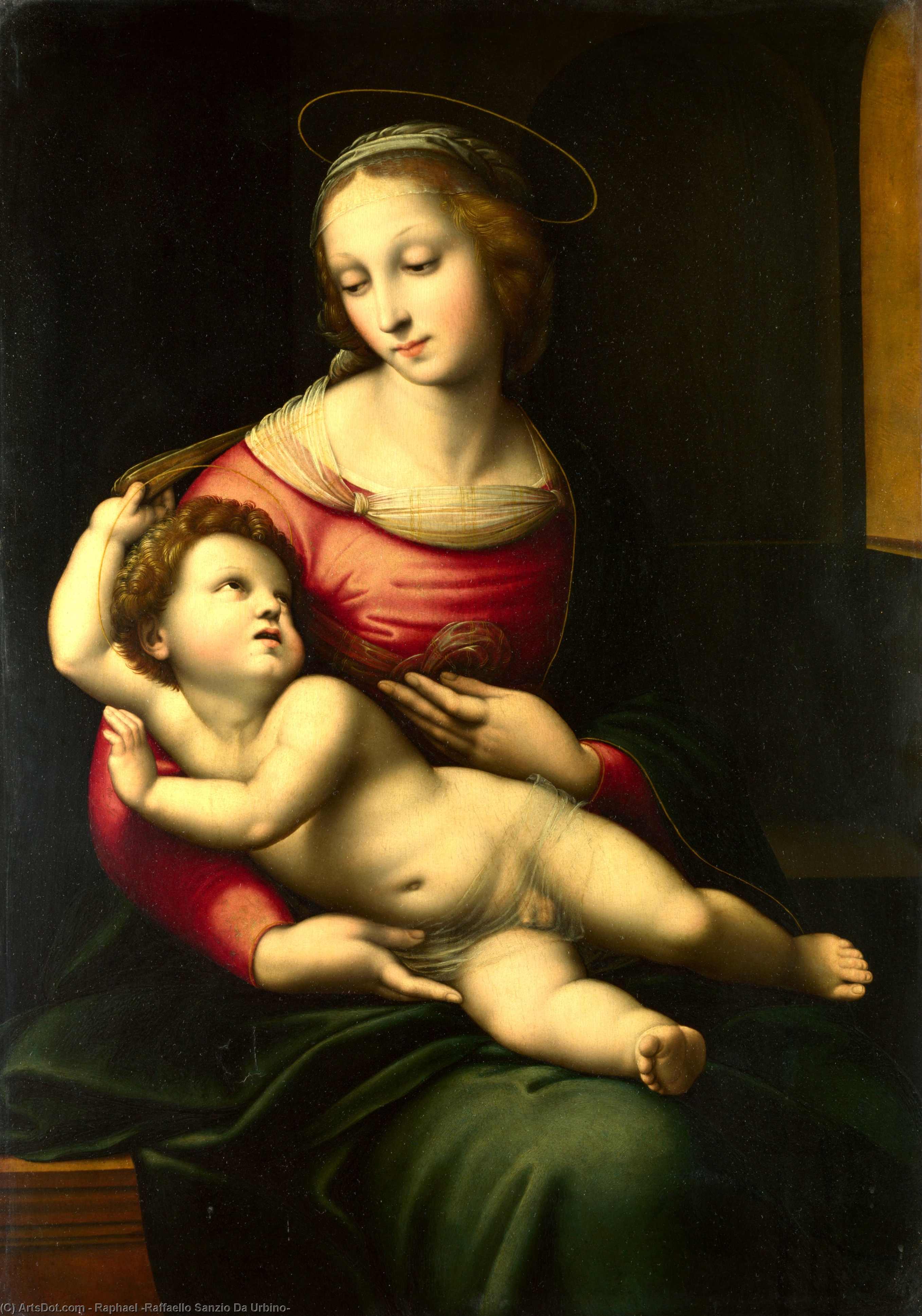
A Renaissance Vision of Motherhood: Raphael’s *Madonna and Child*
Raphael’s *Madonna and Child*, a captivating oil on panel measuring 56 x 46 cm, is a quintessential example of the High Renaissance's devotion to beauty, harmony, and emotional resonance. This intimate portrayal transcends mere representation; it embodies the ideals of grace, piety, and maternal love that defined the era.
Subject & Composition
The painting centers on the Virgin Mary tenderly cradling the infant Jesus. Raphael masterfully employs a pyramidal composition – a hallmark of Renaissance art – to create a sense of stability and visual focus. The figures are positioned centrally, drawing the viewer’s eye directly to their faces and the connection between them. Mary, depicted as a young woman with flowing hair, gazes lovingly at her son, while Jesus reciprocates with an innocent and trusting expression. Their shared gaze fosters a powerful sense of intimacy and devotion.
Style & Technique
This work exemplifies Raphael’s signature style: characterized by *clarity*, *balance*, and a refined aesthetic sensibility. His technique is remarkable for its smooth, flowing lines, delicate modeling of forms, and masterful use of chiaroscuro – the dramatic interplay of light and shadow. The luminous quality of the figures stands in striking contrast to the dark background, enhancing their presence and emphasizing their spiritual significance. Raphael’s brushwork is meticulous yet appears effortless, creating a sense of naturalism and grace.
Symbolism & Iconography
The painting is rich with symbolic meaning. Mary's crown signifies her status as Queen of Heaven, while the red garments worn by both mother and child allude to Christ’s sacrifice and divine love. The dark background serves not merely as a compositional device but also emphasizes the sacredness of the scene, isolating the figures from earthly distractions. The youthful depiction of Mary reflects Renaissance humanist ideals that emphasized beauty and idealized forms.
Historical Context & Artistic Significance
Created during Raphael’s formative years, this *Madonna and Child* demonstrates his early absorption of Umbrian artistic traditions blended with influences from Florentine masters like Leonardo da Vinci and Michelangelo. Raphael moved to Florence in 1504, where he studied the works of these artists, incorporating their innovations into his own style. This painting reflects that synthesis – a harmonious blend of grace, anatomical accuracy, and emotional depth. It’s part of a prolific series of *Madonna* paintings Raphael produced throughout his career, each exploring different facets of maternal love and divine mystery. His work profoundly influenced subsequent generations of artists and continues to be celebrated for its enduring beauty and spiritual power.
Emotional Impact & Interior Design
The painting evokes a sense of serenity, tenderness, and reverence. It’s an image that invites contemplation and offers solace. For interior designers, a reproduction of this masterpiece can introduce a touch of Renaissance elegance and timeless sophistication to any space. Its harmonious color palette – the rich reds, subtle blues, and warm flesh tones – complements a variety of décor styles, from traditional to contemporary. The painting’s intimate scale makes it suitable for both smaller rooms and larger galleries, adding a focal point of beauty and spiritual significance.
Explore Further
- Related Works: Consider exploring Raphael's *Madonna della Seggiola*, *The Madonna of the Rose*, and *The Madonna of the Chair* to appreciate the evolution of his style.
- Historical Context: Research the artistic climate of Renaissance Italy, particularly the influence of humanism and Neoplatonism on Raphael’s work.
- Artist Biography: Delve deeper into Raphael's life and career to understand the influences that shaped his artistic vision.