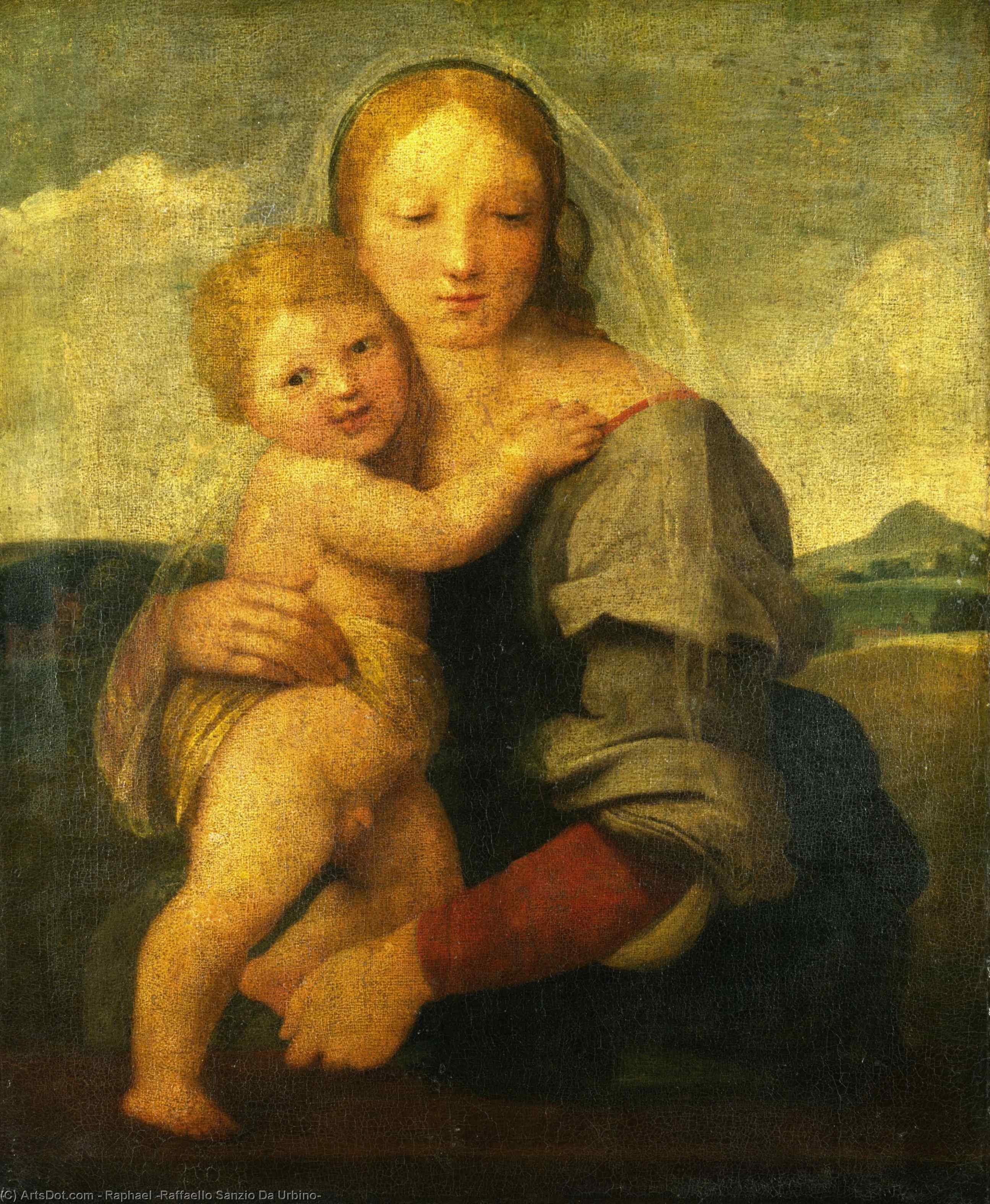
The Madonna and Child (The Mackintosh Madonna)
Raphael’s
The Madonna and Child (The Mackintosh Madonna) stands as a pinnacle of Renaissance artistry—a testament to Raphael’s unparalleled ability to capture profound emotion within exquisitely crafted form. Created around 1509-10 during his formative years in Rome, this painting resides at St John's College, Cambridge, where it continues to inspire awe and admiration. Its fame stems not only from its aesthetic beauty but also from its rich symbolism and connection to the intellectual fervor of the era.
The Composition: Harmony and Grace
At first glance,
The Madonna and Child (The Mackintosh Madonna) presents a serene tableau: the Virgin Mary cradles the infant Jesus in her arms with tender devotion. Her gaze is downward, conveying a contemplative awareness of Christ’s future sacrifice—a subtle yet powerful gesture that underscores the painting's spiritual depth. The baby Jesus turns towards the viewer, offering a radiant smile—a symbol of innocence and divine grace. A veil delicately draped over Mary’s head signifies modesty and piety, reflecting the prevailing religious sensibilities of the time. Behind them unfolds a picturesque landscape dominated by distant mountains, evoking a sense of tranquility and timeless beauty. Raphael skillfully blended realism with idealism, creating an image that transcends mere representation to embody spiritual truth.
Artistic Significance: Mastering Renaissance Technique
Raphael’s mastery of technique is evident in every brushstroke—a hallmark of the High Renaissance style. He employed *sfumato*, a blurring effect achieved through subtle gradations of tone and color, softening contours and creating an ethereal atmosphere. This technique lends the painting an unparalleled luminosity and depth, capturing the nuances of light and shadow with breathtaking precision. The artist’s meticulous attention to detail—from the folds of Mary's robe to the texture of the landscape—demonstrates his unwavering commitment to artistic excellence. Furthermore, Raphael’s use of color is masterful: muted hues dominate the palette, creating a harmonious visual experience that aligns perfectly with the painting’s contemplative mood.
Historical Context: Cambridge and Renaissance Patronage
St John's College, Cambridge has a venerable tradition of artistic patronage—dating back to its founding in 1511 by Lady Margaret Beaufort. The college’s commitment to scholarship and beauty is reflected in its impressive collection of artworks, including
The Madonna and Child (The Mackintosh Madonna)—a masterpiece that embodies the ideals of humanist culture during the Renaissance. The painting’s presence within this esteemed institution underscores its enduring significance as a symbol of artistic achievement and intellectual curiosity.
Other Notable Works by Raphael
Raphael's prolific output extended beyond
The Mystic Marriage of Saint Catherine of Alexandria with Saints Dorothy, Margaret and Barbara—created by
Lucas Cranach The Elder—another stunning example of Renaissance artistry. Similarly, his
Raphael’s *The Mystic Marriage of Saint Catherine of Alexandria with Saints Dorothy, Margaret and Barbara* exemplifies the artist's ability to convey complex theological ideas through visual splendor. For those seeking a captivating glimpse into Renaissance artistic brilliance,
ArtsDot offers exquisite hand-painted reproductions that bring Raphael’s vision to life in your home.