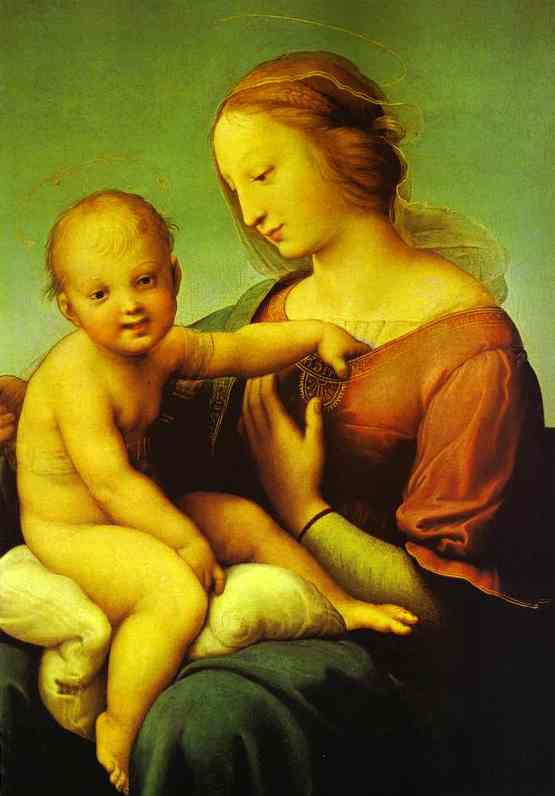
The Niccolini-Cowper Madonna: A Symphony of Light and Grace
Raphael’s *Niccolini-Cowper Madonna*, completed in 1508, stands as an emblem of High Renaissance artistic achievement—a testament to humanist ideals fused with masterful observation of the human form. More than just a depiction of Mary cradling Jesus Christ, it embodies a profound exploration of maternal tenderness and divine grace, capturing a moment frozen in time with unparalleled beauty.
- Artist & Style: Raphael (1483-1520) epitomized the Renaissance spirit. His style—characterized by meticulous perspective, anatomical accuracy, and luminous color palettes—was profoundly influenced by Leonardo da Vinci’s pioneering techniques of sfumato and chiaroscuro. This painting exemplifies these principles perfectly, creating an atmosphere of serene contemplation.
- Composition & Technique: Painted on canvas with oil pigments, the Madonna occupies the central space, bathed in a diffused azure sky—a deliberate choice reflecting the prevailing celestial symbolism of the era. Raphael’s masterful brushwork conveys subtle textures and contours, capturing the delicate folds of Mary's robe and the soft flesh tones of Jesus’ infant face. The artist skillfully employs pyramidal composition to stabilize the image and draw the viewer’s eye towards the focal point: the Madonna’s gaze.
- Historical Context: Created during Raphael’s formative years in Florence, amidst the patronage of influential families like the Medici and the Feltri/Roveri, *Niccolini-Cowper Madonna* reflects the humanist preoccupation with idealized beauty and spiritual contemplation. It aligns seamlessly with the broader artistic trends of the period—a desire to represent human experience with dignity and grace.
- Symbolism & Emotion: The pose of Mary—seated on a bench, gently cradling Jesus—is deliberately reminiscent of depictions found in Michelangelo’s Sistine Chapel ceiling frescoes. This deliberate allusion underscores the importance of motherhood as an embodiment of divine compassion and nurturing love. Raphael's depiction conveys an overwhelming sense of serenity and maternal devotion.
- Provenance & Legacy: Originally commissioned by Giovanni Niccolini, a wealthy Florentine banker, the Madonna eventually found its way into the collection of George Nassau Clavering-Cowper, 3rd Earl Cowper. Today, it resides in the National Gallery of Art, Washington D.C., where it continues to inspire admiration for its artistic excellence and enduring emotional resonance.
ArtsDot.com offers exceptional reproductions that faithfully recreate Raphael’s masterpiece—allowing you to experience its splendor firsthand. Explore The Niccolini-Cowper Madonna and discover the transformative power of owning a piece of art history.