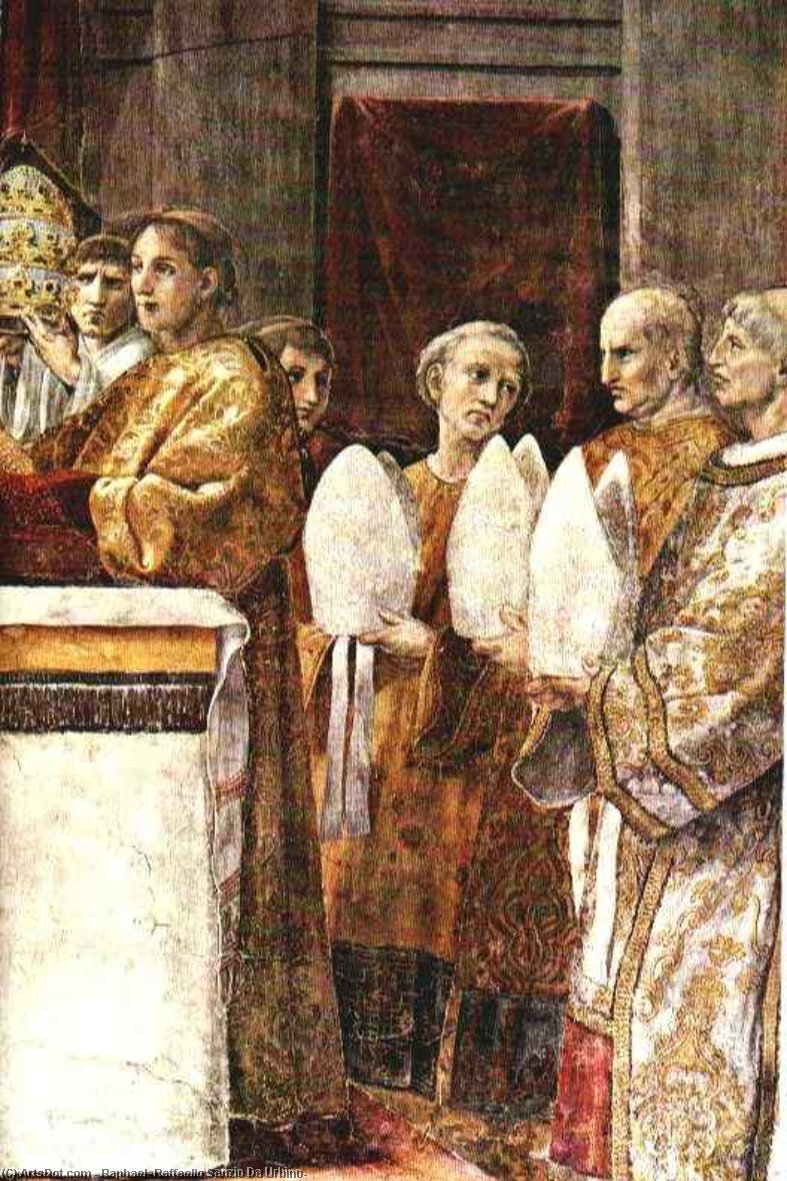
This iconic fresco by Raphael portrays Pope Leo III reaffirming his innocence before Charlemagne and a Roman ecclesiastical assembly, symbolizing papal authority and piety. Commissioned for the Stanza dell'Incendio in Vatican City, it exemplifies Raphael’s mastery of composition and humanist ideals.
The Oath of Pope Leo III (right view): A Testament to Faith and Power
Raphael’s “The Oath of Pope Leo III,” housed within the Stanza dell'Incendio di Borgo in Vatican City, stands as a cornerstone of High Renaissance art—a monumental fresco that transcends mere visual representation to embody profound theological and political significance. Completed around 1517-18 during the reign of Pope Leo X (Giovanni Lorenzo de’ Medici), this artwork isn’t simply a portrait; it's a carefully orchestrated tableau designed to communicate a pivotal moment in papal history.
- Subject Matter: The fresco depicts Pope Leo III, flanked by bishops and dignitaries, reaffirming his oath of purgation before Charlemagne. This event marked the culmination of a trial initiated by Hadrian I’s nephews—a challenge to Leo III's legitimacy and a testament to the papal insistence on divine accountability.
- Style & Technique: Raphael’s masterful execution exemplifies the ideals of classical harmony and proportion characteristic of the Renaissance. Employing *sfumato*, a technique pioneered by Leonardo da Vinci, he achieved remarkable subtlety in shading and modeling—creating an illusionistic depth that draws the viewer into the scene. The fresco utilizes tempera paint on plaster, ensuring exceptional durability and preserving the vibrancy of its colors for centuries.
- Historical Context: Commissioned during a period of intense papal ambition and political maneuvering, “The Oath” reflects the broader anxieties surrounding papal authority in the wake of the Avignon Papacy. It underscores Leo III’s determination to assert his moral superiority over his rivals—a stance reinforced by the biblical text he holds aloft.
- Symbolism: The composition is laden with symbolic references. The pope's gesture signifies piety and unwavering faith, while the bishops represent the Church’s collective judgment. The birds perched atop the altar symbolize divine providence—suggesting that God watches over the proceedings and guarantees Leo III’s righteousness.
- Emotional Impact: Beyond its formal grandeur, “The Oath” evokes a palpable sense of solemnity and conviction. Raphael skillfully captures the psychological drama of the trial—creating an image that resonates with viewers even today as a symbol of papal dignity and spiritual fortitude.
This magnificent fresco remains a powerful reminder of the intersection between art and theology—a testament to Raphael’s artistic genius and his ability to convey complex ideas through visual eloquence. Its enduring appeal lies in its timeless portrayal of faith, power, and moral responsibility.