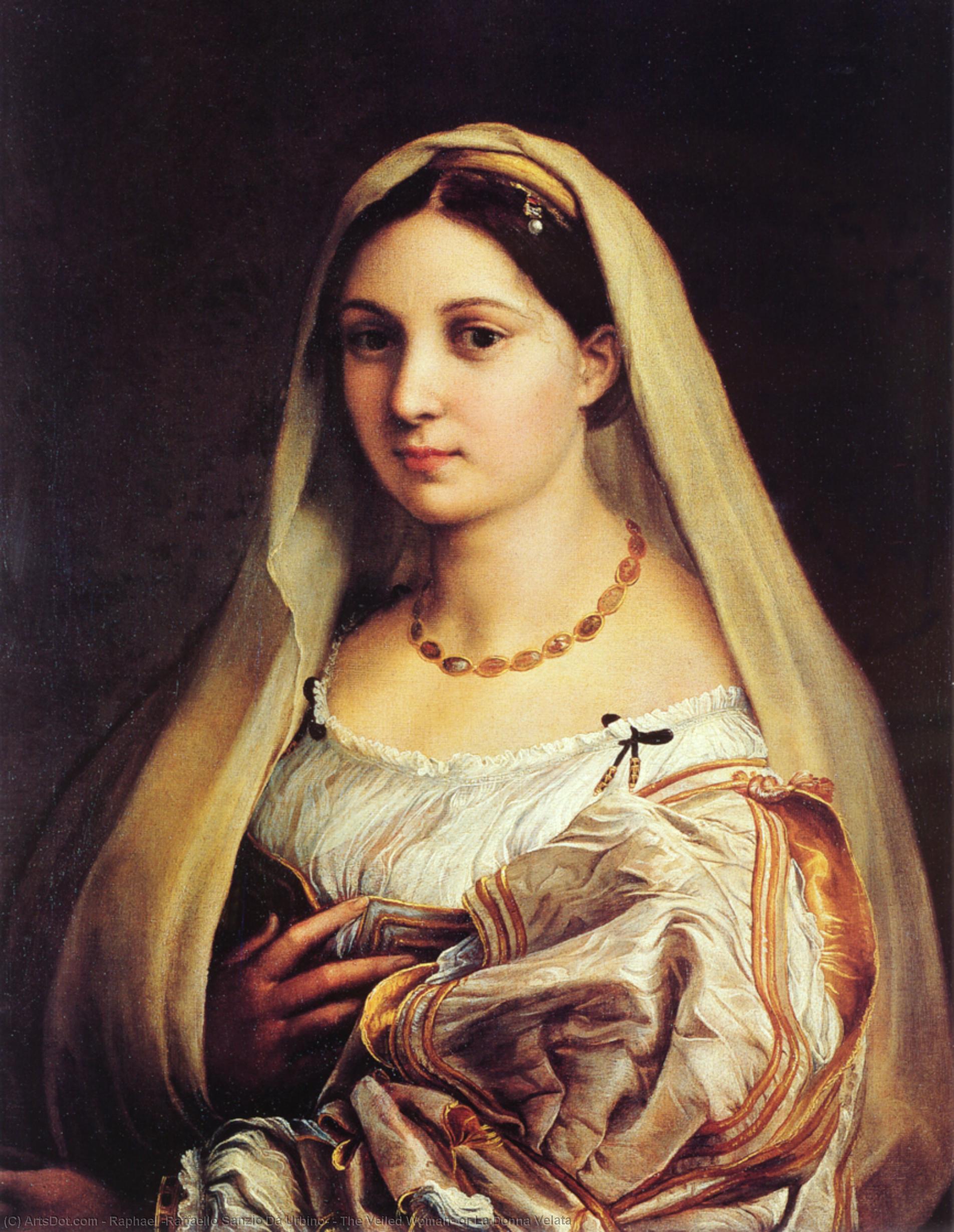
A Portrait of Elegance and Mystery: Raphael’s ‘La Donna Velata’
Raphael Sanzio da Urbino's “The Veiled Woman,” painted in 1516 during the zenith of the High Renaissance, remains an enduring emblem of artistic brilliance and humanist contemplation. Currently residing within the Palazzo Pitti in Florence, Italy—a testament to its cultural significance—this oil on canvas masterpiece transcends mere visual representation; it whispers tales of beauty, secrecy, and idealized femininity.
Technical Mastery: Light, Shadow, and Color Harmony
What immediately captivates the viewer is Raphael’s unparalleled command of chiaroscuro – the dramatic interplay between light and shadow—a technique perfected during this era. He meticulously renders the veil draped over Margherita Luti's head not merely as fabric but as a conduit for illumination, creating an illusionistic depth that draws the eye inwards. The warm hues of yellow and orange dominate the palette, lending vibrancy to the scene while simultaneously conveying a sense of opulent warmth.
Historical Context: Cinquecento Art Movement and Renaissance Ideals
“La Donna Velata” emerged from the Cinquecento Art Movement, a period marked by unprecedented artistic innovation and intellectual fervor. Artists like Raphael actively challenged conventions, embracing new approaches to portraying human form and emotion—a departure from earlier stylistic trends. The painting embodies the humanist ideals prevalent at the time: an emphasis on beauty, proportion, and rational observation of the natural world. It reflects the Renaissance fascination with classical antiquity and its pursuit of perfection.
Symbolism: Veil as Emblematic Representation
The veil itself is laden with symbolic meaning. Traditionally interpreted as representing modesty and purity—attributes highly valued in Renaissance society—it simultaneously obscures the woman’s face, fostering contemplation about her inner life and concealing any imperfections. Raphael skillfully utilizes this visual device to elevate the subject beyond mere physical appearance, transforming her into an embodiment of virtue and grace.
A Legacy Enduring Through Reproduction
ArtsDot understands the desire to experience the grandeur of Renaissance art firsthand. Our meticulously crafted oil painting reproductions capture the essence of Raphael’s genius—the luminous colors, the masterful shading, and the profound emotional resonance—allowing you to bring this iconic artwork into your home or studio. Explore our collection today and discover a timeless masterpiece reborn.