Raphael (1483-1520): A High Renaissance master renowned for his serene Madonnas, architectural genius, and iconic works like 'The School of Athens'. Explore his Urbino beginnings & artistic legacy.
Explore Château de Chantilly's art & history! Discover masterpieces by Raphael & Poussin, illuminated manuscripts, and the Duke of Aumale’s stunning collection. A royal legacy awaits!
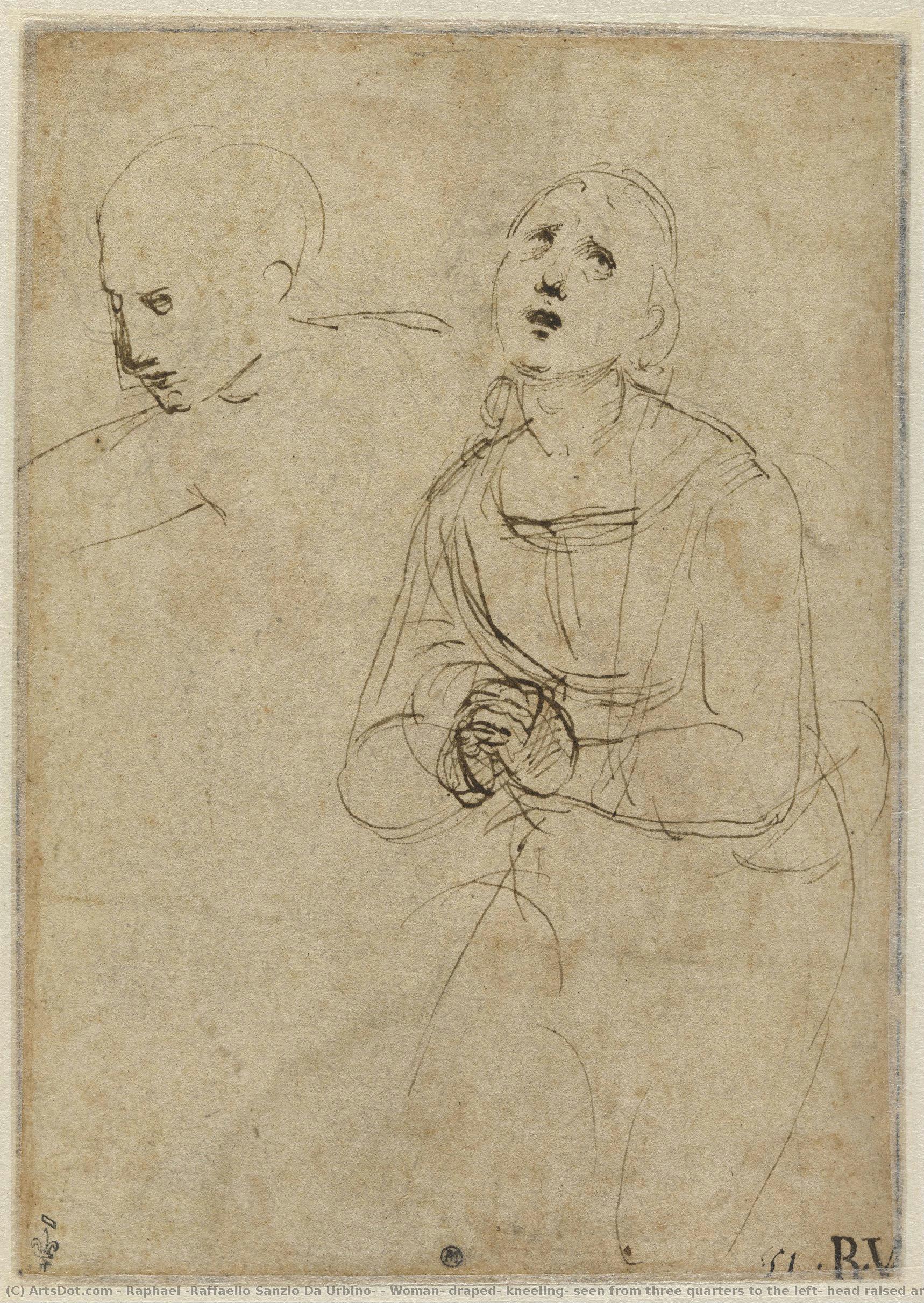
A Moment of Vulnerability Captured: Raphael’s “Woman Kneeling”
The drawing, tentatively titled "Woman Kneeling," represents a poignant glimpse into the artistic sensibilities of Raphael during his formative years—specifically around 1520. Executed in charcoal on paper, this sketch captures an arresting tableau of human emotion and spiritual contemplation, mirroring the broader humanist ideals prevalent within Urbino’s Renaissance court. It's not merely a depiction of two figures; it’s an exploration of posture, gesture, and gaze that speaks volumes about the artist’s understanding of psychological depth.
- Subject Matter: The composition centers on a woman kneeling in prayerful repose, accompanied by a man standing beside her. Their positioning immediately conveys vulnerability and humility—a deliberate choice reflecting Raphael's fascination with portraying human experience with sensitivity and nuance.
- Style & Technique: Raphael’s charcoal drawing demonstrates remarkable precision and tonal variation. The artist skillfully utilizes hatching and shading to sculpt the forms of both figures, creating a palpable sense of volume and texture. Notice how Raphael captures the subtle contours of drapery and flesh, conveying an impression of realism that transcends mere representation.
- Historical Context: Created during Raphael’s prolific period in Urbino—a city renowned for its patronage of the arts—the sketch aligns perfectly with the humanist movement's emphasis on portraying human emotion and intellect. Federico Montefeltro’s court actively encouraged artists to explore themes of morality, faith, and human psychology, fostering an environment conducive to groundbreaking artistic innovation.
Symbolism Beyond Appearance: Interpreting Gesture and Expression
Beyond the visual details lies a deeper layer of symbolic significance. The woman’s hands clasped together are universally recognized as emblems of devotion and supplication—a gesture that underscores her inner state of contemplation. Simultaneously, the man's outstretched arm suggests support or perhaps an attempt to offer solace. Raphael subtly communicates these ideas through posture and facial expression, inviting viewers to engage in a dialogue about faith, compassion, and human connection. The upward gaze of both figures hints at aspiration—a yearning for something transcendent beyond the earthly realm.
Emotional Resonance: A Reflection of Renaissance Humanism
“Woman Kneeling” transcends its formal execution to evoke a powerful emotional response. Raphael’s masterful rendering captures not just physical likeness but also psychological truth, mirroring the humanist preoccupation with understanding human emotions and motivations. The drawing speaks to themes of vulnerability, empathy, and spiritual yearning—qualities that resonate deeply within audiences across centuries. It serves as a testament to Raphael's ability to distill complex ideas into simple yet profoundly evocative visual language.
Reproductions for Inspiration: Bringing Raphael’s Vision Home
ArtsDot.com offers exceptional reproductions of “Woman Kneeling,” meticulously crafted to preserve the artist’s original technique and tonal range. These high-quality prints allow you to experience Raphael's artistic brilliance firsthand, transforming your interior space into a haven of contemplative beauty—a celebration of humanist ideals and enduring artistic legacy. Explore our collection today!