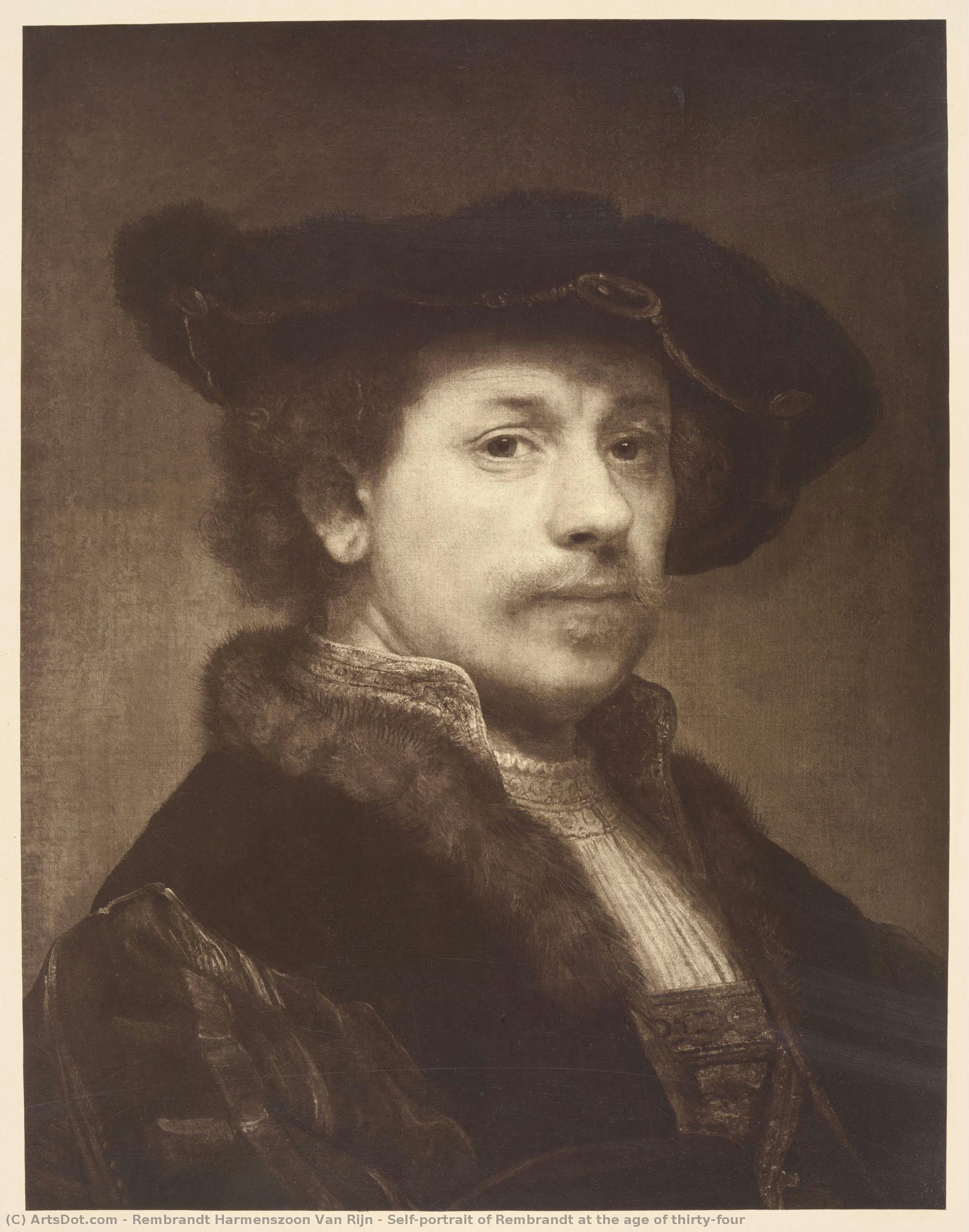
A Window into the Soul: Rembrandt’s ‘Self-Portrait at Thirty-Four’
This meticulously crafted hand-painted reproduction captures the essence of one of Rembrandt van Rijn's most compelling self-portraits, painted during his thirty-fourth year. More than a simple likeness, this artwork offers an intimate glimpse into the burgeoning confidence and artistic ambition that would define the master’s career. The image, rendered in shades of grey reflecting the original photograph, immediately draws the viewer into Rembrandt’s direct gaze – a gaze both thoughtful and intensely personal.
The Dutch Golden Age Portrait
Created during the height of the Dutch Golden Age (1600-1700), this portrait exemplifies the era's fascination with self-representation. Unlike earlier European portraits that often depicted subjects in opulent, idealized settings, Rembrandt’s approach was markedly more humanistic. He wasn’t striving for an unattainable ideal; instead, he presented himself as he truly was – a man of intellect and burgeoning talent. The painting speaks to the growing merchant class's desire to document their success and status, but Rembrandt elevates this genre through his profound understanding of psychological depth.
Technical Brilliance: Light and Shadow
Rembrandt’s mastery of *chiaroscuro* – the dramatic use of light and shadow – is immediately apparent. The carefully modulated tones create a palpable sense of volume, emphasizing the contours of his face and clothing. Notice how the light source, likely positioned to the side, casts deep shadows that add to the painting's three-dimensionality and contribute significantly to its emotional impact. This technique wasn’t merely decorative; it was integral to Rembrandt’s ability to convey mood and character – a hallmark of his style.
Symbolism and Identity
The details within the portrait offer subtle clues about Rembrandt’s identity and aspirations. The fur-lined cloak, a symbol of wealth and status, suggests his growing success as an artist. The hat, a fashionable accessory of the time, adds to his air of sophistication. Most importantly, however, is Rembrandt's direct gaze – a bold statement of self-assurance and artistic conviction. This self-portrait isn’t just a representation; it’s a declaration: Rembrandt was determined to make his mark on the world.
Dimensions & Details
- Title: Self-portrait of Rembrandt at the age of thirty-four
- Artist: Rembrandt Harmenszoon van Rijn
- Size: 5 x 37 cm
- Date: Unknown
This hand-painted reproduction offers a unique opportunity to own a piece of art history. Its exquisite detail and masterful execution will undoubtedly enhance any interior space, serving as a constant reminder of Rembrandt’s genius and the enduring power of his vision.