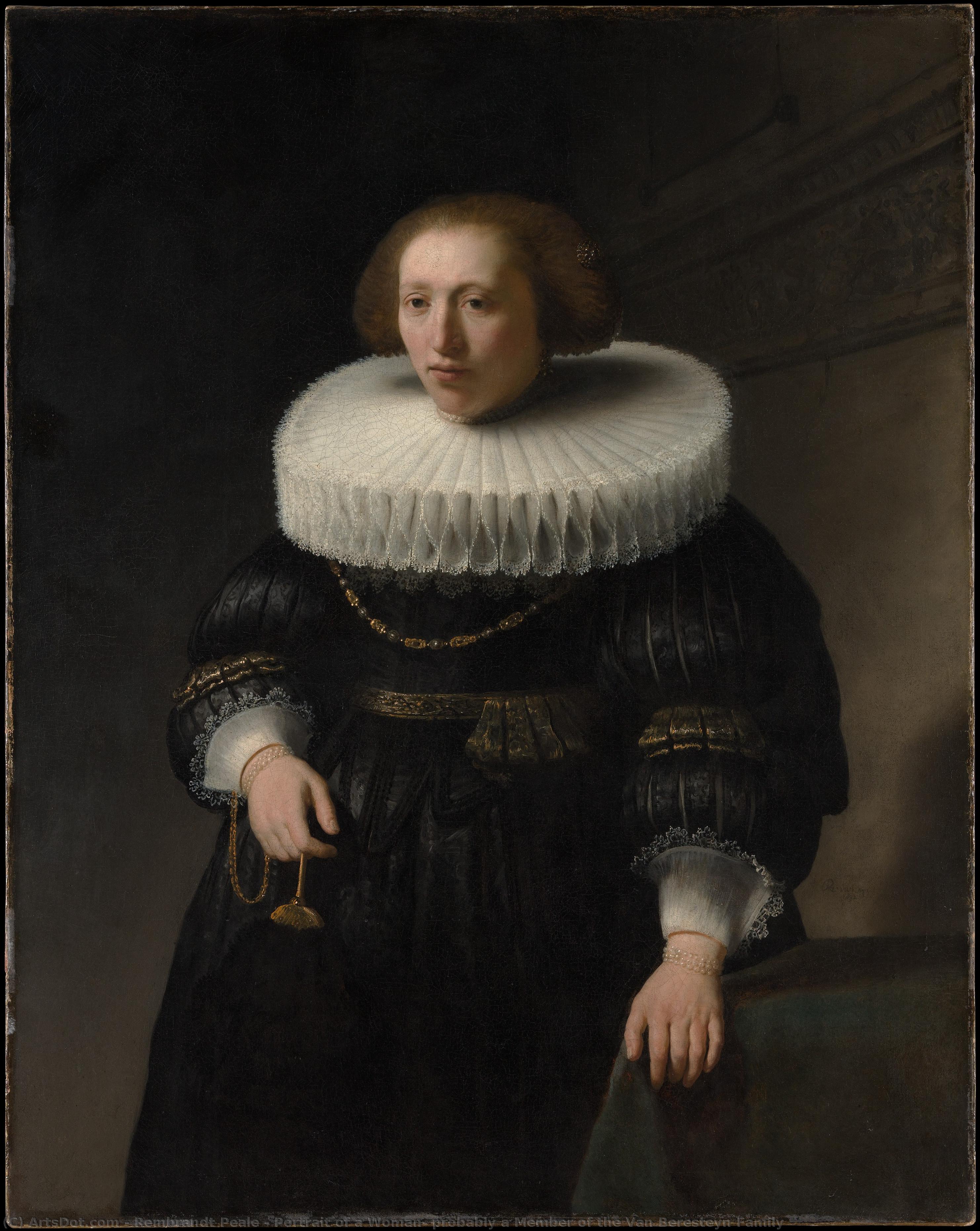
A Dynasty Captured: Rembrandt Peale's Portrait of a Woman
This exquisite portrait, dating from 1632 and measuring 112 x 89 cm, offers a poignant glimpse into the Van Beresteyn family’s life during a pivotal era in Dutch art. Attributed to Rembrandt Peale – though bearing a striking resemblance to the famed Dutch master – this work transcends mere portraiture; it's a carefully constructed narrative of lineage and social standing, meticulously rendered with a sensitivity that speaks volumes about the burgeoning artistic traditions of early America.
- Subject & Composition: The central figure is a woman of considerable grace, her gaze direct and unwavering. Dressed in the fashionable attire of the period – a ruffled collar, delicate lace framing her neck, and a somber black gown – she embodies both elegance and quiet strength. The subtle inclusion of two figures in the background, partially obscured yet undeniably present, adds layers of complexity to the scene, hinting at the familial bonds that underpinned the Van Beresteyn’s social position.
- Technical Mastery: Peale's brushwork is remarkably controlled, demonstrating a deep understanding of chiaroscuro – the dramatic interplay of light and shadow – a hallmark of Rembrandt’s own style. The subtle gradations in tone create a palpable sense of volume and texture, particularly evident in the folds of her gown and the delicate details of her lace.
- Historical Context: This portrait is inextricably linked to another work by Peale, “Portrait of a Man,” creating a pair that likely served as dynastic portraits within the Van Beresteyn family home in Delft. The composition echoes Jacob Willemsz. Delff’s 1592 depiction of Cornelis van Beresteyn, suggesting a deliberate design intended to reinforce familial connections and honor ancestral heritage – a common practice amongst wealthy families seeking to establish their legacy through art.
Symbolism & Artistic Echoes
The inclusion of the ostrich fan held delicately in the woman’s hand is not merely an accessory; it's a potent symbol of status and refinement, reflecting the refined tastes and social graces expected of women within this aristocratic circle. The repetition of pose with her mother-in-law, Delff’s portrait, underscores the importance of familial continuity and respect for tradition – values deeply ingrained in Dutch society at the time. Peale's deliberate choice to mirror Delff’s composition suggests a conscious effort to align his work within a broader artistic lineage, solidifying his position as a skilled artist operating within established conventions.
The Artist: Rembrandt Peale - A Legacy of Likeness
Born in 1778 in Bucks County, Pennsylvania, Rembrandt Peale was part of a family deeply involved in the arts. His father, Charles Willson Peale, was a painter, museum founder, and a champion of art’s role in shaping national identity. This upbringing profoundly influenced Peale's artistic development, equipping him with a strong foundation in portraiture and landscape painting. The very name “Rembrandt,” echoing the Dutch master Harmenszoon van Rijn, signaled Charles Willson Peale’s aspirations for his son – a hope that he would carry forward a tradition of artistic excellence.
Emotional Impact & Collector's Value
Beyond its historical and artistic significance, this portrait possesses a remarkable emotional resonance. The woman’s direct gaze invites the viewer into her world, fostering a sense of intimacy and connection across centuries. As a hand-painted reproduction, this artwork offers an unparalleled opportunity to experience the beauty and craftsmanship of Peale's work firsthand – a timeless piece that will undoubtedly enhance any interior space with its elegance, sophistication, and profound historical context.