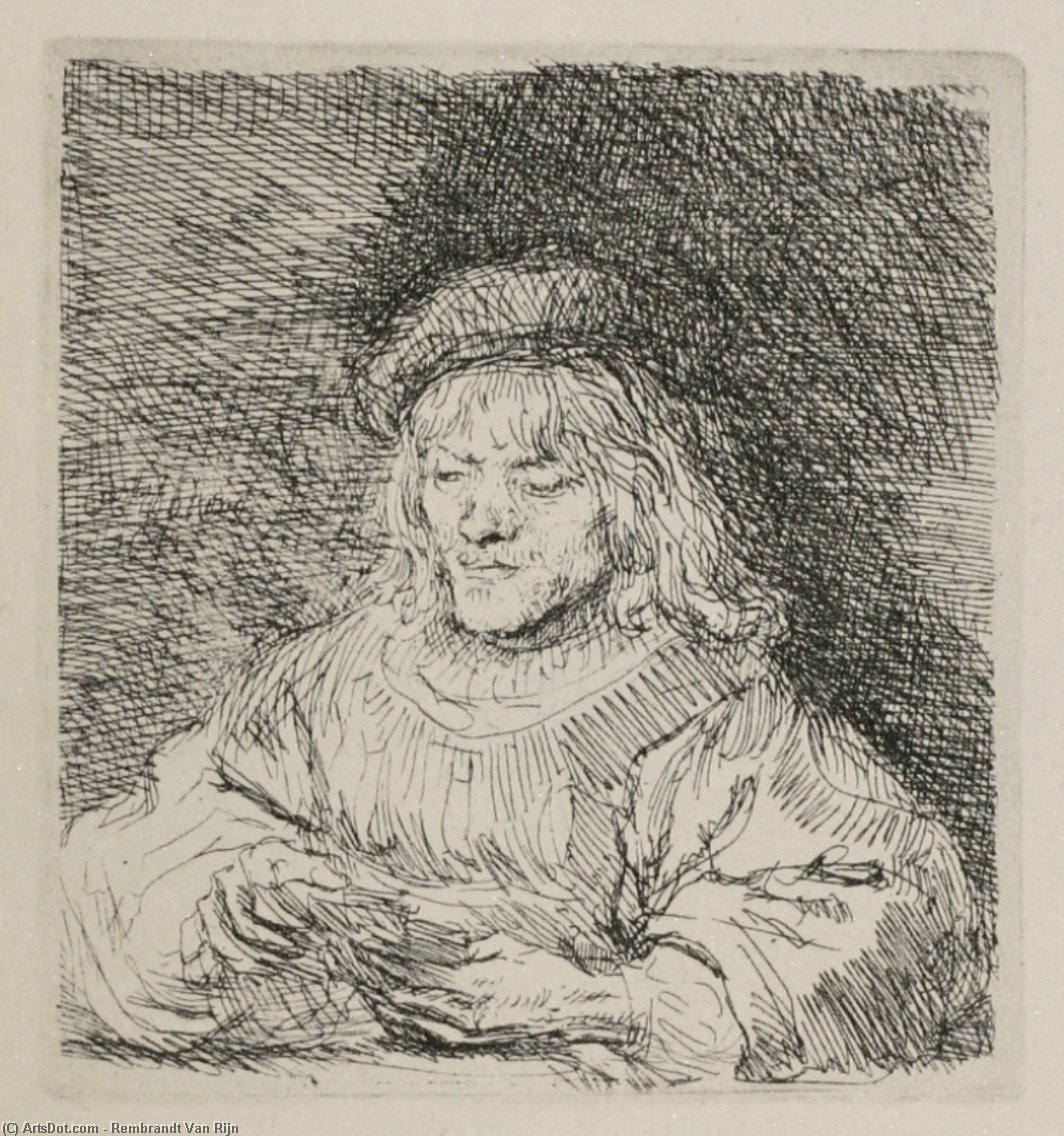
Experience the dramatic chiaroscuro of Rembrandt van Rijn's A Man Playing Cards, a 1658 Dutch Golden Age masterpiece capturing intense human emotion, and bring this profound moment of focus into your private collection.
The Soul in the Shadows: A Study of Rembrandt’s Solitude
In the quiet, amber-hued atmosphere of the Dutch Golden Age, few images capture the profound intimacy of a single moment as masterfully as Rembrandt van Rijn’s A Man Playing Cards. This is not merely a depiction of a pastime; it is an invitation into a private psychological landscape. As we gaze upon the solitary figure seated at his table, we are drawn into a world where time seems to suspend itself. The subject, lost in the silent tension of a game, embodies a universal human experience—the intense, focused concentration that occurs when we are caught between the anticipation of a win and the heavy weight of a potential loss. Through his brush, Rembrandt transforms a simple genre scene into a meditative exploration of the human spirit.
The brilliance of this masterpiece lies in its unparalleled command of chiaroscuro. Rembrandt, a pioneer of dramatic light and shadow, uses illumination not just to reveal form, but to sculpt emotion. A soft, diffused glow emanates across the man’s face, highlighting the subtle furrow of his brow and the intense, fixed gaze that anchors the composition. This light acts as a spotlight on the internal drama, pulling the viewer's eye away from the surrounding darkness and forcing an encounter with the subject's vulnerability. The deep, velvety shadows that envelop the periphery do more than provide contrast; they create a sense of sanctuary and isolation, making the man’s world feel both vast in its mystery and incredibly small in its intimacy.
A Tapestry of Texture and Fate
Beyond the dramatic lighting, the painting is a triumph of tactile realism. Every element of the composition serves to ground the viewer in the physical reality of 1658. One can almost feel the heavy, coarse texture of the man’s clothing and the weathered surface of the wooden table beneath his hands. Rembrandt’s meticulous attention to detail—the way light catches a fold in fabric or settles upon the edge of a playing card—creates a sensory experience that transcends the flat plane of the canvas. This technical mastery serves a deeper symbolic purpose, weaving together the tangible world with the intangible themes of fate and chance. The cards themselves become symbols of life's unpredictability, representing the gambles we all take in our pursuit of fortune and meaning.
For the discerning collector or interior designer, bringing a reproduction of this work into a space offers more than just aesthetic beauty; it introduces a profound narrative depth. Whether placed in a dimly lit study to enhance a sense of scholarly quietude or as a focal point in a contemporary gallery-style room, A Man Playing Cards commands attention through its quiet power. It is a piece that rewards long periods of contemplation, offering new layers of insight with every glance. To possess such a work is to hold a fragment of the Dutch Golden Age, a timeless reminder of the beauty found in moments of stillness, reflection, and the enduring drama of the human condition.