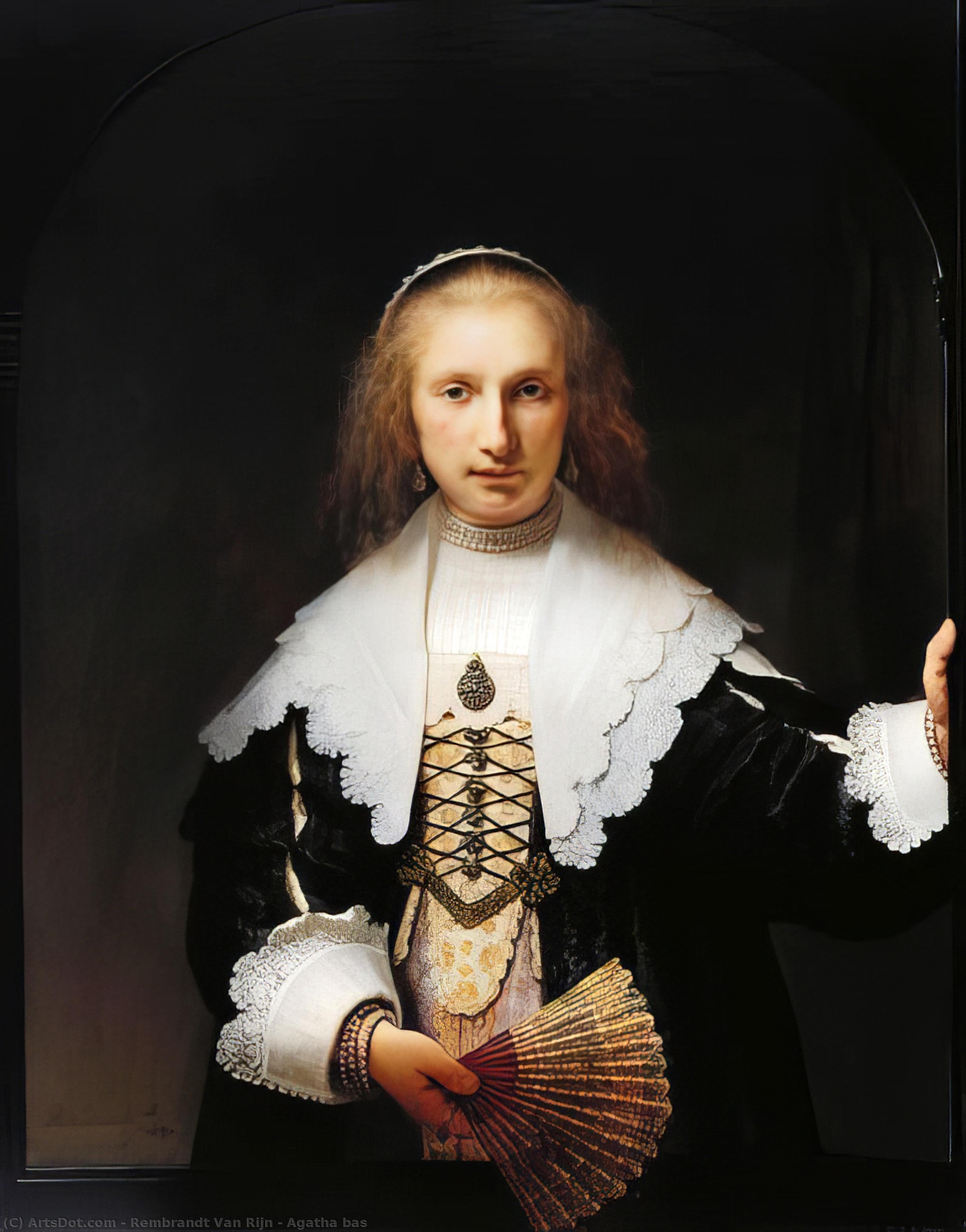
Rembrandt’s Intimate Portrait of Agatha Bas
Rembrandt van Rijn's “Portrait of Agatha Bas,” painted in 1641, isn’t merely a likeness; it’s a profound exploration of light, shadow, and the quiet dignity of a woman within her social sphere. This oil on canvas masterpiece, now housed within the esteemed Museum Het Rembrandthuis in Amsterdam, offers a rare glimpse into the life of a prominent citizen of 17th-century Holland – Agatha Bas herself. More than just a portrait, it’s a testament to Rembrandt's unparalleled ability to capture not only physical appearance but also an underlying sense of character and inner composure.
The painting immediately draws the eye to Agatha’s elegant attire: a rich black gown adorned with delicate white lace cuffs and collar. These details, rendered with meticulous precision by Rembrandt’s hand, speak volumes about her status and wealth within Dutch society. The pearls adorning her neck and wrists further emphasize this position, while the simple yet sophisticated style of her hair – pulled back into a neat bun – suggests an understated grace. However, it's not merely the outward appearance that commands attention; Rembrandt masterfully employs chiaroscuro—the dramatic interplay of light and shadow—to sculpt Agatha’s features and imbue the portrait with depth and emotion.
Notice how the light gently illuminates her face, highlighting the delicate curve of her cheekbones and the subtle expression in her eyes. The shadows that fall across her garments create a sense of volume and texture, inviting us to almost feel the luxurious fabric beneath our fingertips. This masterful use of light isn’t simply decorative; it serves to draw attention to key elements – particularly Agatha's hands, poised with a fan—and subtly directs the viewer’s gaze throughout the composition. The inclusion of the fan itself is significant, a fashionable accessory of the era that adds a touch of elegance and perhaps even a hint of playful reserve to her demeanor.
Rembrandt: A Master of Light and Shadow
To truly appreciate “Portrait of Agatha Bas,” it’s essential to understand Rembrandt's artistic philosophy. He was, above all else, an explorer of light—a phenomenon he believed held the key to revealing truth and emotion within his subjects. Unlike many of his contemporaries who favored bright, even lighting, Rembrandt often utilized dramatic contrasts between light and shadow, creating a sense of mystery and depth. This technique, honed through years of observation and experimentation, is evident throughout this portrait, transforming a simple depiction into a powerfully evocative work.
Rembrandt’s innovative approach extended beyond mere technical skill; it reflected a deeper understanding of human psychology. He wasn't interested in simply presenting a superficial likeness but rather in capturing the essence of his subjects—their inner lives and personalities. This is particularly evident in the subtle nuances of Agatha’s expression, which suggests both intelligence and quiet dignity.
His career spanned decades, marked by periods of immense success followed by financial hardship. He was a prolific artist working across multiple mediums – painting, printmaking, and drawing – constantly pushing the boundaries of artistic convention. The Museum Het Rembrandthuis, situated within the former home and studio where he lived and worked between 1639 and 1658, offers an unparalleled opportunity to immerse oneself in his world and witness the evolution of his remarkable talent.
The Context of a Dutch Golden Age Portrait
“Portrait of Agatha Bas” is firmly rooted within the context of the Dutch Golden Age—a period of unprecedented prosperity, artistic innovation, and social change. During this era, portraiture flourished as a popular genre, reflecting the growing importance of individual identity and status. Wealthy merchants, civic officials, and members of the gentry commissioned portraits to commemorate their achievements, solidify their positions within society, and leave a lasting legacy.
Rembrandt’s portraits were highly sought after, not only for their artistic merit but also for their ability to capture the spirit of the age. He skillfully blended realistic representation with expressive symbolism, creating works that are both visually stunning and intellectually stimulating. The inclusion of objects like fans—a symbol of status and refinement—and jewelry—representing wealth and prosperity—further reinforces this context.
The painting’s composition also reflects the conventions of Dutch portraiture at the time. Agatha is depicted in a three-quarter pose, a common arrangement that allowed for a more intimate connection with the viewer. The use of a dark background helps to isolate her figure and draw attention to her features, while the carefully arranged details—her dress, jewelry, and fan—create a sense of visual harmony.
Handmade Reproductions: Bringing Rembrandt Home
For art enthusiasts seeking to experience the beauty and artistry of “Portrait of Agatha Bas” firsthand, ArtsDot.com offers meticulously crafted handmade oil reproductions that capture every nuance and detail of the original masterpiece. These reproductions are created by skilled artists who employ traditional techniques—layering thin glazes of oil paint to achieve a depth and luminosity reminiscent of Rembrandt’s own work.
Unlike mass-produced prints, these handmade reproductions are unique works of art in their own right, imbued with the artist's skill and passion. They offer an exceptional opportunity to bring a piece of Dutch Golden Age history into your home or office—a timeless addition that will undoubtedly spark conversation and admiration. Explore our collection today and discover the perfect Rembrandt reproduction to complement your personal style.