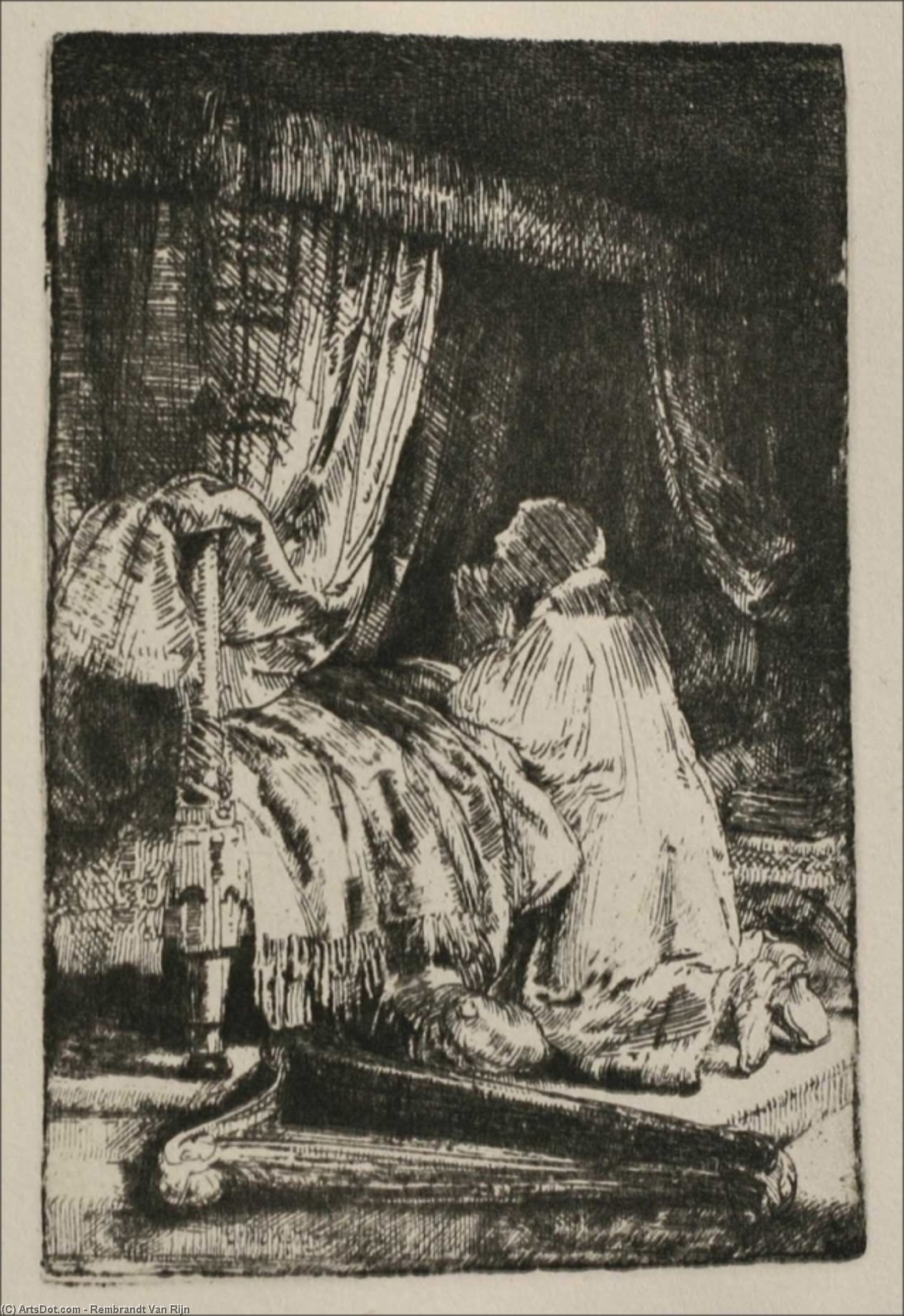
David on His Knees: A Study in Grief and Baroque Drama
Rembrandt van Rijn’s “David on His Knees,” etched circa 1647, stands as a haunting testament to human emotion within the framework of Baroque artistic expression. More than just a depiction of biblical narrative—the story of David confronting Goliath—it transcends its subject matter to explore profound themes of loss, vulnerability, and impending doom, cementing Rembrandt’s reputation as one of the most psychologically astute artists of his era.
- Subject Matter: The etching portrays a poignant scene featuring two figures kneeling beside a bed where a deceased person lies. This composition immediately establishes a solemn atmosphere, reflecting the universal experience of grief and mourning.
- Style & Period: Rooted firmly in Baroque aesthetics, “David on His Knees” embodies the movement’s preoccupation with dramatic lighting, emotional intensity, and expressive gesture—characteristics that distinguish it from the more idealized styles prevalent earlier in the century.
Rembrandt's masterful technique is evident in the meticulous execution of etching – a process renowned for its ability to capture subtle tonal variations and textural nuances. The artist skillfully employed zinc or copper plate, meticulously incised with etching needles to create an intricate network of lines that define form and contour. These lines aren’t merely outlines; they are imbued with palpable energy, conveying the weight of sorrow and the fragility of human existence.
- Technique: Rembrandt's technique relies heavily on hatching—the use of closely spaced parallel lines to build up shading—creating a dense tapestry of gray tones that dominates the composition. This method allows for unparalleled control over tonal gradation, simulating the velvety texture of drapery and the pallor of skin.
- Lighting: The etching’s dramatic lighting is arguably its most striking feature. An unseen source casts long shadows across the bed linens and illuminates the faces of the kneeling figures, emphasizing their expressions of anguish and despair. Rembrandt's understanding of chiaroscuro—the interplay between light and dark—elevates the artwork beyond a simple visual representation; it communicates psychological depth and evokes visceral emotion.
Beyond its technical brilliance, “David on His Knees” resonates with symbolic significance. The kneeling posture itself symbolizes humility and supplication before death – a gesture of profound vulnerability and acceptance. The draped fabric serves as a visual metaphor for mourning, reinforcing the overarching theme of bereavement. Rembrandt’s ability to distill complex emotions into a single image speaks volumes about his artistic genius and continues to captivate audiences centuries later.
- Symbolism: Consider the positioning of the figures; their bowed heads convey reverence and sorrow. The folds of fabric symbolize mourning, mirroring the solemnity of the scene.
“David on His Knees” remains a powerful reminder of Rembrandt’s unparalleled capacity to translate human experience into enduring visual art. Its melancholic beauty—captured with breathtaking precision—continues to inspire contemplation and serves as an exquisite example of Baroque drama at its finest.