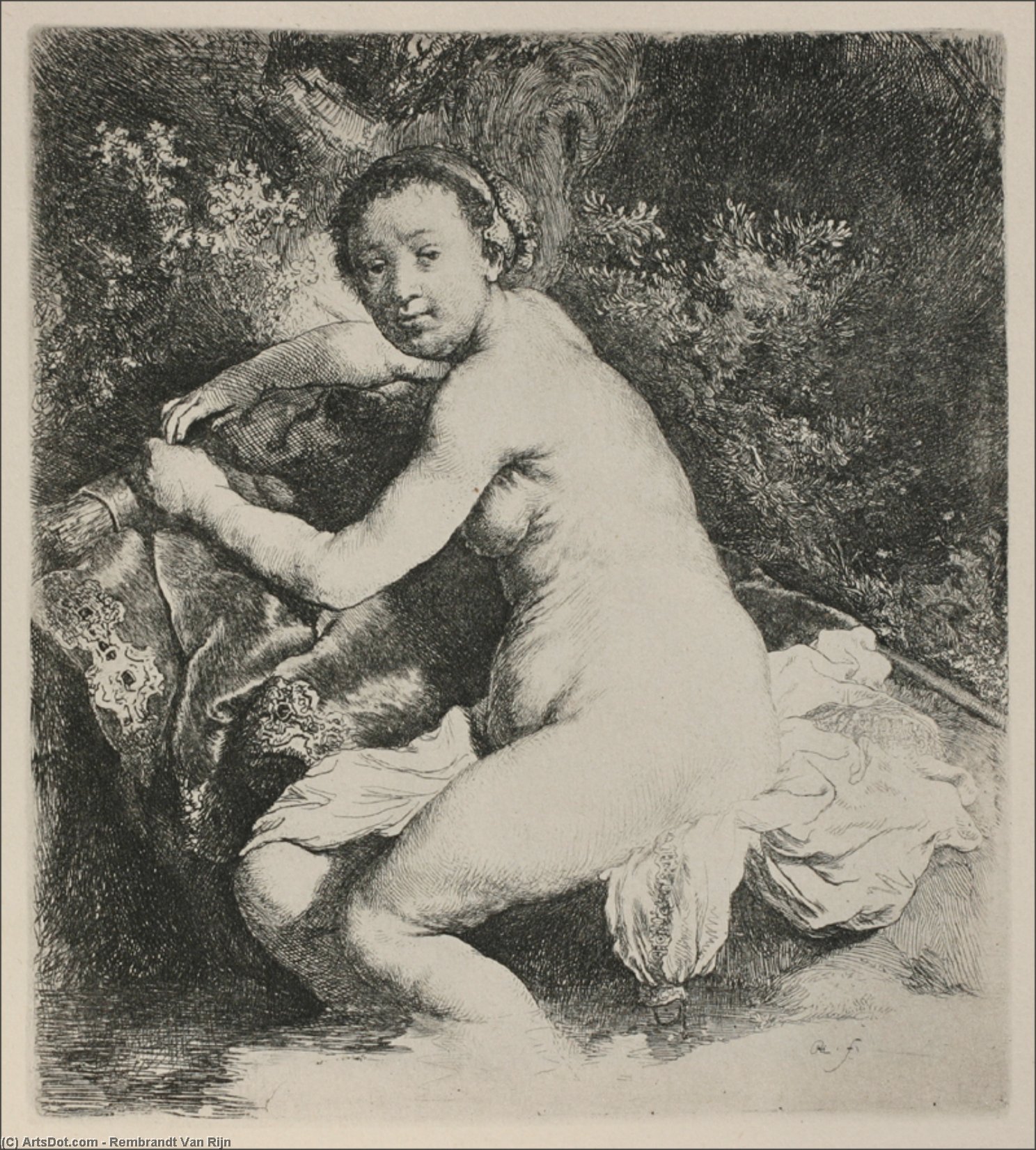
This etching, created around 1632-1633, showcases Rembrandt's early style—characterized by meticulous observation and dramatic lighting—as he portrays a pivotal moment from Ovid’s Metamorphoses. Part of the Charles Deering Collection at The Art Institute of Chicago, it exemplifies Rembrandt’s pioneering approach to nude depictions during his Leiden period.
A Divine Encounter in Shadow and Light
To step before Rembrandt van Rijn’s “Diana Bathing” is to enter a sanctuary of profound intimacy and dramatic tension. This masterpiece, a cornerstone of the Baroque era, transcends the mere depiction of a mythological scene to offer a window into the human soul. At its heart lies the goddess Diana, captured in a moment of quiet vulnerability as she bathes amidst her nymphs. The composition is not merely a study of classical myth but a masterful exploration of chiaroscuro—that legendary technique where light and shadow dance in a high-stakes struggle. Rembrandt uses stark contrasts to pull the viewer into the scene, making the dampness of the water and the soft textures of skin feel almost tangible. For the discerning collector or interior designer, this work offers an unparalleled sense of depth, bringing a sophisticated, moody elegance to any curated space.
The narrative weight of the piece draws heavily from Ovid’s Metamorphoses, weaving a complex tapestry of divine law and consequence. As Diana rests, the etching subtly alludes to the tragic interludes of Actaeon and Callisto. There is a palpable sense of a world in flux; the averted gaze of the goddess suggests a dignity that refuses to be compromised, even as her privacy is breached. This tension between the sacred and the seen creates an emotional resonance that lingers long after one has turned away. The artist’s ability to render the delicate folds of fabric and the shimmering reflections on the water serves to ground these lofty mythological themes in a breathtakingly realistic atmosphere, making the divine feel intimately human.
The Mastery of the Dutch Golden Age
Created during Rembrandt’s formative and highly prolific years in Amsterdam, this work reflects the burgeoning intellectual curiosity of the Dutch Golden Age. During this period, European art circles were deeply enamored with classical antiquity, yet Rembrandt breathed new life into these ancient tales by infusing them with psychological depth. Unlike the more stylized or rigid representations of his predecessors, Rembrandt’s approach is characterized by a raw, observational truth. He does not merely paint a goddess; he paints the feeling of being watched, the sensation of cool water, and the heavy silence of a forest glade.
For those seeking to adorn a home with art that inspires contemplation, "Diana Bathing" serves as a perfect focal point. Its monochromatic brilliance—whether viewed through the lens of his original etchings or a high-quality hand-painted reproduction—provides a timeless aesthetic that complements both classical and contemporary interiors. The piece does not demand attention through loud colors, but rather commands it through its quiet, commanding presence and its ability to evoke a sense of history, mystery, and eternal beauty.