Rembrandt’s ‘Flora’: A Portrait of Grace and Hidden Symbolism
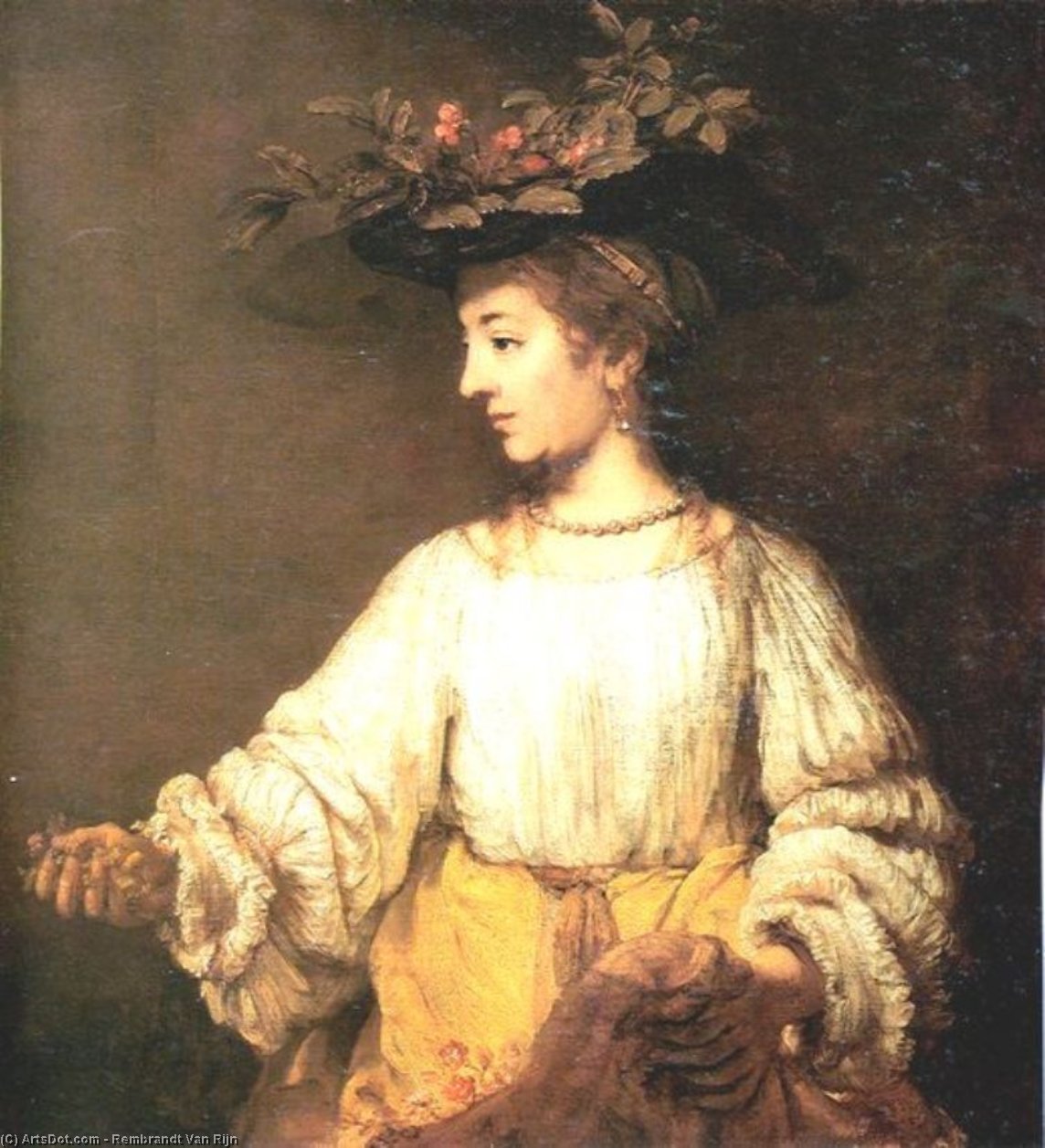
Rembrandt van Rijn's “Flora,” painted around 1654, is not merely a depiction of a woman holding a fan; it’s a profound meditation on beauty, femininity, and the subtle interplay between earthly pleasure and spiritual contemplation. This captivating portrait, now meticulously reproduced in exquisite detail by ArtsDot, offers a rare glimpse into the artist's evolving style and his masterful command of light and shadow – hallmarks that define his enduring legacy. The painting’s subject, often identified as Saskia van Rijn (though some scholars suggest Hendrickje Stoffels), is presented in profile, her face partially obscured by a delicate hat adorned with flowers, instantly evoking the goddess Flora herself, Roman deity of spring, fertility, and blossoms.
Rembrandt's approach to this subject matter reveals a fascinating shift from his earlier, more overtly dramatic works. Unlike the vibrant, dynamic compositions of his youth, “Flora” embodies a quieter elegance. The palette is restrained – primarily muted browns, creams, and subtle greens – creating an atmosphere of contemplative serenity. The lighting, characteristic of Rembrandt’s genius, is not merely illuminating; it sculpts the form, drawing attention to the delicate curve of her neck, the graceful drape of her clothing, and the intricate details of the floral arrangement on her hat. This masterful use of chiaroscuro – the dramatic contrast between light and dark – imbues the scene with a sense of depth and mystery.
The Influence of Titian and the Language of Flowers
Art historians have long noted Rembrandt’s debt to Venetian painter Titian, particularly in “Flora.” The composition shares similarities with Titian's own "Flora" (circa 1517-20), most notably in the pose and the emphasis on the subject’s face. However, Rembrandt departs from his inspiration by introducing a profound sense of melancholy and introspection. The averted gaze, coupled with the subtle downturn of her lips, suggests a quiet sadness—a poignant contrast to the joyous associations typically linked with Flora.
Beyond mere stylistic influence, “Flora” is rich in symbolism, particularly through its use of flowers. Each blossom carries a specific meaning within the language of flowers – a tradition deeply rooted in Renaissance Europe. The carnation, prominently featured on her hat, traditionally symbolizes love and affection, while roses represent beauty and passion. The arrangement as a whole speaks to a complex interplay between earthly desires and spiritual longing—a theme that resonates throughout Rembrandt’s oeuvre. It's believed the artist may have been referencing his own marriage to Saskia, and perhaps hinting at the challenges and complexities of their relationship.
A Window into Rembrandt’s World
“Flora” offers a valuable insight into Rembrandt’s personal life and artistic development during this period. The painting was created in the twilight years of his career, after he had experienced both professional success and profound financial hardship. The somber mood and introspective quality of the portrait reflect the emotional turbulence that characterized his later years. Interestingly, the image has been linked to studies Rembrandt made of Mughal miniatures, demonstrating a fascination with Eastern artistic traditions and their emphasis on capturing the essence of the subject rather than merely replicating its outward appearance.
ArtsDot’s meticulous reproductions capture every nuance of Rembrandt's original brushstrokes, allowing you to experience the full emotional power of “Flora” in stunning detail. Whether displayed as a centerpiece in your living room or a thoughtful addition to your art collection, this iconic masterpiece will undoubtedly spark conversation and inspire contemplation for years to come. Explore high-quality reproductions at ArtsDot and bring the timeless beauty of Rembrandt’s “Flora” into your home.
Technical Details & Reproduction Quality
Rembrandt utilized oil paints on a canvas, employing his signature technique of layering glazes to achieve remarkable depth and luminosity. The subtle variations in tone and texture are meticulously reproduced in our high-definition prints, ensuring that every detail—from the delicate folds of her clothing to the intricate patterns of the flowers—is faithfully rendered. Our hand-painted reproductions maintain the original artwork's character and authenticity, offering a truly exceptional alternative to traditional museum displays.
Discover More Rembrandt Masterpieces
Interested in exploring other iconic works by Rembrandt? Visit our article on masterful portraits to discover ten paintings that define the genre, or explore our extensive collection of Rembrandt reproductions at Rembrandt’s Artist Page. Don't miss the opportunity to experience the brilliance of this Dutch master firsthand.