Hendrickje Stoffels: A Glimpse into Rembrandt's Intimate World
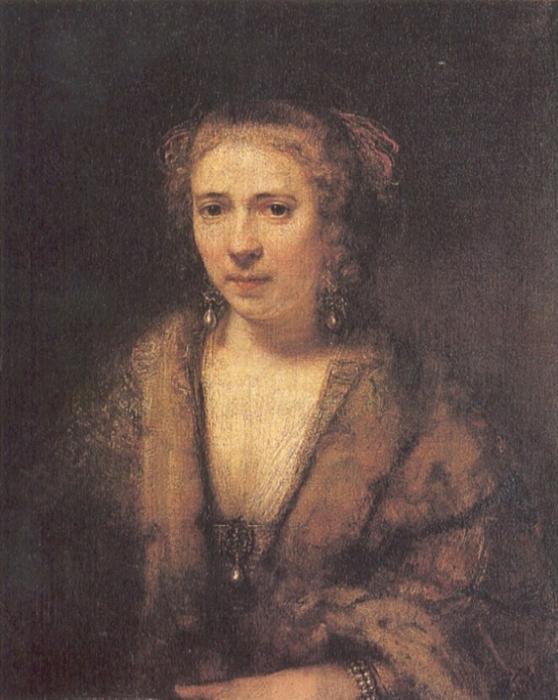
Rembrandt van Rijn’s Hendrickje Stoffels (1654) is more than just a portrait; it's a poignant window into the artist's personal life and artistic evolution. Housed in the Musée du Louvre, this oil on canvas painting (72 x 60 cm) depicts Rembrandt's companion and model, Hendrickje Stoffels, with remarkable sensitivity and psychological depth. The work stands as a testament to Rembrandt’s mastery of light and shadow, his ability to capture human emotion, and his willingness to portray the ordinary with extraordinary skill.
Subject and Composition
The painting portrays Hendrickje Stoffels in a three-quarter view, her gaze directed towards the viewer. She is dressed simply in a brown dress, which contrasts subtly with the darker background, drawing attention to her face and hands. Her hair is long and loosely styled, framing her features. The composition is intimate and unpretentious, devoid of elaborate ornamentation or theatrical poses. Rembrandt eschews grand gestures, instead focusing on capturing Hendrickje's quiet dignity and inner life. The simplicity of the setting emphasizes the sitter’s presence, allowing viewers to connect with her on a personal level.
Style and Technique: Chiaroscuro and Emotional Depth
Hendrickje Stoffels exemplifies Rembrandt’s signature style – characterized by dramatic use of chiaroscuro. The stark contrast between light and shadow creates a sense of depth and volume, highlighting the textures of her dress and skin while obscuring parts of the background. This technique not only enhances the visual impact but also contributes to the painting's emotional intensity. Rembrandt’s brushwork is loose and expressive, particularly in the rendering of Hendrickje’s hair and clothing. The visible brushstrokes add a sense of spontaneity and immediacy to the work. The subtle gradations of light and shadow convey a profound sense of realism and psychological complexity.
Historical Context and Symbolism
Painted in 1654, during a period of personal hardship for Rembrandt, the portrait reflects both his artistic maturity and his complex emotional state. Having lost his first wife Saskia, Rembrandt found companionship with Hendrickje Stoffels, who also became his model and business manager. Their relationship was complicated by societal norms and legal constraints; they could not legally marry due to inheritance laws tied to Saskia’s estate. The painting can be interpreted as a celebration of their bond and a testament to Hendrickje's strength and resilience. Some art historians suggest the simple setting and unadorned dress symbolize a rejection of ostentation and a focus on genuine human connection, reflecting Rembrandt’s evolving artistic philosophy.
Emotional Impact and Legacy
Hendrickje Stoffels evokes a sense of quiet contemplation and profound empathy. The sitter's direct gaze creates an intimate connection with the viewer, inviting us to reflect on her life and experiences. Rembrandt’s masterful use of light and shadow imbues the portrait with a palpable emotional depth, conveying a sense of vulnerability and strength. This painting is considered one of Rembrandt’s most moving portraits, showcasing his ability to capture not just physical likeness but also the inner essence of his subjects. It remains an enduring testament to the power of art to illuminate human relationships and explore the complexities of the human condition.