A Symphony of Shadow and Prophecy
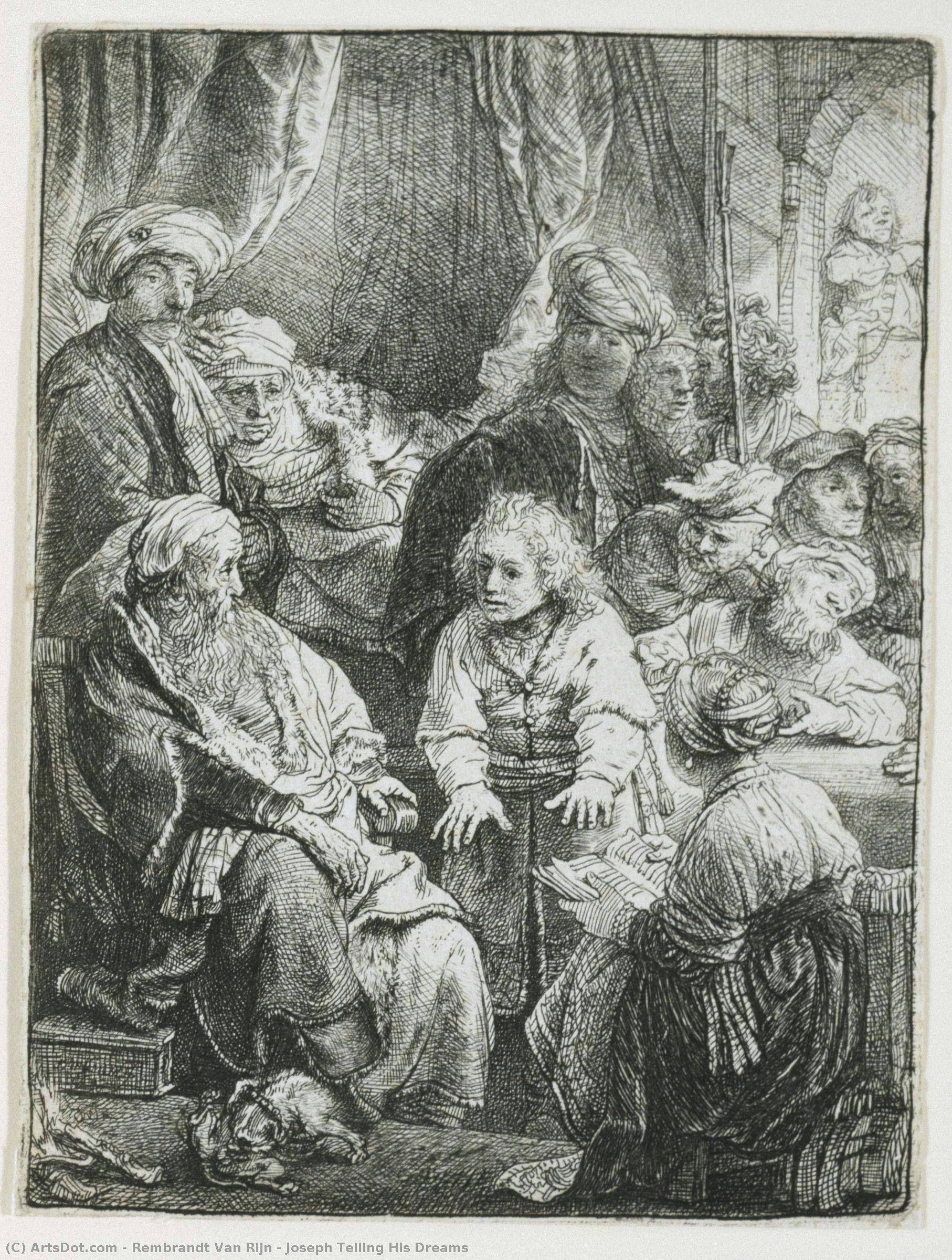
In the quiet intimacy of a seventeenth-century interior, a moment of profound tension unfolds within Rembrandt van Rijn’s 1638 masterpiece, "Joseph Telling His Dreams." This exquisite etching does not merely depict a biblical scene; it invites the viewer into a sacred circle of listeners, caught in the breathless anticipation of a divine revelation. As Joseph recounts his prophetic visions from Genesis—dreams of celestial bodies and bowing sheaves that foretell a future of both triumph and tribulation—the air seems to thicken with the weight of destiny. Rembrandt, the undisputed master of the Dutch Golden Age, captures more than just a narrative; he captures the very psychological pulse of human reaction, ranging from skeptical doubt to wide-eyed wonder.
The brilliance of this work lies in its ability to transform a small-scale print into an expansive emotional landscape. Through his unparalleled command of chiaroscuro, Rembrandt directs our gaze with surgical precision. An unseen light source, positioned above and slightly to the left, pierces the gloom to illuminate Joseph at the apex of a pyramidal composition. This technique does more than create depth; it serves as a metaphor for divine illumination breaking through the shadows of earthly uncertainty. The dramatic interplay between brilliant highlights and deep, velvety blacks creates a theatrical atmosphere that pulls the observer into the room, making the viewer an uninvited guest at this momentous family gathering.
The Mastery of the Etching Needle
To behold "Joseph Telling His Dreams" is to witness the technical virtuosity of a genius at the height of his creative powers. As an etching, the piece relies on the meticulous manipulation of a copper plate, where every line etched by the needle carries the weight of intention. Rembrandt employs a dense network of cross-hatching and fine, interwoven lines to sculpt form out of darkness. One can almost feel the texture of the heavy drapery, the ruggedness of the skin, and the palpable volume of the figures as they lean into the light. This painstaking process allows for a level of detail that breathes life into the inanimate, turning ink on paper into a living, breathing tableau.
For the discerning collector or interior designer, this artwork offers a timeless elegance that transcends modern trends. The monochromatic palette provides a sophisticated anchor for any curated space, offering a sense of historical gravity and intellectual depth. Whether placed in a sunlit gallery or a moody, library-inspired study, the print’s organic shapes and dramatic tonal range command attention without overwhelming the surrounding decor. It is a piece that rewards prolonged contemplation, revealing new nuances of light and shadow with every glance.
A Legacy of Human Emotion
Beyond its technical brilliance, the enduring power of Rembrandt’s work resides in its profound humanity. While the subject matter is rooted in ancient scripture, the emotions rendered are universal. In the faces of Joseph's brothers, we see the recognizable spectrum of human nature: the flicker of envy, the squint of skepticism, and the quiet intensity of those awaiting a sign. There is no caricature here, only the raw, honest depiction of souls caught in the grip of a life-altering story. This psychological depth is what makes a high-quality reproduction of this etching so much more than a decoration; it is an acquisition of a piece of human history.
Owning a reproduction of such a seminal work allows one to bring the spirit of the Dutch Golden Age into the contemporary home. It serves as a constant reminder of the power of storytelling and the enduring beauty found in the balance of light and dark. For those seeking to infuse their environment with inspiration, "Joseph Telling His Dreams" stands as a testament to the idea that even in the deepest shadows, there is always a light waiting to reveal the truth.