Introduction
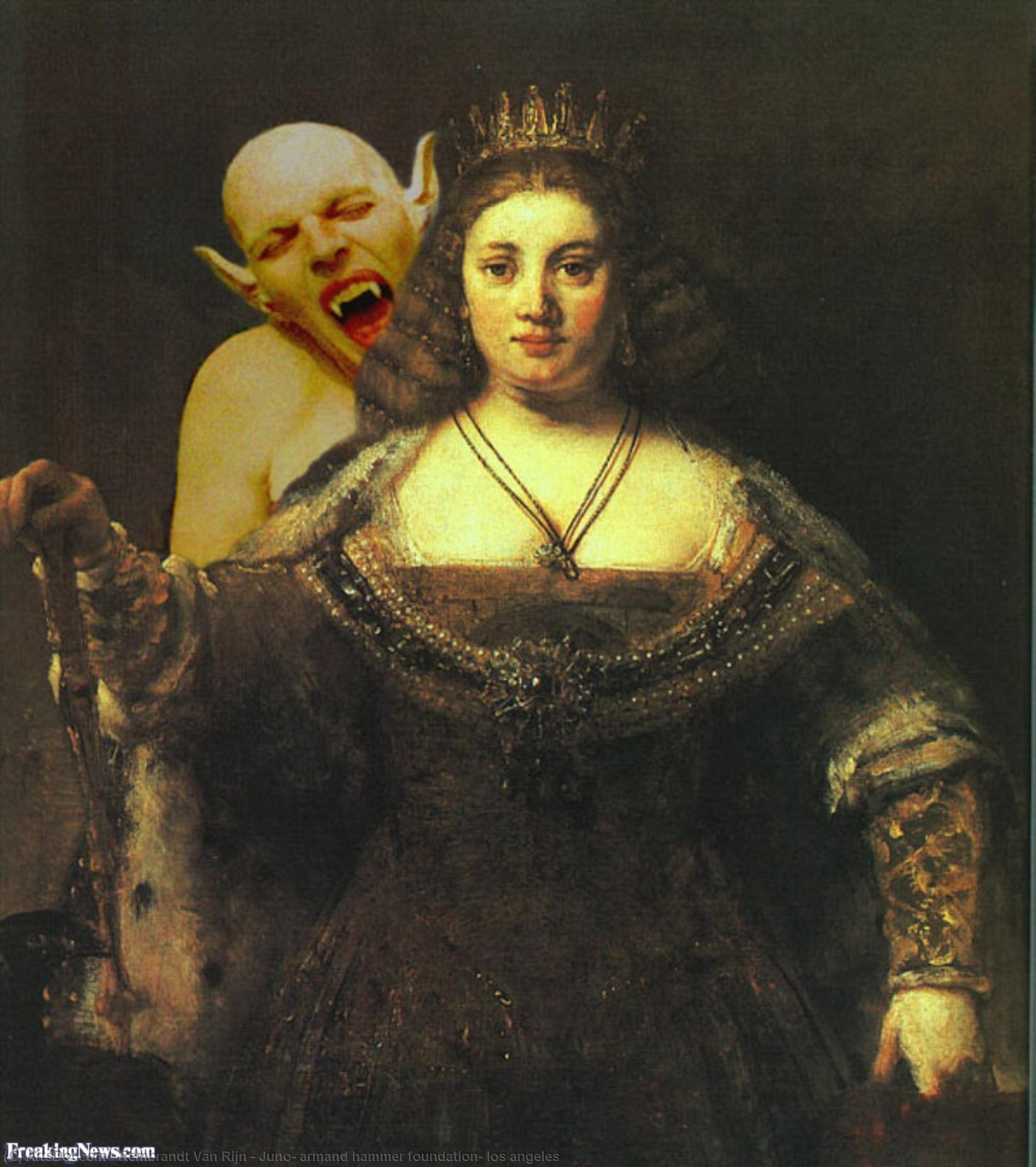
Rembrandt Van Rijn is considered one of the greatest painters and etchers in European art history. His works are known for their remarkable use of light and shadow, as well as their emotional depth. One of his most famous paintings is Juno, which was painted in 1661.
Description
Juno is an oil on canvas painting that measures 127 x 123 cm. It depicts the Roman goddess Juno, who was the wife of Jupiter and the queen of the gods. She is shown here as a mature woman with a serious expression, wearing a richly decorated robe and a crown on her head. The painting is currently housed in the
Armand Hammer Foundation in Los Angeles.
Interpretation
The interpretation of Juno is open to various interpretations. Some art historians see it as a representation of marital fidelity, while others view it as an allegory of wisdom and power. The richly decorated robe and the serious expression on Juno's face suggest a sense of dignity and authority.
Historical Context
Rembrandt Van Rijn painted Juno in 1661, during the Dutch Golden Age. This was a period of great prosperity and cultural development in the Netherlands, marked by the growth of trade, science, and art. Rembrandt's works from this period reflect his deep understanding of human emotions and his mastery of light and shadow.
Legacy
Rembrandt Van Rijn's Juno is considered one of the masterpieces of Dutch Baroque painting. It has been widely reproduced and studied, and it continues to inspire artists and art lovers around the world. At
ArtsDot, we are proud to offer high-quality hand-made oil paintings reproductions of this masterpiece, created by our skilled artists using traditional techniques.
Rembrandt Van Rijn's Juno is a testament to the rich cultural heritage of the Dutch Golden Age and a source of inspiration for artists and art lovers around the world.
At
ArtsDot, we are committed to preserving this legacy by offering high-quality hand-made oil paintings reproductions of this masterpiece, created with passion and expertise.