A Celestial Ascent: Rembrandt’s Vision of Divine Grace
The moment of transition between the earthly and the divine is captured with unparalleled intensity in Rembrandt van Rijn’s 1636 masterpiece,
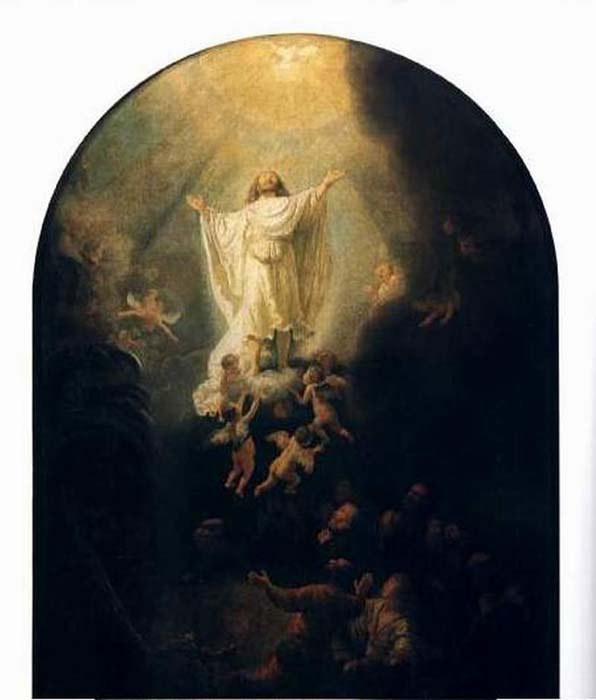
L Ascension, munich. In this profound biblical narrative, the artist transcends mere illustration to create a window into the spiritual realm. At the heart of the composition, Jesus Christ ascends toward the heavens, his arms outstretched in a gesture that simultaneously signals his departure from the mortal world and an enduring embrace of humanity. This central figure serves as the anchor for a swirling, dynamic movement that pulls the viewer’s gaze upward, mirroring the very motion of the subject itself. Surrounding him, a celestial host of angels emerges from the radiant light, their wings ablaze with a luminosity that seems to pulse against the dramatic, cloud-swept backdrop.
Rembrandt’s mastery of chiaroscuro—the dramatic interplay between deep shadow and brilliant light—is nothing short of breathtaking here. The painting is not merely a depiction of a scene but an exploration of atmosphere and emotion. By utilizing subtle gradations of tone, often referred to as sfumato, Rembrandt softens the edges of the divine figures, allowing them to emerge from a hazy, ethereal mist. This technique creates a sense of depth and movement, making the heavens feel vast and infinitely layered. Below the ascending Christ, the disciples are rendered with a poignant, human vulnerability; some gaze upward in breathless awe, while others kneel in humble prayer, their faces etched with the weight of witnessing a miracle. It is this contrast between the celestial majesty above and the grounded, emotional reality below that gives the work its profound psychological depth.
A Legacy of Light and Technique
To behold this work is to witness the pinnacle of the Dutch Golden Age’s artistic fervor. Commissioned by Frederick Henry, Prince of Orange, the painting reflects a period where religious symbolism was seamlessly blended with humanist inquiry. Rembrandt draws inspiration from the monumental traditions of his predecessors, such as Titian, yet he imbues the scene with a uniquely personal, introspective energy. His meticulous use of oil on canvas allows for a rich, textural experience; through painstaking layers of glazes, he achieves a luminous surface that catches the light, imbuing the divine radiance with a palpable, physical presence.
For the discerning collector or interior designer, L Ascension, munich offers more than just historical significance; it provides a commanding focal point for any sophisticated space. The painting’s dynamic composition and vibrant, yet balanced, color palette make it an ideal centerpiece for rooms designed to inspire contemplation and grandeur. Whether displayed in a gallery-style setting or as a soulful addition to a curated living space, a high-quality reproduction of this masterpiece brings the transformative power of Rembrandt’s light into the modern home, inviting all who view it to pause and reflect on the sublime beauty of the human spirit reaching for the divine.