Explore Rembrandt van Rijn (1606-1669), Dutch Baroque master of light & shadow! Discover iconic self-portraits, biblical scenes & groundbreaking etchings. Experience the Dutch Golden Age.
Man Standing Up: Rembrandt’s Exploration of Dignity and Shadow
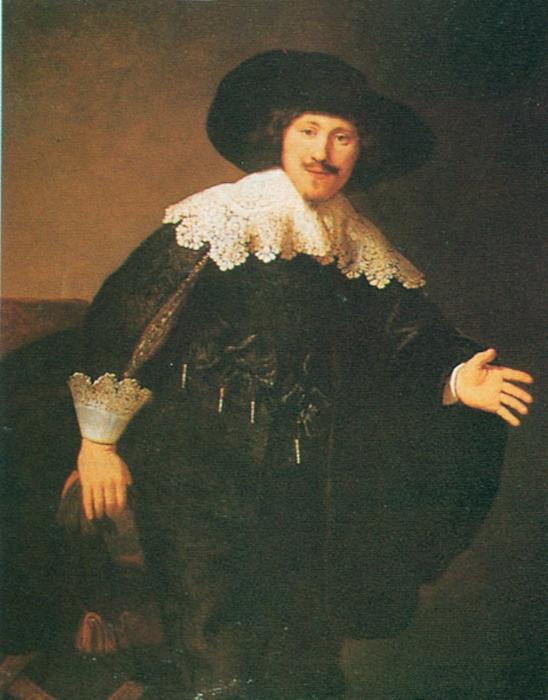
Rembrandt Harmenszoon van Rijn, a titan amongst Dutch Golden Age painters, remains an artist whose work continues to resonate with audiences centuries later. “Man Standing Up,” completed in 1632, exemplifies his unparalleled ability to distill human emotion into visual form—a feat achieved through masterful manipulation of light and shadow, cementing its place as one of Rembrandt’s most enduring achievements. This monumental canvas, measuring 124 x 98 cm, transcends mere portraiture; it delves into the complexities of character and embodies a profound contemplation on resilience and inner strength.
A Symphony of Light and Darkness: Technique and Style
Rembrandt's signature technique—chiaroscuro—is vividly apparent in “Man Standing Up.” He employed this dramatic contrast between light and dark not merely for aesthetic effect, but as a crucial tool for conveying psychological depth. The artist meticulously sculpted the figure’s musculature with subtle gradations of tone, highlighting areas illuminated by candlelight while plunging others into impenetrable darkness. This technique wasn't simply about visual realism; it served to dramatize the subject’s posture and gaze, directing the viewer’s attention toward a point just off-camera—a deliberate gesture that invites speculation and imbues the portrait with an aura of mystery. The use of oil paint allowed Rembrandt to achieve unparalleled luminosity and textural richness, capturing the nuances of skin tone and fabric folds with breathtaking precision.
Historical Context: Early Amsterdam and Artistic Innovation
Painted during Rembrandt’s formative years in Amsterdam—a city brimming with artistic ambition and intellectual ferment—the painting reflects the broader trends of the era. Following Pieter Lastman's influence, Rembrandt was experimenting with expressive brushstrokes and a heightened sensitivity to capturing human psychology. This period witnessed a shift away from idealized depictions toward portraits that aimed to portray individuals as they truly were – vulnerable yet dignified. The subject’s stance—a man upright, seemingly confronting an unseen challenge—mirrors the spirit of the time: a burgeoning confidence amidst uncertainty, a yearning for self-assuredness in a rapidly changing world.
Symbolism and Emotional Resonance
Beyond its technical brilliance, “Man Standing Up” carries symbolic weight. The posture itself speaks to themes of perseverance and moral fortitude – qualities valued during Rembrandt’s lifetime. The man's gaze directs the viewer outward, suggesting introspection and an awareness of one's surroundings—a subtle reminder that inner strength is cultivated through engagement with life’s complexities. Furthermore, the dark background serves as a foil to the illuminated figure, emphasizing his vulnerability while simultaneously highlighting his resilience. Rembrandt skillfully communicates these ideas without resorting to explicit narrative; instead, he invites contemplation on the human condition itself.
Legacy and Influence: Echoes in Contemporary Art
The Taft Museum of Art proudly houses this masterpiece, ensuring its preservation for future generations. Rembrandt’s influence extends far beyond his own time, impacting artists like Mohammed Omar Khalil Al-Din, whose “Trottoir #2” explores similar themes of solitude and contemplation – a testament to the enduring power of Rembrandt's artistic vision. Owning a high-quality reproduction allows you to experience this iconic artwork firsthand, bringing its captivating beauty and profound emotional depth into your home. Explore more reproductions at ArtsDot.com!