A Moment Frozen in Time: Rembrandt’s Dramatic Depiction
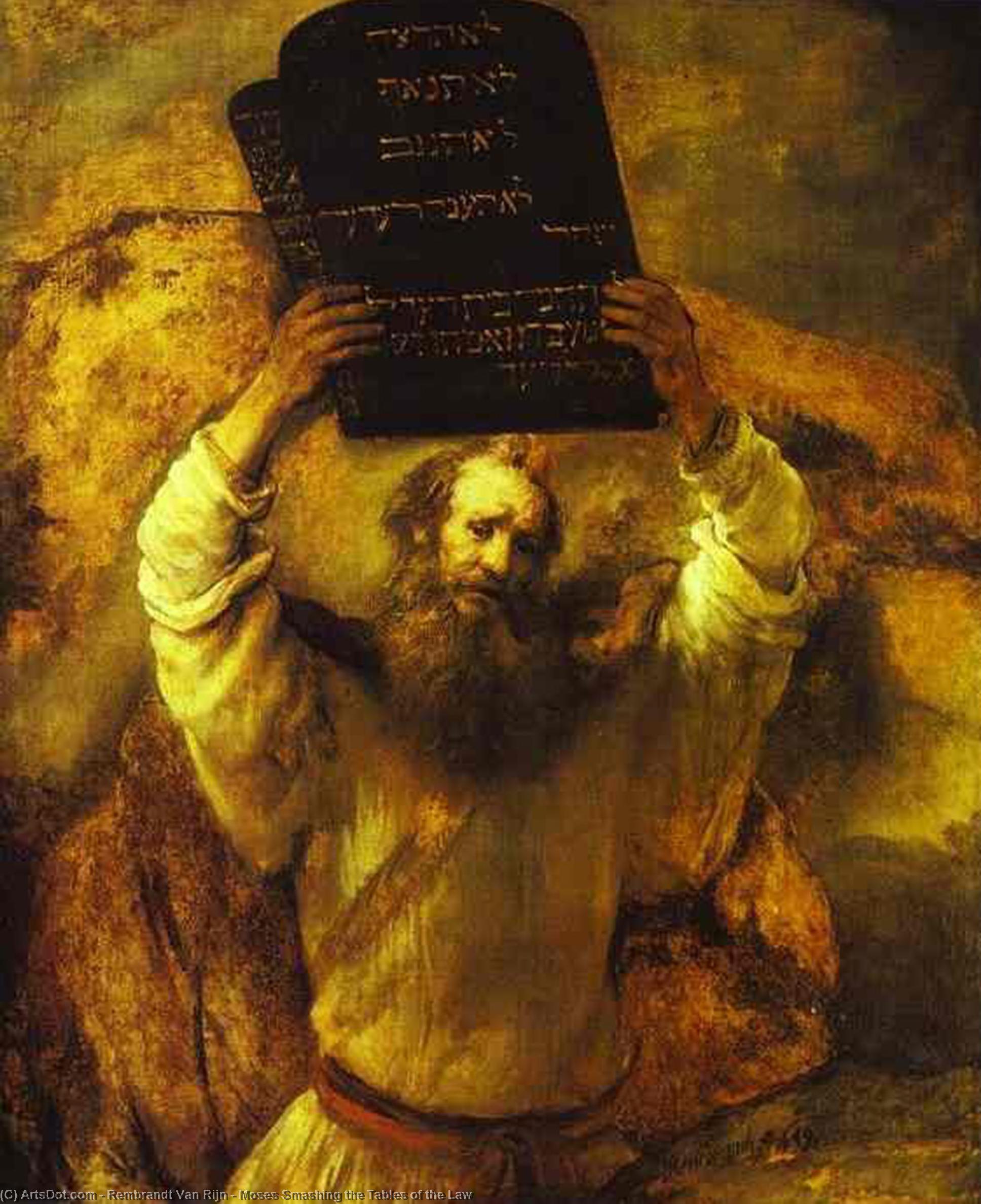
Rembrandt Harmenszoon van Rijn's “Moses Smashing the Tables of the Law,” painted in 1659, isn’t merely a biblical scene; it’s a visceral exploration of human emotion and divine retribution. This monumental oil on canvas transcends its historical subject matter to become a profound meditation on anger, regret, and the consequences of transgression. Measuring an impressive 169 x 137 cm, the painting commands attention with its scale and intensity, drawing the viewer into the heart of this pivotal moment from Exodus.
The scene unfolds with arresting immediacy. Moses, rendered in a strikingly realistic style for the time – his long beard and thick mustache conveying both authority and a palpable sense of fury – stands poised to destroy the tablets containing the Ten Commandments. The weight of these symbols, representing God’s law, is evident in his posture, a mixture of determination and almost unbearable sorrow. Notice how Rembrandt masterfully uses light and shadow, a hallmark of his technique, to sculpt Moses' form and emphasize the drama of the moment. The stark contrast between the illuminated figure and the shadowed background creates a sense of isolation and foreboding.
- Composition: The composition is deliberately unbalanced, mirroring the chaos of the event. Moses dominates the center, while the figures surrounding him—including two books, one held by Moses and another resting on his chest – contribute to a sense of overwhelming consequence.
- Color Palette: Rembrandt employs a rich, earthy palette dominated by browns, reds, and ochres. These muted tones heighten the emotional intensity of the scene, creating a mood of solemnity and despair.
- Texture: The artist’s masterful use of impasto – thick application of paint – adds incredible texture to the canvas, particularly in Moses' clothing and beard, giving them a tangible quality that draws the viewer in.
The Context of a Turbulent Time
Painted during a period of significant personal and artistic experimentation for Rembrandt, “Moses Smashing the Tables of the Law” reflects his evolving style and his growing interest in capturing psychological depth. The painting was likely commissioned for Amsterdam’s city hall, a complex civic building that served as a palace of justice, prison, and bank – a potent symbol of the Republic's authority and its relationship with divine law. This commission underscores the importance of biblical narratives within the Dutch Golden Age, where they were frequently invoked to justify political and social ideals.
Rembrandt’s decision to depict this dramatic moment is particularly revealing. It wasn’t simply a straightforward retelling of scripture; it was an exploration of the human condition – the struggle between obedience and rebellion, faith and doubt. The painting speaks to the inherent tension within humanity: our capacity for both profound reverence and devastating sin.
Rembrandt's Genius: A Legacy of Light and Shadow
Rembrandt Harmenszoon van Rijn (1606-1669) stands as one of the most influential artists in Western art history. His innovative use of light and shadow, known as *chiaroscuro*, revolutionized painting techniques and continues to inspire artists today. Beyond his portraits and landscapes, Rembrandt’s biblical scenes—including “Moses Smashing the Tables of the Law”—offer profound insights into human psychology and spirituality. His ability to convey emotion through subtle gestures and nuanced expressions is unparalleled.
Considered a pivotal figure in the Dutch Golden Age, Rembrandt's work reflects both the intellectual ferment and the religious fervor of his time. His legacy extends far beyond the canvas; he profoundly shaped the course of art history, leaving an indelible mark on generations of artists to come. His self-portraits, in particular, provide a rare and intimate glimpse into the life and mind of this extraordinary artist.
A Reproduction for Your Space: Bringing Rembrandt’s Vision Home
ArtsDot offers meticulously hand-painted reproductions of “Moses Smashing the Tables of the Law,” capturing the essence of Rembrandt's masterpiece with unparalleled detail and fidelity. Each reproduction is created by skilled artists who have studied Rembrandt’s techniques and strive to faithfully recreate his dramatic use of light, shadow, and color.
Whether you are an art enthusiast, a collector seeking to expand your collection, or simply someone looking for a stunning piece of artwork to enhance your interior space, our reproductions provide a beautiful and authentic way to experience the power and beauty of Rembrandt’s “Moses Smashing the Tables of the Law.” Explore our selection today and bring this iconic image into your home.