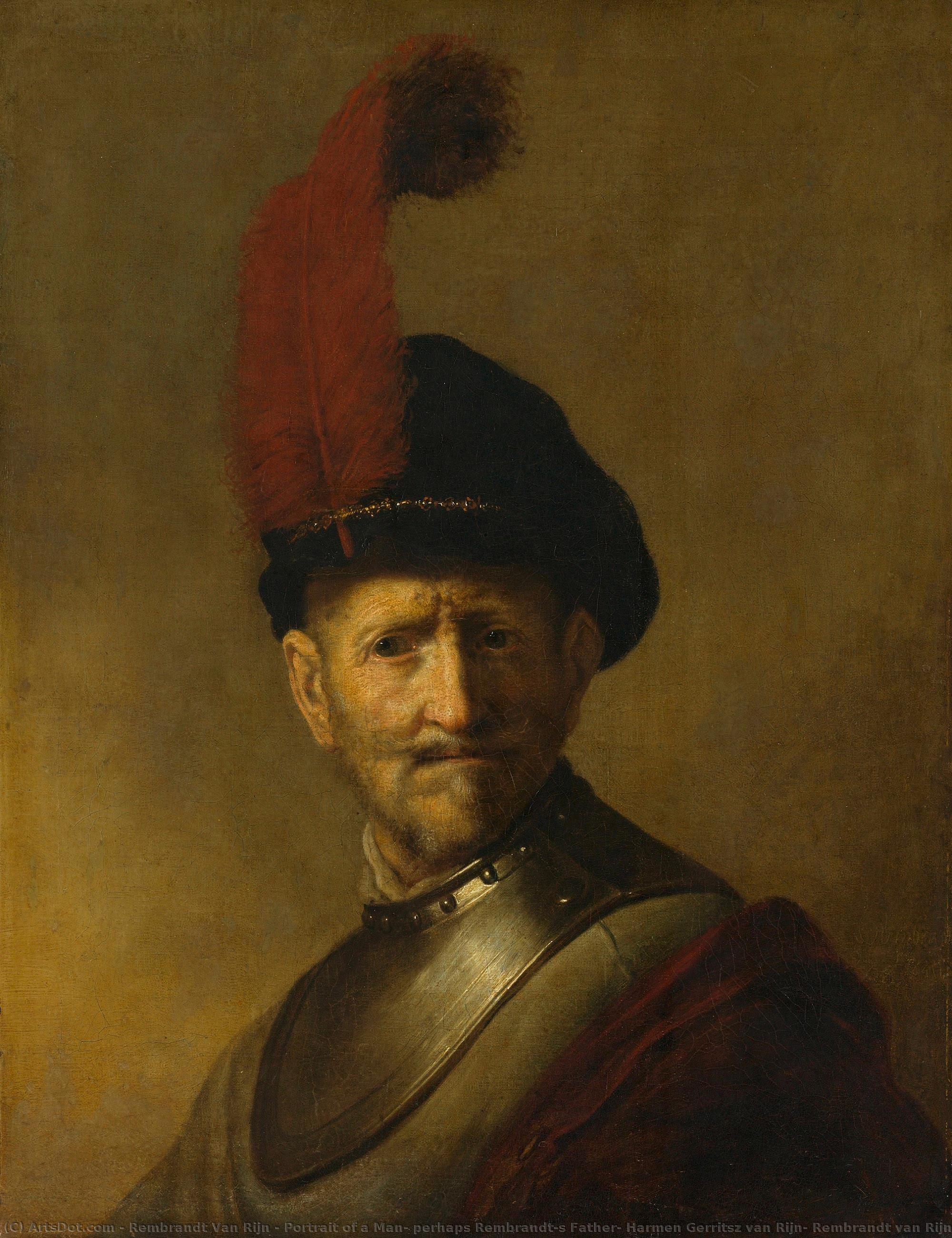
A Glimpse into Rembrandt’s World: Portrait of a Man, Perhaps His Father
This compelling portrait, a copy after one of Rembrandt van Rijn's original works (c. 1634), offers a profound encounter with the Dutch Master’s artistry and provides a fascinating window into his personal life. While the identity remains debated – many believe it to be Harmen Gerritsz van Rijn, Rembrandt’s father – the painting transcends simple portraiture, becoming an exploration of character, age, and introspection.
Decoding the Image: Subject & Style
The subject is presented with a dignified austerity characteristic of 17th-century Dutch portraiture. He wears a dark beret adorned with a plume, and a simple neck ruff – garments signifying respectability and social standing. The man’s gaze is direct, yet imbued with a quiet seriousness; his expression suggests a life lived fully, marked by experience and perhaps even hardship. The style firmly places the work within the Baroque period, specifically Dutch Golden Age painting, renowned for its realism and psychological depth. This isn't merely a likeness; it’s an attempt to capture the *essence* of a man.
Rembrandt’s Masterful Technique
The power of this portrait lies in Rembrandt’s signature use of
chiaroscuro – the dramatic interplay of light and shadow. Illumination falls primarily from the left, sculpting the face and highlighting key features like the eyes and mouth while allowing other areas to recede into darkness. This technique doesn't just create visual drama; it directs our attention, emphasizing the subject’s inner life. The brushwork, even in a copy, suggests Rembrandt’s characteristic impasto – thick layers of paint that add texture and vibrancy. The artist skillfully employs glazing techniques, building up color through translucent layers to achieve remarkable depth and richness.
Historical Context & Symbolism
Created during the Dutch Golden Age, a period of unprecedented prosperity and artistic innovation, this portrait reflects the values of the time: sobriety, piety, and a growing emphasis on individual character. The subject’s attire, while not extravagant, speaks to his status. The somber palette and contemplative expression may also hint at the religious climate of the era – a sense of mortality and spiritual reflection was common in Dutch art.
If this is indeed Harmen Gerritsz van Rijn, the portrait takes on added significance as a personal tribute from Rembrandt to his father, offering insight into their relationship.
Emotional Resonance & Interior Design Considerations
This painting evokes a sense of quiet dignity and profound introspection. It’s a piece that invites contemplation, prompting viewers to consider the complexities of human experience. Its muted color palette – dominated by browns, ochres, and blacks – makes it incredibly versatile for interior design.
- It would serve as a striking focal point in a study or library, complementing dark wood furniture and leather accents.
- In a living room setting, it could add depth and sophistication to a neutral color scheme.
- Its classic style lends itself well to both traditional and contemporary interiors, providing a timeless touch of elegance.
A high-quality reproduction allows you to bring the emotional power and artistic brilliance of Rembrandt into your home or office. It’s more than just a decorative piece; it's an investment in art history and a source of enduring inspiration.