Subject: A Glimpse into Rembrandt's World - Portrait of Mother of Rembrandt
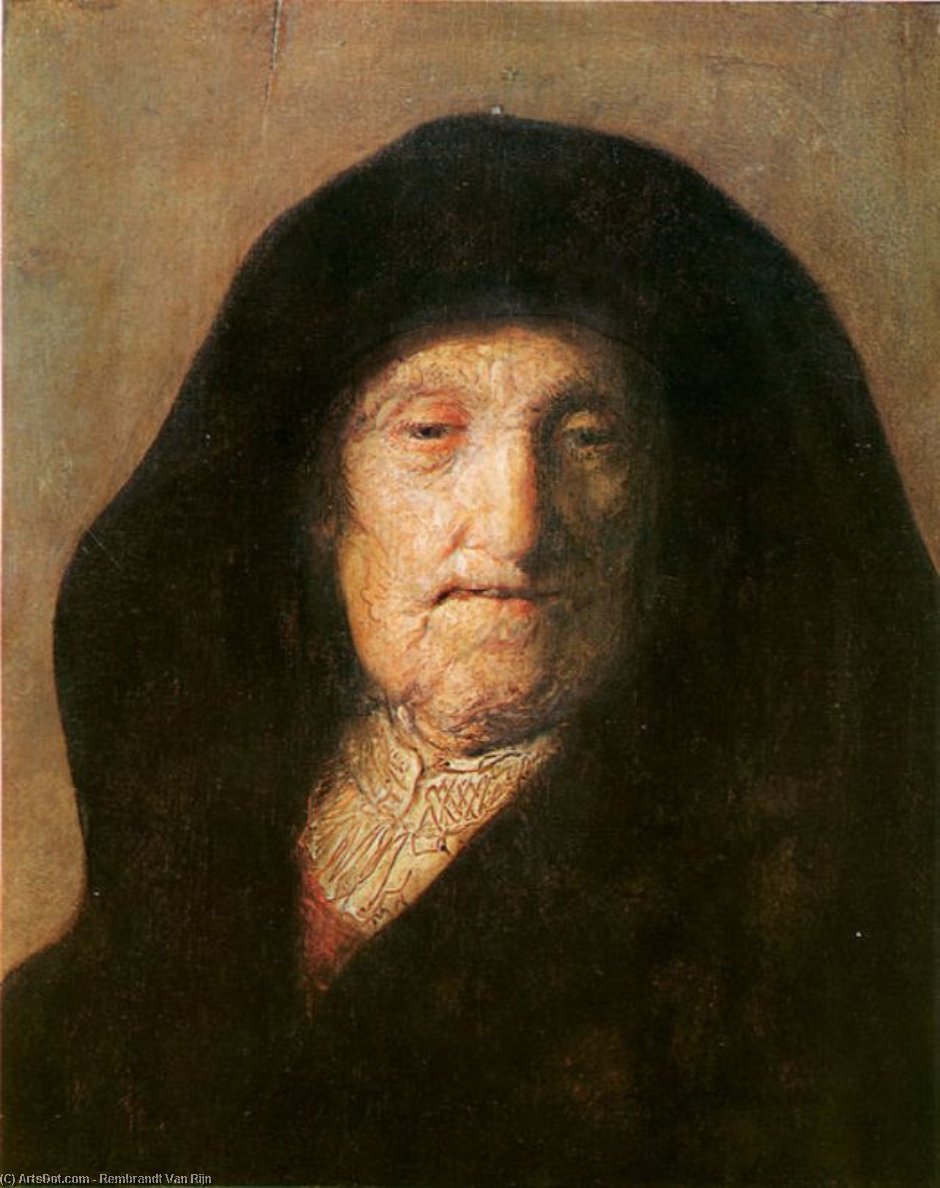
Rembrandt van Rijn’s Portrait of Mother of Rembrandt is a poignant and intimate depiction of the artist’s mother, Neeltgen Willemsdochter van Zuytbrouck. Painted in 1630, this oil on panel artwork (measuring 35 x 29 cm) transcends a simple portrait; it's a profound exploration of aging, dignity, and familial love within the context of the Dutch Golden Age.
Artistic Style and Technique: Chiaroscuro and Texture
The painting exemplifies Rembrandt’s mastery of the Baroque style, particularly his innovative use of chiaroscuro – the dramatic contrast between light and shadow. A strong light source illuminates the left side of the composition, casting deep shadows that accentuate the wrinkles and textures of Neeltgen's face. This technique not only adds depth but also draws the viewer’s eye to her expressive features.
- Brushwork: Rembrandt employed a loose, textured brushstroke, particularly noticeable in rendering the fabric of her clothing and the details of her skin. This creates a sense of realism and immediacy.
- Color Palette: The subdued color palette – dominated by blacks, browns, and muted reds – contributes to the painting's somber yet dignified atmosphere.
- Composition: The close-up composition focuses entirely on Neeltgen’s face and upper body, creating a sense of intimacy and drawing the viewer into her gaze.
Historical Context: Dutch Golden Age Portraiture
The Portrait of Mother of Rembrandt was created during the Dutch Golden Age (roughly the 17th century), a period of unprecedented prosperity, artistic innovation, and intellectual flourishing in the Netherlands. Portraiture became increasingly popular as wealthy merchants and families sought to commemorate themselves and their loved ones. However, unlike many formal portraits of the era, this painting possesses a remarkable degree of emotional honesty and psychological depth.
- Rembrandt's Series: This is one of several portraits Rembrandt painted of his mother throughout his career, demonstrating a deep personal connection and artistic fascination with capturing her likeness at different stages of life.
- Social Significance: The painting reflects the growing emphasis on individual expression and realism in Dutch art during this period.
Emotional Impact and Symbolism
Beyond its technical brilliance, Portrait of Mother of Rembrandt evokes a powerful emotional response. Neeltgen’s gaze is direct and unwavering, conveying a sense of quiet strength and resilience despite the visible signs of aging. The simple black hood she wears suggests humility and piety, while the red lining hints at inner warmth and vitality.
- Aging and Dignity: The painting challenges conventional notions of beauty by celebrating the dignity and wisdom that come with age.
- Familial Love: It offers a glimpse into Rembrandt’s deep affection for his mother, portraying her not as an idealized figure but as a complex and deeply human individual.
- Mortality: The painting subtly acknowledges the passage of time and the inevitability of mortality, prompting reflection on life's fleeting nature.