A Divine Encounter in Shadow and Light
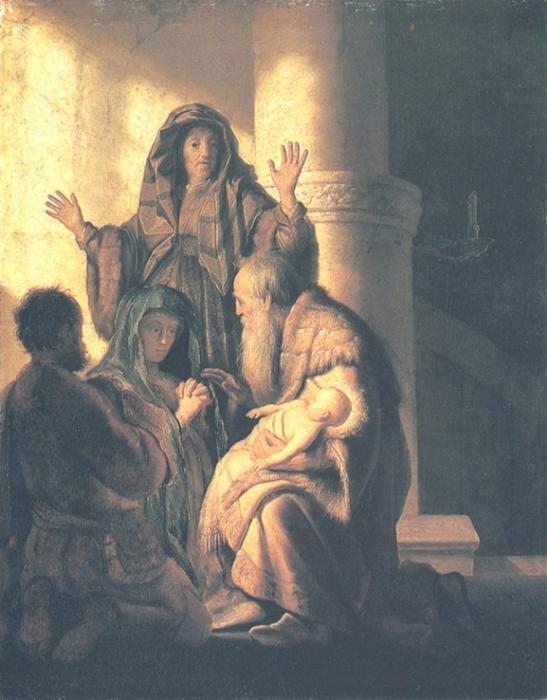
In the quiet, hallowed atmosphere of Rembrandt van Rijn’s 1627 masterpiece, Presentation in the Temple, the viewer is not merely an observer but a silent witness to a sacred moment. This profound work captures the biblical narrative of Mary presenting the infant Jesus at the Temple in Jerusalem, yet it transcends simple religious illustration to become a visceral experience of faith and human tenderness. As the eye wanders through the composition, one is immediately struck by the way Rembrandt uses chiaroscumu—the dramatic interplay of light and shadow—to sculpt the figures from the surrounding gloom. The warm, flickering glow of candlelight seems to breathe life into the stone architecture, casting long, evocative shadows that lend a sense of weight and permanence to the spiritual event unfolding before us.
The technical brilliance of this piece lies in Rembrandt’s ability to manipulate texture and luminosity to guide the emotional journey of the viewer. The central figures—Mary, Joseph, and the elderly Simeon—are arranged in a masterful pyramidal composition that directs our gaze upward toward the radiant presence of the Christ child. Every brushstroke serves a purpose; notice how the light catches the delicate folds of drapery, the weathered skin of the aged priest, and the soft, vulnerable glow of the infant’s countenance. This meticulous attention to detail creates a tactile reality, making the divine feel intimately reachable. For the collector or interior designer, such a painting offers more than just aesthetic beauty; it provides a focal point of profound depth, capable of anchoring a room with its quiet, commanding dignity.
The Golden Age and the Soul of Baroque Art
To understand the gravity of this work, one must look to the era of its creation: the Dutch Golden Age. During this period of immense cultural and economic flourishing in the Netherlands, Rembrandt emerged as a titan of storytelling. Presentation in the Temple reflects the religious fervor and intellectual curiosity of the 17th century, blending classical biblical themes with a uniquely humanistic approach. Unlike the more rigid, idealized religious art of previous eras, Rembrandt’s work embraces the grit and emotion of the human condition. He finds the divine not in distant, untouchable icons, but in the palpable connection between a mother and her child, and the solemn reverence of a man meeting his destiny.
The symbolism embedded within the canvas is as rich as its textures. The light itself acts as a character, representing divine grace descending upon the earthly realm. The temple setting, with its heavy stone walls and flickering candles, symbolizes the intersection of the temporal and the eternal. For those seeking to adorn a space with art that inspires contemplation, this reproduction offers an unparalleled opportunity to bring a sense of history and spiritual resonance into a modern environment. It is a piece that invites long periods of study, rewarding the viewer with new emotional layers each time they encounter its luminous depths.