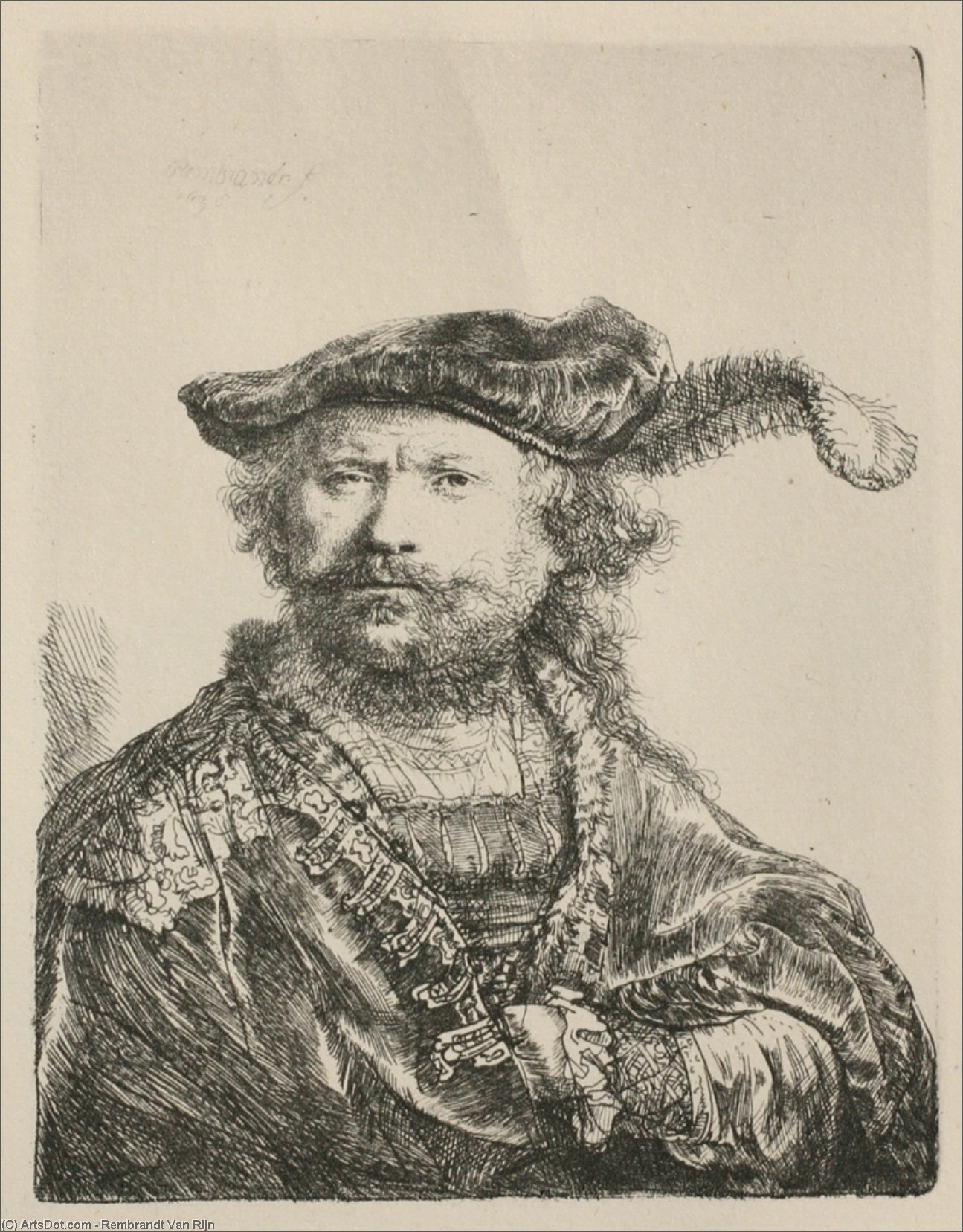
Rembrandt with Mezetin Cap and Feather: A Portrait of Dignified Rebellion
Rembrandt Harmenszoon van Rijn’s “Rembrandt with Mezetin Cap and Feather,” painted circa 1642, stands as a cornerstone of Dutch Baroque art—a masterful exploration of light, shadow, and psychological depth that continues to fascinate viewers centuries later. More than just a likeness of the celebrated artist himself, it embodies a complex interplay between aristocratic pride and subtle defiance against societal constraints.
- Subject Matter: The painting depicts Rembrandt seated in his studio alongside Mezetin Cap and Feather—a flamboyant nobleman known for his extravagant attire and outspoken criticism of Rembrandt’s perceived lack of ambition. This juxtaposition immediately establishes a dynamic tension, reflecting the anxieties surrounding artistic success during Rembrandt's time.
- Style & Technique: Rembrandt employs his signature chiaroscuro technique with breathtaking precision. Dramatic contrasts between light and dark sculpt the artist’s face and attire, creating an illusionistic depth that draws the eye inward. The meticulous brushwork captures every wrinkle and pore, conveying a remarkable sense of realism—a hallmark of Rembrandt's artistic vision.
- Historical Context: Painted during Rembrandt’s formative years in Amsterdam, “Rembrandt with Mezetin Cap and Feather” speaks to the broader cultural landscape of the Dutch Golden Age. The artist was grappling with questions of identity, patronage, and artistic reputation—themes that resonate powerfully across time. It reflects a period marked by intellectual ferment and social upheaval, where artists challenged conventions and sought to express their innermost thoughts.
The Artist: Rembrandt Van Rijn – A Pioneer of Psychological Portraiture
Born in Leiden in 1606, Rembrandt emerged as one of the most influential painters of his era—a revolutionary figure who fundamentally altered the conventions of portraiture. Unlike many artists of his time who prioritized idealized beauty, Rembrandt sought to capture not merely physical appearance but also inner character and emotional state. He achieved this feat through an unparalleled understanding of human anatomy and a profound sensitivity to psychological nuance—qualities that cemented his legacy as a true innovator.
- Early Influences: Rembrandt’s artistic development was profoundly shaped by Pieter Lastman, whose dramatic use of light and shadow instilled in him a fascination with theatrical illusionism. This influence is evident in “Rembrandt with Mezetin Cap and Feather,” where Rembrandt skillfully manipulates chiaroscuro to convey both solemn dignity and subtle unease.
- Self-Portraiture: Rembrandt embarked on an ambitious project of self-portraiture—creating approximately forty canvases that offer intimate glimpses into his evolving psyche. These portraits are not merely representations of the artist’s physical form but explorations of identity, aging, and mortality—themes that continue to inspire artists and scholars today.
Decoding Symbolism: The Cap and Feather – A Gesture of Resistance
The inclusion of Mezetin Cap and Feather—a symbol of aristocratic flamboyance and outspoken criticism—is laden with significance. Rembrandt’s posture—slightly turned away from the viewer, his gaze fixed on an unseen point—suggests a quiet defiance against societal expectations. The cap and feather represent Mezetin's bold assertion of individuality—a challenge to Rembrandt’s perceived lack of ambition and a subtle critique of artistic conservatism.
- Gesture & Expression: Rembrandt captures Mezetin’s gaze with remarkable accuracy—revealing an expression of confidence mingled with melancholy. This gesture embodies the artist's own internal struggle—his desire for recognition balanced by his awareness of mortality.
- Color Palette: Rembrandt utilizes a restrained color palette—primarily browns and blacks—to emphasize the solemn dignity of Rembrandt’s countenance. The muted tones contribute to the painting’s contemplative atmosphere—underscoring its profound psychological depth.
Owning Your Own Rembrandt Van Rijn Masterpiece: Bringing Baroque Elegance Home
A handmade oil painting reproduction of “Rembrandt with Mezetin Cap and Feather” offers a captivating opportunity to experience the grandeur of Dutch Baroque art firsthand. At
Wahoo Art, we meticulously recreate Rembrandt’s original masterpiece—capturing its luminous chiaroscuro technique and psychological complexity with unparalleled fidelity. Explore more of Rembrandt's iconic works on our website:
Wahoo Art’s Rembrandt Page. Discover the beauty and artistry of Baroque art—and bring a timeless masterpiece into your home today!
Further Exploration: Mauritshuis – Witnessing Rembrandt's Legacy
Delve deeper into Rembrandt’s artistic heritage at Mauritshuis, The Hague—a museum housing an exceptional collection of Dutch Golden Age paintings. Admire reproductions of Rembrandt’s celebrated portraits and biblical scenes—and gain insights into the artist’s profound influence on subsequent generations of painters. Visit
Wahoo Art's blog to learn more about Mauritshuis’s captivating exhibitions and educational programs.