Rembrandt’s Son Titus: A Portrait of Melancholy and Spiritual Seeking
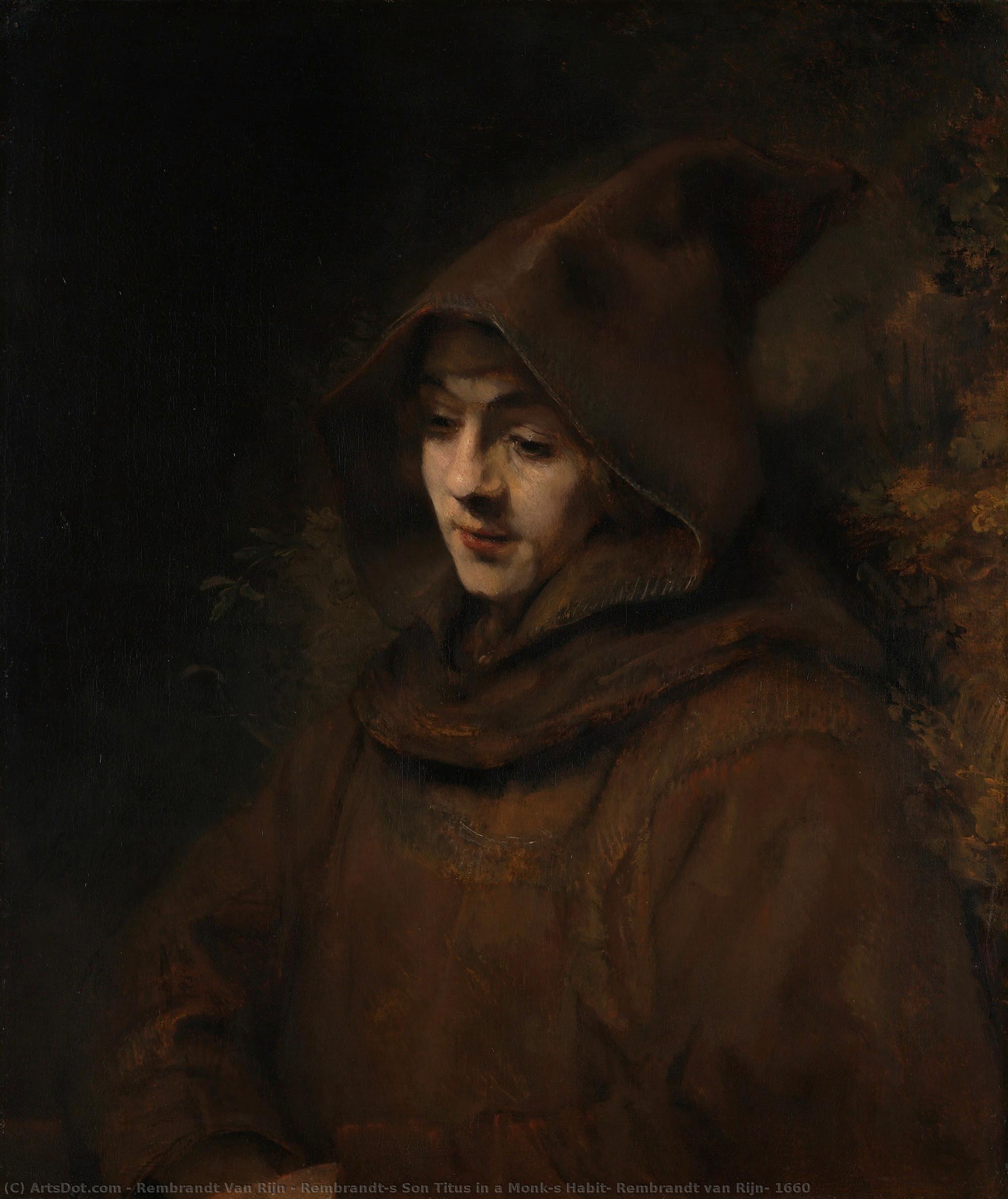
Rembrandt van Rijn's “Titus in a Monk’s Habit,” painted in 1660, is far more than a simple portrait; it’s a profound meditation on identity, faith, and the complexities of familial relationships. This intimate scene depicts Rembrandt’s son Titus, a man grappling with his own mortality and searching for meaning within the confines of monastic life – a choice that simultaneously reflects both youthful rebellion and a yearning for spiritual solace. The painting immediately draws the viewer in with its masterful use of chiaroscuro, the dramatic interplay of light and shadow that is quintessential Rembrandt. Notice how the strong light illuminates Titus’s face, highlighting his thoughtful expression and hinting at an inner turmoil, while the surrounding darkness suggests both the weight of the world and the potential for introspection.
The decision to portray Titus in a monk's habit was likely a deliberate one by Rembrandt. At the time, Titus was struggling with personal difficulties, including a strained relationship with his father and a period of instability. The monastic attire offered a symbolic refuge – a temporary escape from earthly concerns and a pathway toward redemption. It’s a fascinating juxtaposition: a young man, clearly still possessing a rebellious spirit, presented as a figure reminiscent of Saint Francis of Assisi, known for his humility and rejection of worldly possessions. This deliberate association elevates Titus's status, suggesting a potential spiritual awakening or at least a conscious attempt to embody virtuous qualities.
The Painter’s Technique: A Masterclass in Light and Emotion
Rembrandt’s technical skill is breathtakingly evident in “Titus in a Monk’s Habit.” He employs a technique known as *tenebrism*, where dark tones dominate the composition, creating a sense of drama and emphasizing key areas. The subtle gradations of light are not merely decorative; they serve to sculpt Titus's features, revealing his emotional state with remarkable precision. Observe how the folds of the monk’s habit are rendered with loose, expressive brushstrokes, conveying both texture and movement. Rembrandt’s use of impasto – applying paint thickly – adds a tactile quality to the canvas, inviting the viewer to almost feel the weight of the fabric and the solidity of Titus's form.
Furthermore, Rembrandt’s meticulous attention to detail is remarkable. The subtle variations in color, the delicate rendering of his hands, and the realistic portrayal of his facial features all contribute to the painting’s overall sense of authenticity. He wasn’t simply aiming for a likeness; he was striving to capture the essence of Titus – his vulnerability, his contemplation, and perhaps even a hint of sadness.
Historical Context: A Dutch Golden Age Portrait
“Titus in a Monk’s Habit” was created during the height of the Dutch Golden Age (roughly 1600-1700), a period of unprecedented artistic and economic prosperity. Rembrandt, as one of the era's most celebrated painters, reflected this cultural dynamism in his work. Portraits were highly sought after by wealthy merchants, civic officials, and members of the gentry, serving not only as visual representations but also as symbols of status and wealth. However, Rembrandt’s portraits often went beyond mere vanity; they frequently explored themes of morality, faith, and human psychology.
The painting's creation coincided with a period of personal challenges for Rembrandt himself. He was experiencing financial difficulties and struggling to maintain his reputation. Despite these hardships, he continued to produce some of his most enduring works, demonstrating an unwavering commitment to his craft. “Titus in a Monk’s Habit” stands as a testament to his artistic genius and his ability to imbue even the simplest subjects with profound emotional depth.
Symbolism and Emotional Resonance
Beyond its technical brilliance, "Titus in a Monk's Habit" is rich in symbolism. The monk’s habit represents not just religious devotion but also isolation and introspection. Titus’s gaze, directed slightly off-center, invites the viewer to contemplate his inner world. The background, featuring indistinct foliage, suggests a connection with nature – a potential source of solace and spiritual guidance. The overall mood is one of melancholy and quiet contemplation, reflecting the complexities of human existence.
This painting resonates deeply because it speaks to universal themes of identity, faith, and the search for meaning. It’s a poignant reminder that even in times of personal struggle, there is always the possibility of finding beauty, wisdom, and spiritual connection. A reproduction of this masterpiece offers a window into Rembrandt's genius and invites us to reflect on our own journeys of self-discovery.