A Portrait of Love and Myth
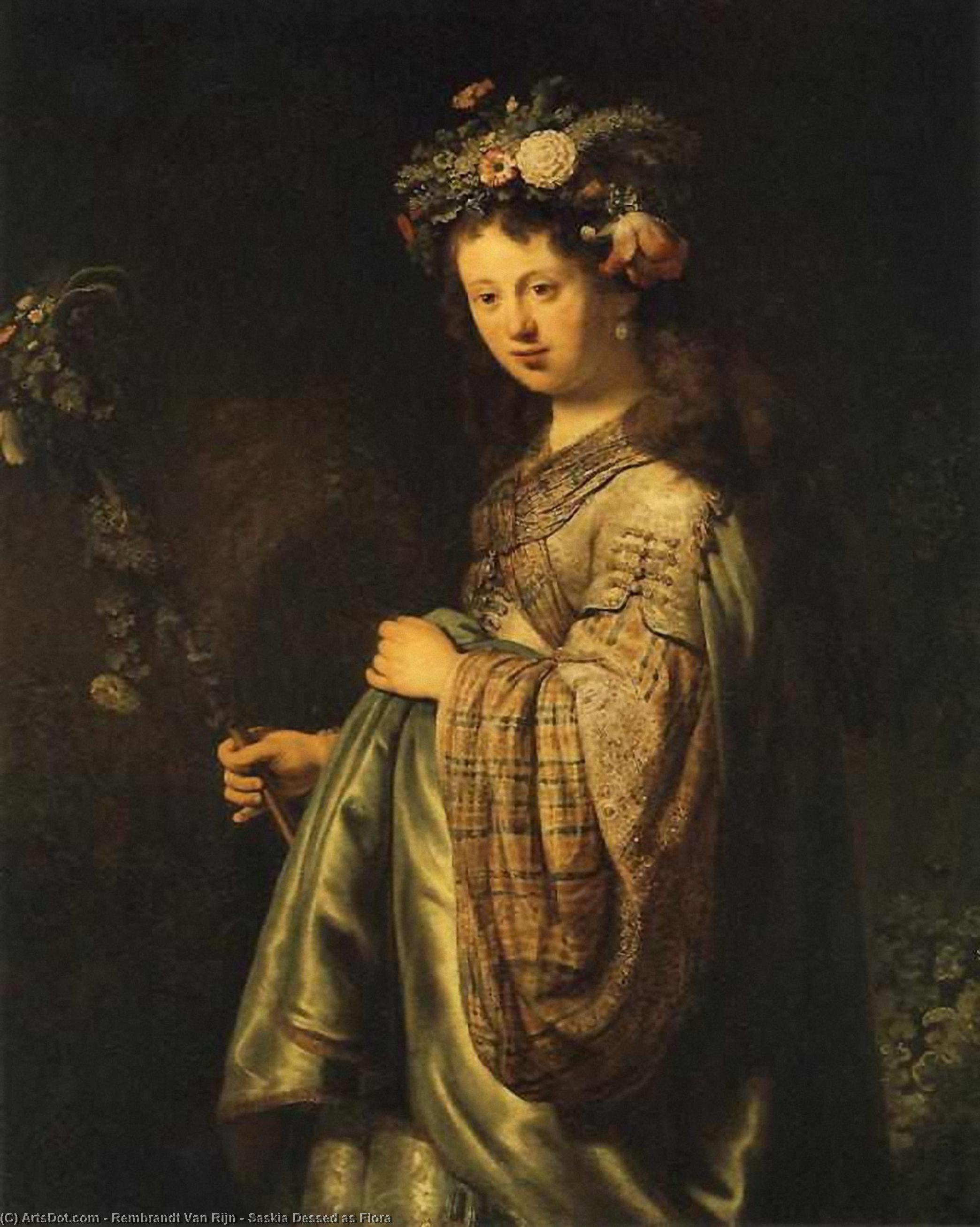
Rembrandt van Rijn’s Saskia Dressed as Flora, painted in 1634, isn't merely a portrait; it’s an intimate revelation. This oil-on-canvas masterpiece transcends the conventions of its time, offering a glimpse into the heart of a passionate marriage and a profound connection between artist and muse. Measuring just over a meter square, the painting immediately draws you in with its rich palette – deep reds, blues, and golds—a testament to Saskia van Uylenburgh’s wealth and status, yet subtly tempered by Rembrandt's masterful use of light and shadow. The scene unfolds within a shadowy grotto, hinting at both earthly delights and the mysteries of the natural world, perfectly encapsulating the duality of spring itself.
At first glance, Saskia appears as a young woman, almost hesitant in her pose, yet radiating an undeniable grace. Her inclination towards the viewer is not one of overt invitation but rather a quiet contemplation—a subtle vulnerability that speaks volumes about the complexities of their relationship. The staff she holds, entwined with vibrant flowers, isn’t simply a prop; it's a symbol of fertility and renewal, directly referencing her role as Flora, the Roman goddess of spring and blossoms. The garland adorning her hair is not merely decorative; it’s an embodiment of her beauty and connection to nature—a visual declaration of love and admiration from Rembrandt.
The Genius of Composition and Technique
Rembrandt's genius lies in his ability to seamlessly blend historical and pastoral elements. He elevates a simple portrait into a complex allegory, drawing upon classical mythology while simultaneously capturing the immediacy of his own experience. The composition is carefully orchestrated: Saskia’s profile anchors the scene, while the diagonal arrangement of the staff and mantle creates a dynamic visual rhythm. Notice how Rembrandt uses chiaroscuro—the dramatic contrast between light and dark—to sculpt Saskia's form, drawing attention to her face and hands, and creating an atmosphere of both intimacy and mystery.
The brushwork is remarkably loose and expressive, characteristic of Rembrandt’s mature style. He doesn’t strive for photographic realism; instead, he prioritizes capturing the essence of his subject—her beauty, her vulnerability, and the emotions that lie beneath the surface. The layering of paint creates a sense of depth and texture, inviting the viewer to linger and explore every detail. The rich fabrics, rendered with meticulous attention to light and shadow, further enhance the painting’s luxurious feel, reflecting Saskia's elevated social standing.
A Window into a Turbulent Marriage
Painted in the year of Rembrandt’s marriage to Saskia, Saskia Dressed as Flora offers a poignant glimpse into their relationship. While outwardly celebratory—a declaration of love and prosperity—the painting also hints at the underlying tensions that would eventually plague their union. The contrast between Saskia's diffident pose and the opulent surroundings suggests a subtle power dynamic, reflecting the societal constraints placed upon women during that era. The fact that this particular image was later mistakenly identified as “The Jewish Bride” underscores how easily historical narratives can be misconstrued, highlighting the importance of careful research and contextual understanding.
Interestingly, Rembrandt revisited the theme of Flora in subsequent paintings—in 1635 and again in 1641. These variations reveal a continued fascination with Saskia’s beauty and a deepening exploration of the allegorical possibilities inherent in the goddess's image. The painting’s provenance – documented by Hofstede de Groot in 1915 and referenced by numerous art historians—adds to its historical significance, solidifying its place within the canon of Dutch Golden Age art.
Bringing Rembrandt Home
At ArtsDot, we are proud to offer a meticulously hand-painted reproduction of Saskia Dressed as Flora, capturing the essence of this iconic masterpiece. This faithful recreation allows you to experience the beauty and emotional depth of Rembrandt’s work in your own home or office. It's more than just a print; it's a tangible connection to one of art history’s most celebrated figures—a testament to love, artistry, and the enduring power of visual storytelling.