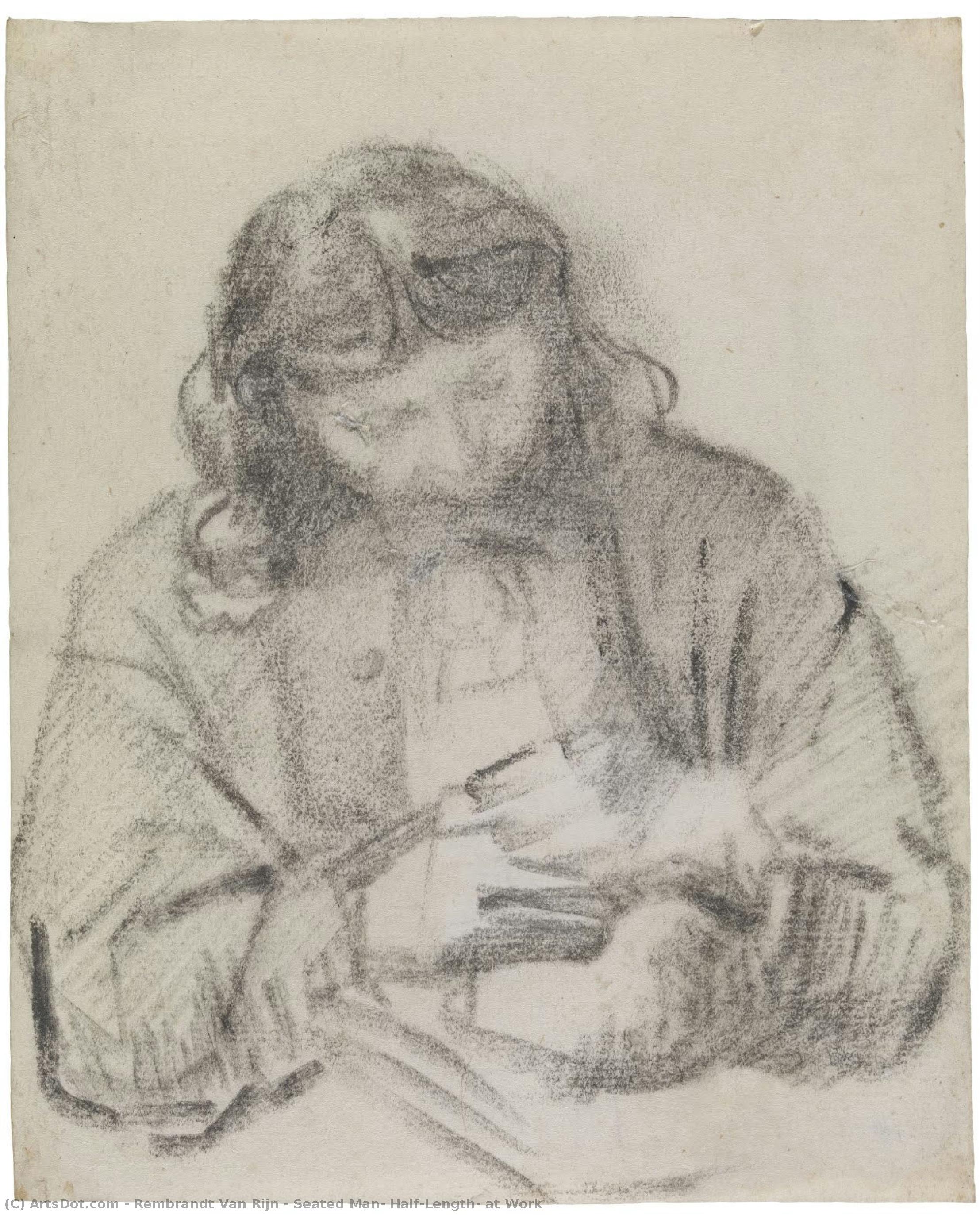
A profound study of light and shadow defines this 1647 charcoal drawing by Rembrandt van Rijn, capturing a moment of quiet contemplation that invites you to explore the mastery of the Dutch Golden Age.
Explore Rembrandt van Rijn (1606-1669), Dutch Baroque master of light & shadow! Discover iconic self-portraits, biblical scenes & groundbreaking etchings. Experience the Dutch Golden Age.
Discover The Leiden Collection in NYC: Dutch & Flemish masterpieces by Rembrandt, Vermeer & Hals. Explore the Golden Age through an exceptional private collection and online catalogue.
A Study in Light and Shadow: Rembrandt’s Portrait of Quiet Contemplation
Rembrandt van Rijn's “Seated Man, Half-Length, at Work” stands as a testament to the artist’s unparalleled ability to capture psychological depth within a deceptively simple composition. Painted in 1647 during his prolific period, this chalk drawing transcends mere representation; it embodies the spirit of the Dutch Golden Age and exemplifies Rembrandt's signature style—a masterful blend of observation and expressive linework that continues to resonate with viewers centuries later. The artwork’s stark monochrome palette – shades of gray, black, and white – serves not as a limitation but as an amplifier of tonal variation, allowing Rembrandt to sculpt form and texture with remarkable precision.
Composition and Technique: Mastering the Illusion of Volume
The central figure dominates the frame, seated at what appears to be a table or desk, his posture conveying focused concentration. Rembrandt skillfully employs hatching and cross-hatching techniques—a hallmark of his draughtsmanship—to build up areas of shadow, creating an illusion of three dimensionality that defies the flatness of the paper surface. Notice how the artist’s lines converge towards the figure's head, subtly directing the viewer’s gaze and emphasizing the importance of facial expression. The placement of the table provides a grounding element, anchoring the composition while simultaneously highlighting the man’s activity—likely reading or studying—a common motif in Rembrandt’s portraits reflecting the intellectual pursuits valued during his time.
Symbolism and Emotional Resonance: Introspection Illuminated
Beyond its formal qualities, “Seated Man” speaks to profound themes of introspection and quiet contemplation. The man's tilted head suggests a moment of deep thought, mirroring Rembrandt’s own artistic process—a relentless pursuit of capturing the inner life of his subjects. The subdued lighting emanating from an unseen source above contributes significantly to the artwork’s emotional impact, casting shadows that delineate contours and conveying a sense of solemnity. This careful manipulation of light is characteristic of Rembrandt's dramatic style, mirroring biblical narratives and elevating portraiture beyond mere likeness into explorations of human psychology.
Historical Context: Rembrandt’s Place in Dutch Artistic Tradition
Rembrandt van Rijn emerged during the zenith of Dutch artistic innovation—the Golden Age—a period marked by unprecedented patronage and a fervent embrace of humanist ideals. Influenced by Caravaggio's revolutionary use of chiaroscuro, Rembrandt pushed the boundaries of traditional portraiture, prioritizing emotional realism over idealized beauty. His meticulous attention to detail—evident in the rendering of skin texture and clothing folds—reflects the artistic conventions of his era while simultaneously establishing him as a pioneer of psychological portraiture.
A Legacy Enduring Through Reproduction: Bringing Rembrandt’s Vision Home
Today, reproductions of “Seated Man” offer art enthusiasts and collectors alike the opportunity to experience Rembrandt's genius firsthand. ArtsDot.com presents exceptionally crafted prints that faithfully capture the artwork’s luminous quality and textural nuances—allowing you to appreciate the enduring power of this iconic masterpiece in your own living space. Explore the beauty of Dutch Baroque artistry and immerse yourself in a timeless image of contemplation.