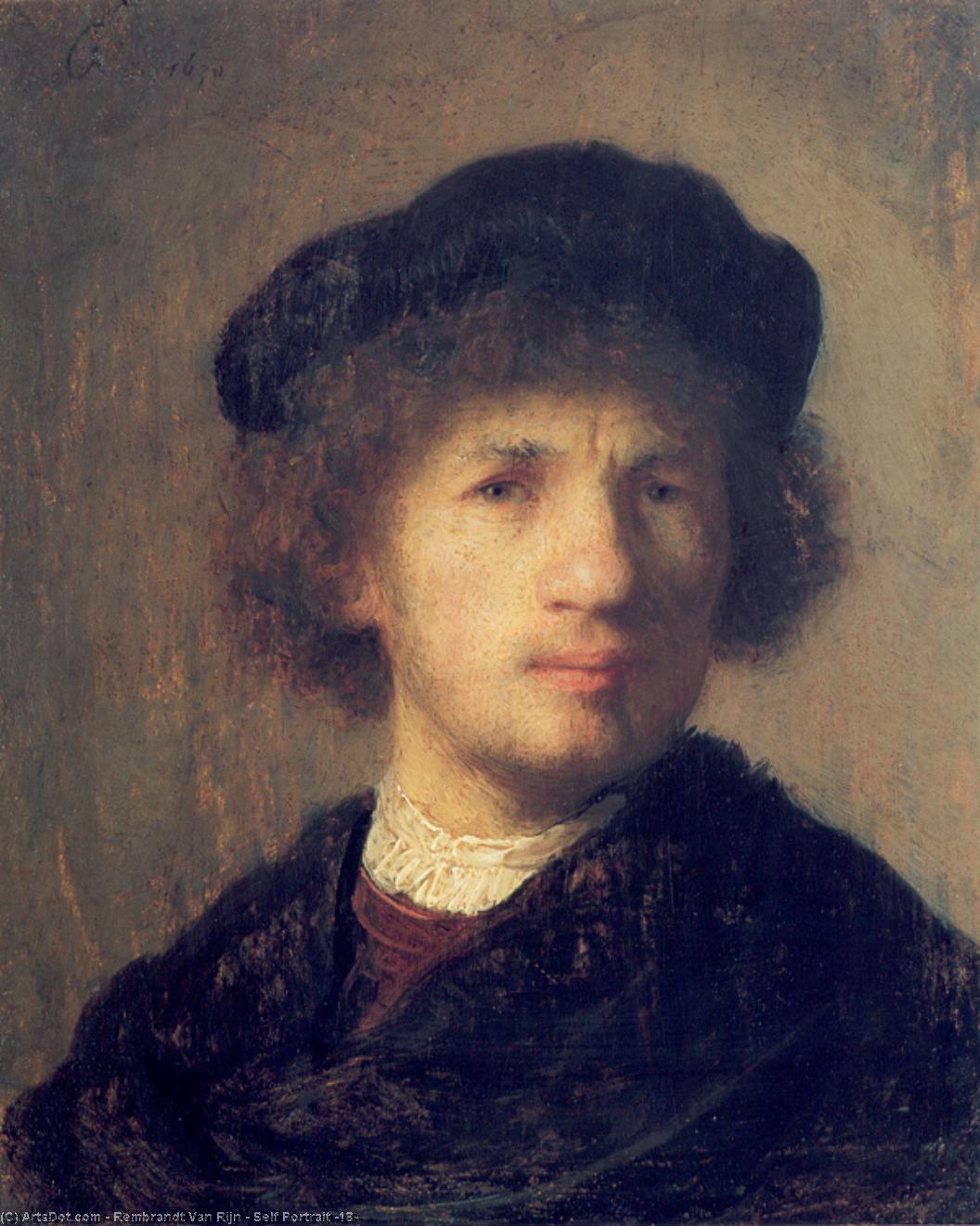
Rembrandt’s Self Portrait (18): A Window Into Genius
Rembrandt Harmenszoon van Rijn, arguably the most celebrated artist of the Dutch Golden Age, bequeathed to posterity an unparalleled legacy of introspection and artistic mastery—primarily embodied in his prolific self-portraits. Among these iconic images, *Self Portrait (18)*, created in 1630, stands as a cornerstone of Rembrandt’s oeuvre, offering a profound glimpse into both his personal life and the burgeoning spirit of Baroque art. This relatively small canvas – measuring just 15 x 12 cm – belies its monumental significance within the artist's oeuvre and continues to fascinate scholars and admirers alike.
The Painting: A Study in Light and Shadow
This portrait depicts Rembrandt himself at approximately 32 years old, gazing directly out from the canvas with an arresting gaze that conveys both vulnerability and unwavering conviction. He wears a dark brown velvet robe adorned with a crimson sash—a deliberate choice reflecting the prevailing fashion of the time—and his face is illuminated by a dramatic chiaroscuro effect characteristic of Rembrandt’s distinctive style. The artist meticulously captures the subtle nuances of skin texture, highlighting the deep creases etched into his forehead and cheekbones – marks that speak to the passage of time and the burdens borne during his life's journey. The background is deliberately blurred, directing the viewer’s attention squarely onto Rembrandt’s visage, emphasizing its centrality within the composition. This masterful use of light and shadow isn’t merely decorative; it serves as a conduit for conveying emotion—a palpable sense of melancholy mingled with quiet contemplation.
Artistic Technique: Mastery of Oil Paint
Rembrandt's unparalleled skill lies in his command of oil paint on canvas, allowing him to achieve textures and colors that transcend mere representation. His brushwork is extraordinarily detailed, capturing the intricacies of facial features with astonishing precision—the delicate folds of skin around his eyes, the subtle contours of his nose, and the expressive lines etched into his mouth. The artist employs impasto technique – applying thick layers of paint – to build up sculptural surfaces that imbue the portrait with a remarkable tactile quality. This deliberate layering creates depth and luminosity, mirroring the psychological complexity he seeks to portray. Rembrandt’s meticulous attention to detail underscores his unwavering commitment to capturing not just what he saw but also how he *felt*.
Historical Context: The Baroque Spirit
*Self Portrait (18)* emerged during a pivotal moment in Rembrandt's artistic career—a period marked by both professional success and personal turmoil. The painting exemplifies the Baroque aesthetic, which prioritized dramatic emotion and psychological realism over idealized beauty. Influenced by Caravaggio’s revolutionary use of chiaroscuro, Rembrandt pushes boundaries in portraying human experience with unflinching honesty. This self-portrait reflects a broader cultural preoccupation with confronting mortality and exploring the inner landscape of consciousness—themes that resonated deeply within the intellectual currents of the era. It stands as a testament to Rembrandt's ability to distill complex emotions into a single visual image, cementing his place as one of history’s greatest portraitists.
Significance: An Icon of Artistic Introspection
*Self Portrait (18)* transcends its status as merely a likeness; it is an embodiment of Rembrandt’s artistic philosophy—a profound meditation on identity and self-awareness. The painting continues to inspire artists today, demonstrating the enduring power of visual art to communicate emotion and provoke contemplation. Its influence can be seen in countless reproductions created by
ArtsDot.com, allowing enthusiasts worldwide to experience Rembrandt’s genius firsthand. Ultimately, *Self Portrait (18)* remains a timeless masterpiece—a poignant reminder of the artist's unwavering gaze and his masterful exploration of the human condition.